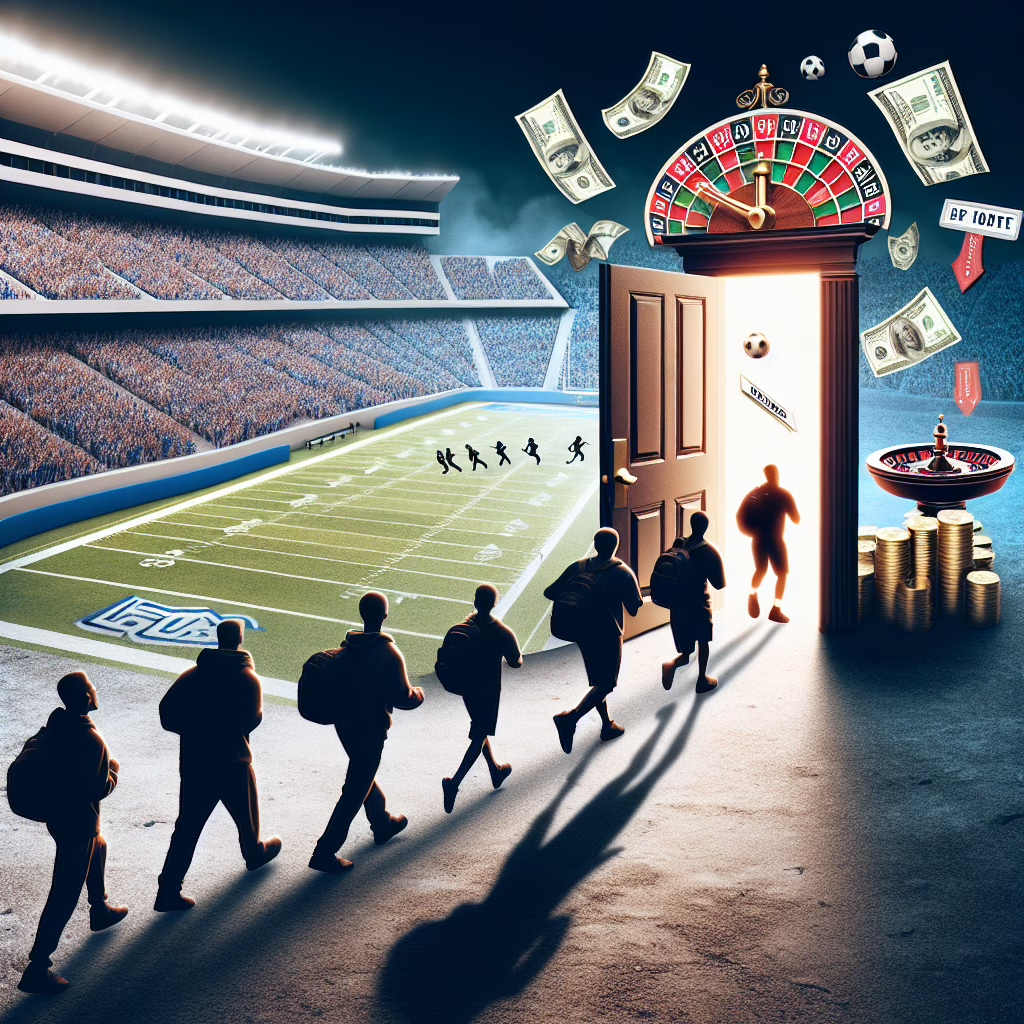
In a significant shift, the NCAA Division I Administrative Committee has approved a proposal to allow student-athletes and athletics department staff to bet on professional sports. This decision marks a departure from longstanding NCAA rules that have banned participants from placing bets on both collegiate and professional events. However, the journey to fully implementing this rule change is not yet complete. The proposal still needs the approval of Division II and Division III committees, which are scheduled to evaluate it later this month. Should these committees give their nod, the prohibition on pro sports betting could be officially lifted by November 1.
Despite this advancement, the NCAA maintains a firm stance against college sports betting activities. Student-athletes will continue to face disciplinary action should they attempt to alter game outcomes, wager on their own teams, or disclose gambling-related information to external entities. Josh Whitman, the Athletics Director at the University of Illinois and Chair of the Committee, remarked on the decision, highlighting that while the risks of sports gambling remain a concern, the committee’s vote was a step towards aligning regulations with the current environment on campuses. By easing these restrictions, the NCAA hopes to safeguard the integrity of college sports while encouraging student-athletes to adopt responsible betting habits on professional sports.
Whitman emphasized that current NCAA regulations are outdated remnants from a time when sports betting was broadly illegal in the United States. This viewpoint gained momentum when the idea of allowing professional sports wagers was first presented to the Division I Board of Directors in May 2025. The proposal has also garnered support from the Division I Student-Athlete Advisory Committee (SAAC), which features representatives from each conference. The SAAC expressed optimism that the rule change would foster an atmosphere that values education and openness, allowing student-athletes and administrators to discuss concerns without fear of reprisal.
Nonetheless, the NCAA’s move comes amid ongoing challenges with gambling-related violations involving student-athletes. Recently, three former Fresno State basketball players were handed lifetime bans after investigations revealed they had deliberately underperformed to influence the outcome of bets, sharing the proceeds with others. These incidents, which occurred during the 2024-2025 season, underscore a larger issue the NCAA is grappling with. Additionally, a separate probe has uncovered betting violations by 13 former men’s basketball players across six different schools, prompted by suspicious betting patterns flagged by monitoring services.
Jon Duncan, NCAA Vice President of Enforcement, highlighted the organization’s commitment to swiftly and thoroughly investigating these cases. The enforcement team’s priority remains focused on behaviors that significantly undermine the integrity of collegiate sports. While the NCAA is taking steps to adapt its policies to modern realities, it remains vigilant in addressing and curbing illegal betting activities.
However, not everyone is convinced that lifting the ban is a move in the right direction. Critics argue that allowing professional sports betting sets a dangerous precedent and could potentially lead to a slippery slope regarding betting on college sports. Some university officials fear that easing restrictions might inadvertently increase the temptation for athletes to engage in gambling activities that could jeopardize the spirit of fair play in collegiate athletics. They argue that the NCAA should instead focus on education programs to help student-athletes understand the risks and ethical implications of gambling.
On the other hand, proponents of the change argue that with the widespread legalization of sports betting in the United States, it is unrealistic to expect student-athletes to be completely isolated from these activities. By permitting wagering on professional sports, they believe the NCAA is acknowledging the evolving landscape of sports gambling and helping student-athletes navigate it responsibly. Supporters see this as an opportunity to educate athletes about maintaining the integrity of the game while engaging in legal and regulated betting activities.
The debate continues as the NCAA navigates these complex issues, striving to balance the freedom and autonomy of student-athletes with the need to preserve the fairness and integrity of college sports. As November approaches, all eyes will be on the decisions of Division II and III committees, which will ultimately determine if this new chapter in collegiate athletics governance will unfold.

erik is an editorial byline used by Casino No Deposits for industry news coverage. Articles published under this byline are summarised from reporting by licensed gambling industry news sources and produced with AI assistance, then published against our editorial rules on accuracy, sourcing and tone. They are not first-hand reporting and do not contain personal player accounts. Our full process, including how bonus listings and ratings are maintained separately by our team, is documented in how we review casinos: https://casinonodeposits.com/how-we-review-casinos/
Topics: Illinois · Sports Betting · Enforcement
Looking for somewhere to play? See our current no deposit bonus offers, updated with verified codes and full wagering terms.
 4.6/5
4.6/5