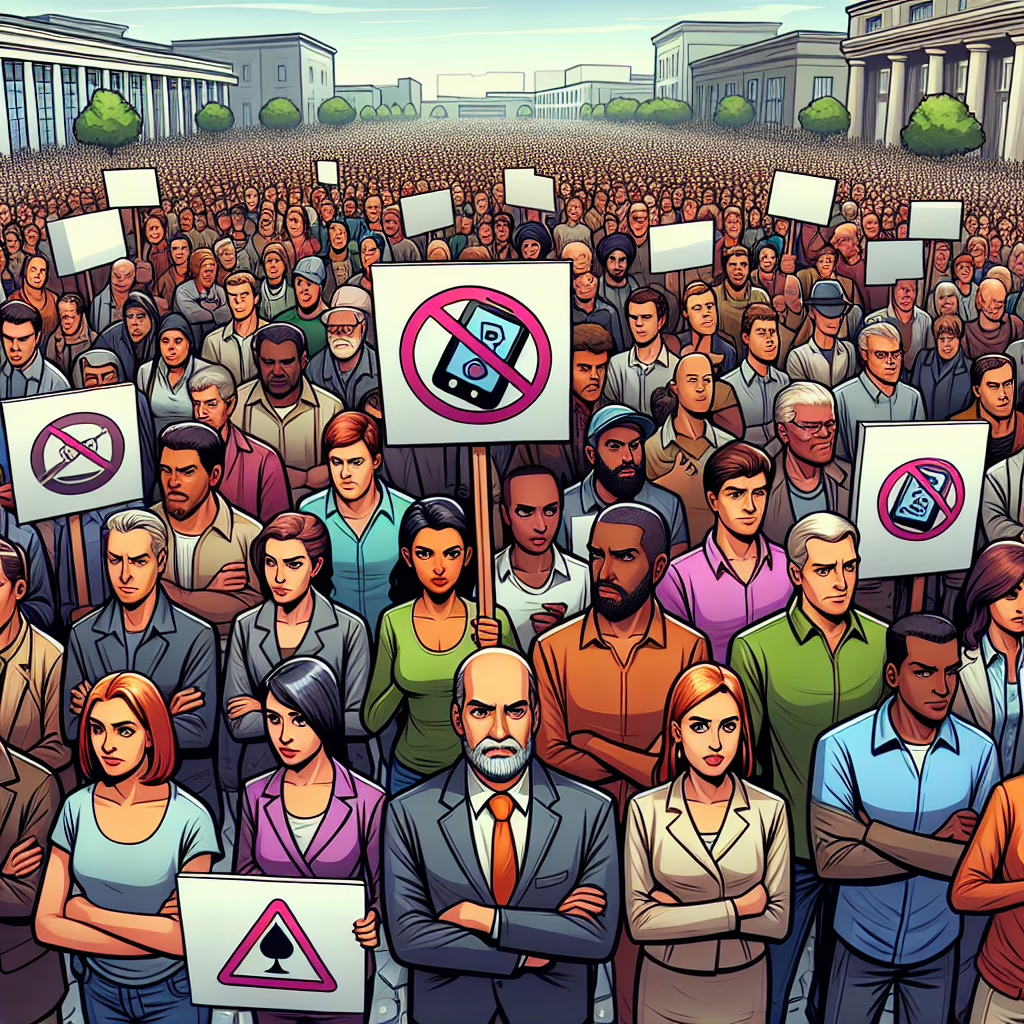
In a significant hurdle for Maryland lawmakers, a recent poll conducted by Lake Research Partners reveals that 71% of registered voters are against the legalization of online casinos in the state. This data indicates that despite ongoing discussions, public sentiment remains largely resistant to the idea of digital casinos becoming a staple in Maryland’s gambling landscape. As legislators gear up for the 2026 session, they face the daunting task of addressing these concerns while attempting to expand the state’s gambling market.
The poll, sanctioned by the National Association Against iGaming (NAAiG), underscores the challenges lawmakers will encounter as they navigate the complex dynamics of public opinion. The survey, which sampled 650 registered voters in mid-September, emphasizes a critical point: only 17% of respondents expressed favorable views towards online casinos. Notably, many participants admitted unfamiliarity with the concept until it was detailed as “24-hour access to casino games on mobile devices.” Upon understanding this description, support for online gambling waned significantly.
The poll carries a margin of error of 3.8%, yet the message is clear—Marylanders are not readily embracing the advent of online casinos. NAAiG, supported by influential entities like The Cordish Companies, Churchill Downs Inc., Jack Entertainment, and several unions and municipalities, argues that iGaming could jeopardize jobs, family stability, and the revenue generated by physical casino venues.
Jason Gumer, a board member of NAAiG and executive vice president at Monarch Casino & Resort, noted that the survey results highlight a strong rejection of iGaming once the public comprehends its implications. He observed that voters are particularly worried about the potential risks to children, families, and community well-being, urging policymakers to heed these concerns.
As Maryland legislators brace for another round of debates on the subject, Delegate Vanessa Atterbeary and Senator Ron Watson continue to spearhead efforts to legalize iGaming. Despite the bill stalling twice, these lawmakers remain resolute. Atterbeary, who successfully guided her bill through the House of Delegates in 2024 only to see it falter in the Senate, expressed urgency in pushing forward. She remarked that Maryland is lagging, acknowledging the competitive disadvantage the state faces without embracing the online casino market.
However, fears of revenue cannibalization continue to fuel the opposition. A study by The Innovation Group for the Maryland Lottery and Gaming Control Commission projected a potential 10% decrease in land-based casino revenue if online gambling is approved. Senator Watson, nevertheless, argues that this revenue impact is a matter of perspective, suggesting that any casino that chooses to cut jobs after adopting iGaming does so out of greed rather than necessity.
The conversation surrounding Maryland’s gambling industry is expanding beyond just casinos. During the last legislative session, Senate Bill 860 aimed to prohibit sweepstakes-style gaming platforms that function outside of established gambling regulations. Although the bill did not pass, the Maryland Lottery and Gaming Control Agency has taken proactive steps, issuing cease-and-desist orders to entities like Virtual Gaming Worlds to curb unlicensed activities.
This shift in the regulatory landscape signals a tightening grip on gambling activities, yet the core issue extends beyond legislative action to public perception. According to Senator Watson, the next battle might be educational rather than legislative. Reflecting on past efforts, he acknowledged that the campaign to legalize iGaming requires a comprehensive approach, emphasizing the need for a unified team to enlighten the public on the benefits and safeguards of online gambling.
Even if the legislative hurdles are overcome by 2026, the ultimate decision lies in the hands of Maryland voters through a public referendum. Lawmakers recognize the necessity of shifting public opinion to align with the evolving gambling landscape, especially as neighboring states advance in their digital gambling offerings.
The ongoing challenge for Maryland will be to rapidly alter public perception to facilitate the successful launch of iGaming by 2026. This would follow the momentum observed with recent developments, such as bet365’s approval for a Maryland sports betting license. As discussions continue, the stakes remain high, with policymakers striving to balance public concerns with economic opportunities within the iGaming sector.

erik is an editorial byline used by Casino No Deposits for industry news coverage. Articles published under this byline are summarised from reporting by licensed gambling industry news sources and produced with AI assistance, then published against our editorial rules on accuracy, sourcing and tone. They are not first-hand reporting and do not contain personal player accounts. Our full process, including how bonus listings and ratings are maintained separately by our team, is documented in how we review casinos: https://casinonodeposits.com/how-we-review-casinos/
Topics: Maryland · Sweepstakes Casinos · Illegal Gambling · Land-Based Casinos · Licensing · Sports Betting
Looking for somewhere to play? See our current no deposit bonus offers, updated with verified codes and full wagering terms.
 4.6/5
4.6/5