
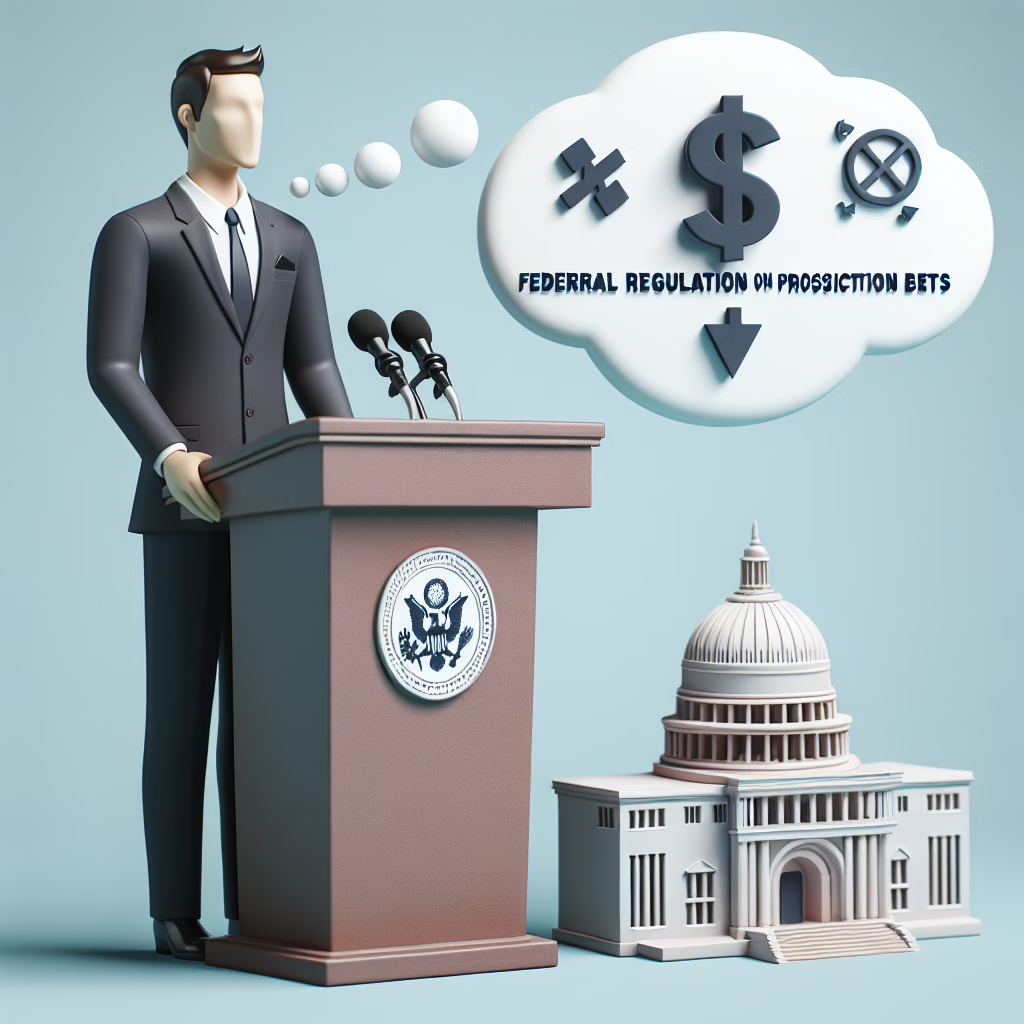
Senator Brian Schatz from Hawaii is making strides to introduce a legislative bill in 2026 aimed at enhancing federal oversight of player proposition betting markets. The senator stresses that the swift proliferation of betting types linked to detailed in-game moments poses integrity risks that current state-by-state regulations are ill-equipped to manage. This initiative follows a year marked by notable cases in the NBA and Major League Baseball, highlighting how a limited range of outcomes can be influenced by a handful of participants, thereby sparking new debates over compliance boundaries.
Schatz, speaking on the Pablo Torre Finds Out podcast, conveyed his intent to heavily regulate prop bets, including those offered by offshore sportsbooks that continue accepting U.S. wagers outside state licensing frameworks. He emphasized that the issue stems from a gap in federal integrity and consumer protection, exacerbated by the scale and speed of modern sports wagering. According to Schatz, “Integrity is essential to competitive sport, and recent allegations about gambling in the NBA and MLB have made it clear we need federal protections.”
The proposal is gaining attention as a significant issue, even reaching legislative discussions in Washington state. Schatz’s stance emerged after identifying the risk that certain prop markets could concentrate exposure on outcomes manipulable by a “single bad actor,” as both the senator and podcast discussions articulated. Unlike point-spread or total wagers that are broader in scope, some props are contingent on narrow events, such as minutes played, specific pitch outcomes, or singular statistical thresholds—events that can be swayed by a limited decision set.
Despite the legality of sports betting in most states and its ongoing expansion, Congress has yet to establish a comprehensive federal sports-betting framework since the 2018 Supreme Court decision that granted states the power to legalize. Consequently, most product rules, integrity reporting expectations, and enforcement standards are determined at the state level, allowing illegal offshore sites to operate beyond those boundaries.
The legislative push has gained momentum due to scandals involving both the NBA and MLB that underscore the unique vulnerabilities of prop markets. In the NBA, former Toronto Raptors player Jontay Porter received a permanent ban in 2024 following an investigation that uncovered he had shared confidential information and limited his game participation amid suspicious prop market wagers. In late 2025, Miami Heat guard Terry Rozier faced federal charges of wire fraud and money-laundering conspiracy, with accusations that his 2023 game performance was intentionally manipulated to benefit “under” prop bets.
Similarly, in MLB, federal prosecutors in Brooklyn charged Cleveland Guardians pitchers Emmanuel Clase and Luis Ortiz in November 2025, accusing them of a scheme targeting wagers on pitch characteristics. These markets can be manipulated with minimal disruption compared to altering a game’s overall outcome.
Such incidents only add fuel to the concerns regulators have been discussing for years and now face in court settings. Schatz’s legislative draft aims to address these vulnerabilities directly. While the draft text is yet to be published, reports and statements from Schatz suggest the proposal will focus on restricting or reshaping easily manipulated prop bet markets and incorporating illegal offshore offerings within policy frameworks. Schatz views this initiative as a trust-and-integrity response to the burgeoning sports wagering sector and its integration into broadcasts and fan engagement activities.
The senator disclosed he is collaborating with professional leagues, player associations, and sportsbooks to shape the measure. This collaborative approach is crucial for industry stakeholders, as it indicates the bill might be introduced with pre-agreed positions on defining “high-risk” props and the protocols for managing them.
As the debate continues, some industry experts argue that the solution may not solely reside in heightened federal oversight. They suggest a balanced approach that includes technological advancements, such as improved data analytics and real-time monitoring, to enhance transparency and mitigate risks. Others caution against overregulation, which might inadvertently push bettors towards unregulated markets, undermining the very integrity protections the legislation seeks to bolster.
In contrast, advocates for Schatz’s proposal insist that the current patchwork of state laws is insufficient to address the complexities of modern sports betting. They assert that a standardized federal framework is necessary to ensure fair play across all states and to safeguard the interests of all stakeholders, including players, fans, and legitimate betting operators.
As the legislative process unfolds, the proposed bill is expected to spark significant debates among lawmakers, industry representatives, and consumer advocates alike. The outcome will likely shape the future landscape of sports betting in the United States, balancing the need for innovation with the imperative of maintaining competitive integrity.

erik is an editorial byline used by Casino No Deposits for industry news coverage. Articles published under this byline are summarised from reporting by licensed gambling industry news sources and produced with AI assistance, then published against our editorial rules on accuracy, sourcing and tone. They are not first-hand reporting and do not contain personal player accounts. Our full process, including how bonus listings and ratings are maintained separately by our team, is documented in how we review casinos: https://casinonodeposits.com/how-we-review-casinos/
Topics: Licensing · Sports Betting · Product Launches · Enforcement · Gambling Regulation
Looking for somewhere to play? See our current no deposit bonus offers, updated with verified codes and full wagering terms.
 4.5/5
4.5/5MegawinEU Casino Review
Bonus Code: NDB10