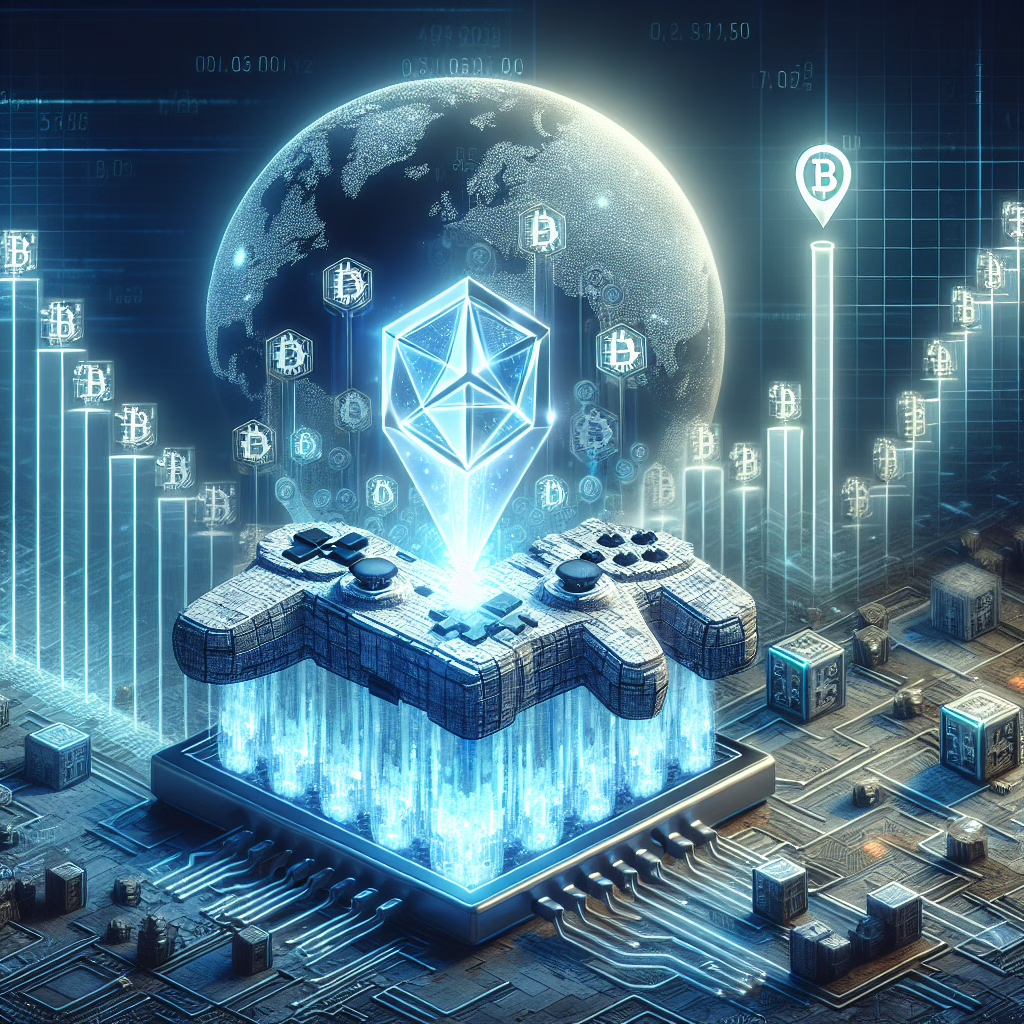
Blockchain technology is radically altering the landscape of the gaming industry by allowing players genuine ownership of in-game assets and creating new revenue opportunities. This shift marks a departure from traditional gaming models where virtual items remain confined within individual games. By 2025, the NFT gaming market is anticipated to achieve a valuation of USD 0.54 trillion, with predictions of growing at an annual rate of 14.84%, potentially doubling to USD 1.08 trillion by 2030. This trajectory underscores the burgeoning significance of blockchain, not just in gaming but across diverse sectors.
Blockchain has introduced the concept of non-fungible tokens (NFTs), which enable players to own in-game items as their personal digital property. This transformational approach allows players to trade or sell these assets across various platforms, thus creating dynamic new marketplaces. Where traditionally players spent money on virtual items without actual ownership, blockchain technology records these items as NFTs on the blockchain, enabling true ownership. For instance, a rare sword or a unique skin is no longer just a game item but a tradable asset. This concept of digital ownership could significantly impact gambling products, where presently, value is often confined within a single platform.
The play-to-earn model is another revolutionary change brought by blockchain gaming. This model allows players to earn cryptocurrency based on their gameplay, contrasting starkly with the older model of paying for advancements within a game. Axie Infinity exemplifies this trend, with its economy revolving around NFT-based creatures, attracting over a million active participants. In some regions, players even treat this as a viable income source. In the iGaming sector, this raises important considerations about the nature of rewards. Could the future see engagement translating to direct financial returns rather than just bonuses or loyalty points?
One of the most compelling aspects of blockchain is its capacity for interoperability, enabling assets to be transferred across multiple games. This means that characters, weapons, or plots of land can retain their value and utility across different platforms, rather than being restricted to the original game. Such cross-platform asset mobility fosters greater player loyalty and allows developers to tap into established communities of players. For gambling operators, this trend could signal increasing player expectations for flexibility, including how value and assets move between platforms.
Blockchain games also empower players through decentralised autonomous organisations (DAOs). In these setups, players with tokens have a say in game governance, influencing decisions on rules, prize distributions, and development priorities. Smart contracts ensure these decisions are executed automatically, fostering transparency and trust. This model offers valuable insights for the iGaming industry, where player trust and regulatory compliance are vital.
Security is another key area where blockchain proves its worth. The permanent recording of every trade and transaction on the blockchain drastically reduces risks of fraud, duplication, and cheating. Players can verify the authenticity of NFTs and trace their history, preventing counterfeit items from infiltrating the system. For gambling operators, this technology promises enhanced fraud prevention and lower compliance costs through more secure and transparent transaction records.
The anticipated growth of blockchain gaming to over USD 1 trillion by 2030 will inevitably influence the gambling industry. The core features of blockchain—ownership, play-to-earn, cross-platform assets, player governance, and robust security—address challenges that the gambling sector already faces. Operators must contemplate several crucial questions: Could tokenized assets or loyalty points become tradeable? Will future player expectations include earnings tied to engagement time? How will regulatory bodies adapt to community-driven governance models? Can blockchain technology lower the costs associated with fraud and anti-money laundering (AML) monitoring?
The answers to these questions underscore the profound impact that blockchain gaming’s growth could have beyond the entertainment industry. As blockchain gaming rapidly transitions from concept to reality, mainstream studios are increasingly incorporating NFT features, and blockchain-native games continue to expand. The concept of a player-owned economy is becoming an integral part of the wider digital economy.
For the gambling sector, staying ahead will require strategic preparation. As consumer demands for transparency, ownership, and portability grow, operators might need to adapt their compliance frameworks and product designs to meet these evolving expectations. The trajectory is evident: Blockchain is set to redefine the workings of digital economies in the coming years, and staying attuned to this shift will be crucial for all stakeholders.

James Miller is an editorial byline used by Casino No Deposits for industry news coverage. Articles published under this byline are summarised from reporting by licensed gambling industry news sources and produced with AI assistance, then published against our editorial rules on accuracy, sourcing and tone. They are not first-hand reporting and do not contain personal player accounts. Our full process, including how bonus listings and ratings are maintained separately by our team, is documented in how we review casinos: https://casinonodeposits.com/how-we-review-casinos/
Topics: Anti-Money Laundering · Crypto Gambling · Financial Results · Online Casino · Enforcement · Gambling Regulation
Looking for somewhere to play? See our current no deposit bonus offers, updated with verified codes and full wagering terms.
 4.6/5
4.6/5