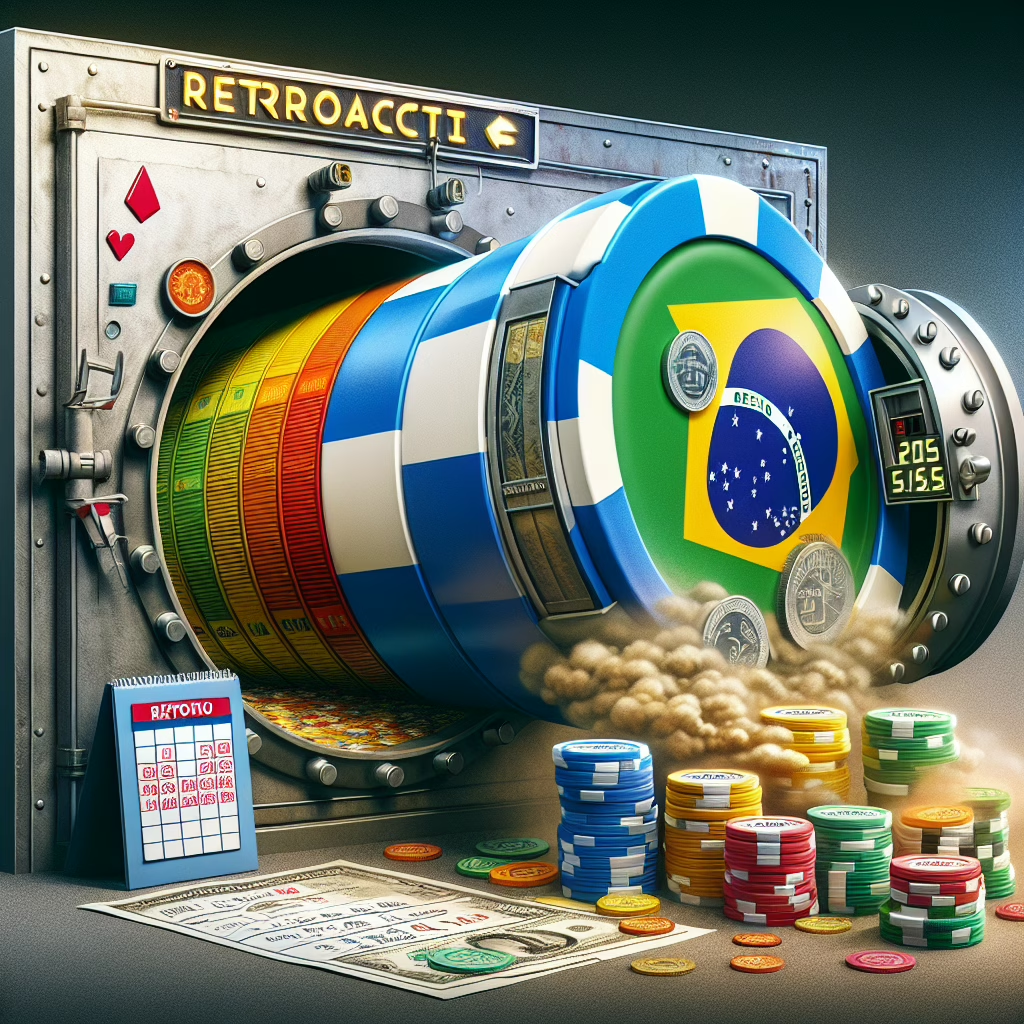
Brazil’s betting industry is at a pivotal crossroads as the government deliberates over a proposal to increase the tax on bets from 12% to 24%. This potential hike has prompted operators to devise a strategic plan aimed at safeguarding their profit margins and preserving the burgeoning regulated market in the country. Their proposal involves making retroactive tax payments for the years prior to regulation in exchange for halting a permanent increase in tax rates, a move that could significantly alter the sector’s landscape.
The proposal, initially highlighted by Folha de S.Paulo, has the potential to generate up to R$12.5 billion (approximately US$2.36 billion) in immediate revenue for the government. Many operators view this one-time payment as a preferable option compared to enduring a prolonged tax hike that would impact the industry for years to come.
This plan is considered a high-stakes trade-off by industry executives, who see it as a calculated attempt to maintain market stability. Although the idea of paying for past operations might be a financial burden in the short term, it provides a sense of certainty for future operations.
The impetus behind the proposed 24% tax rate, put forward by Senator Renan Calheiros, is to offset the new income tax exemption for Brazilian workers earning up to R$5,000 monthly. The Ministry of Finance supports this proposal as a means of increasing revenue efficiently without resorting to cuts in public spending. However, the betting industry contends that such a rate would hinder long-term growth prospects.
On the other hand, retroactive payments could deliver the same fiscal benefits immediately without jeopardizing the legal market’s competitiveness. This idea has gained traction, particularly given the Federal Revenue Secretary Robinson Barreirinhas’s earlier remarks that companies operating before regulation should have been paying taxes on their revenue. “If they had revenue and income here, they owe taxes to the country,” he had asserted, lending the proposal legal weight and offering the government an opportunity to claim success without causing instability in the sector.
Nonetheless, the situation is complicated by political factors. Brazil’s economy is under fiscal pressure as the 2026 elections approach, and betting is one of the few sectors where quick financial gains seem feasible. Thus, the final decision might hinge more on political timing than on fiscal reasoning.
The outcome of this decision is critical. Raising taxes might drive operators and players back to unregulated markets, warned André Gelfi, president of the Brazilian Institute of Responsible Gaming (IBJR). He often cautions, “The more expensive it is to operate legally, the greater the chance that clandestine platforms will gain ground.”
Striking a compromise could help Brazil secure both stability and credibility during its new regulatory phase. Industry leaders are confident that maintaining reasonable tax rates will draw foreign investment, preserve local employment, and enhance responsible gaming oversight.
The negotiations are still ongoing, with both parties remaining at the bargaining table. As of now, the Ministry of Finance has not issued any official response to the retroactive tax proposal, and the debate is intensifying as the congressional vote looms.
In the end, Brazil faces a decision between choosing immediate revenue gains or focusing on sustainable, long-term growth.

erik is an editorial byline used by Casino No Deposits for industry news coverage. Articles published under this byline are summarised from reporting by licensed gambling industry news sources and produced with AI assistance, then published against our editorial rules on accuracy, sourcing and tone. They are not first-hand reporting and do not contain personal player accounts. Our full process, including how bonus listings and ratings are maintained separately by our team, is documented in how we review casinos: https://casinonodeposits.com/how-we-review-casinos/
Topics: Brazil · Gambling Taxes · Financial Results · Gambling Regulation
Looking for somewhere to play? See our current no deposit bonus offers, updated with verified codes and full wagering terms.
 4.6/5
4.6/5