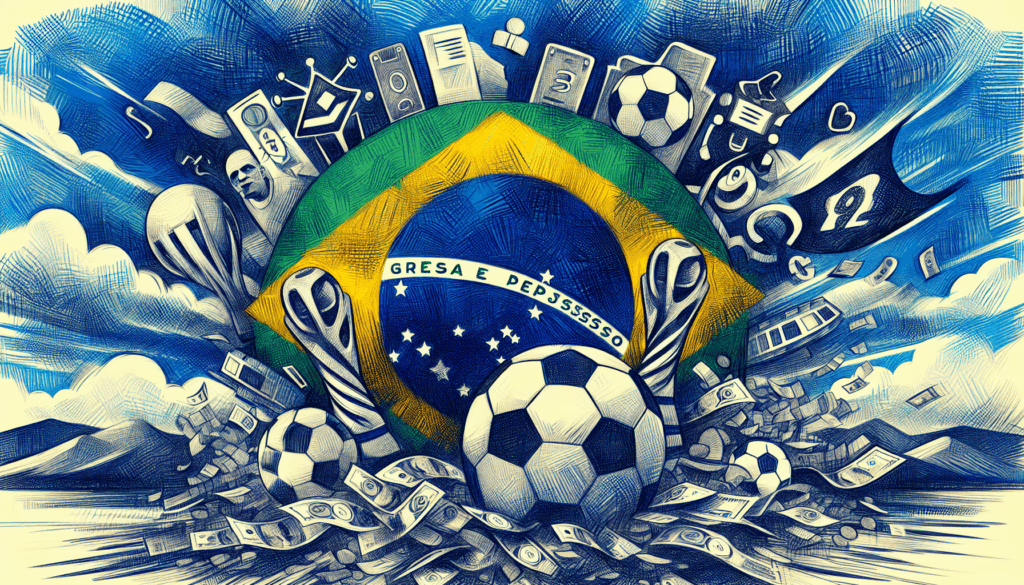
In Brazil, a significant political debate has emerged as the federal government aims to impose a comprehensive ban on gambling activities nationwide. This legislative effort, initiated by the Workers’ Party (PT), comes as the government seeks to enforce stricter control over gambling by outlawing not only operations but also associated advertising and financial transactions. The proposal, recently introduced in the Chamber of Deputies, underscores the government’s determination to regulate the sector. However, the plan faces considerable obstacles in Congress, as political dynamics and economic implications present substantial challenges.
The legislative push to ban gambling in Brazil is encountering resistance due primarily to the political landscape and an agenda crowded with other priorities, such as labor law reforms, especially in light of upcoming elections. With political parties like PL, PDT, and Republicanos prioritizing other legislative matters, the gambling bill appears unlikely to advance quickly. Moreover, the economic contributions of regulated gambling, which yielded nearly R$9.95 billion in tax revenue in 2025, pose a significant deterrent to an outright ban. Projections suggest these revenues could increase by 13% in 2026 and 15% by 2028, highlighting the financial ramifications for the federal budget should such a ban be implemented.
This economic contribution has led some congress members to suggest focusing on combating illegal gambling operations rather than banning the entire industry. This perspective underscores the tension between the executive’s regulatory ambitions and legislative hesitance, complicating the potential for swift legislative action. President Luiz Inácio Lula da Silva has voiced his concerns over the influence of the gambling industry, criticizing the extent of lobbying efforts that he claims hinder meaningful reform.
The proposed legislation put forward by Congressman Pedro Uczai reflects the government’s stringent stance. It aims to prohibit all forms of betting activities and related advertising, with severe penalties for violations, including fines and imprisonment. While some have suggested increased regulation and taxation as alternatives to a total ban, these measures have yet to gain traction in the legislative process.
The ongoing debate has sparked significant public discourse, with varying opinions on how best to regulate gambling. The executive’s push for a ban emphasizes the perceived social harms of gambling, while legislative hesitation reflects the economic and political complexities involved. This stalemate leaves the future of Brazil’s gambling sector uncertain, with current regulations likely to remain focused on curbing illegal operations.
As the political and economic implications continue to unfold, the next steps for Brazil’s gambling regulation remain unclear. With elections on the horizon, legislative action on the proposed ban may be delayed, keeping the existing regulatory framework intact for the foreseeable future. The ongoing discussions suggest that any significant regulatory changes will require careful negotiation and balancing of economic interests and social concerns.

erik is an editorial byline used by Casino No Deposits for industry news coverage. Articles published under this byline are summarised from reporting by licensed gambling industry news sources and produced with AI assistance, then published against our editorial rules on accuracy, sourcing and tone. They are not first-hand reporting and do not contain personal player accounts. Our full process, including how bonus listings and ratings are maintained separately by our team, is documented in how we review casinos: https://casinonodeposits.com/how-we-review-casinos/
Topics: Brazil · Illegal Gambling · Gambling Taxes · Financial Results · Enforcement · Gambling Regulation
Looking for somewhere to play? See our current no deposit bonus offers, updated with verified codes and full wagering terms.