

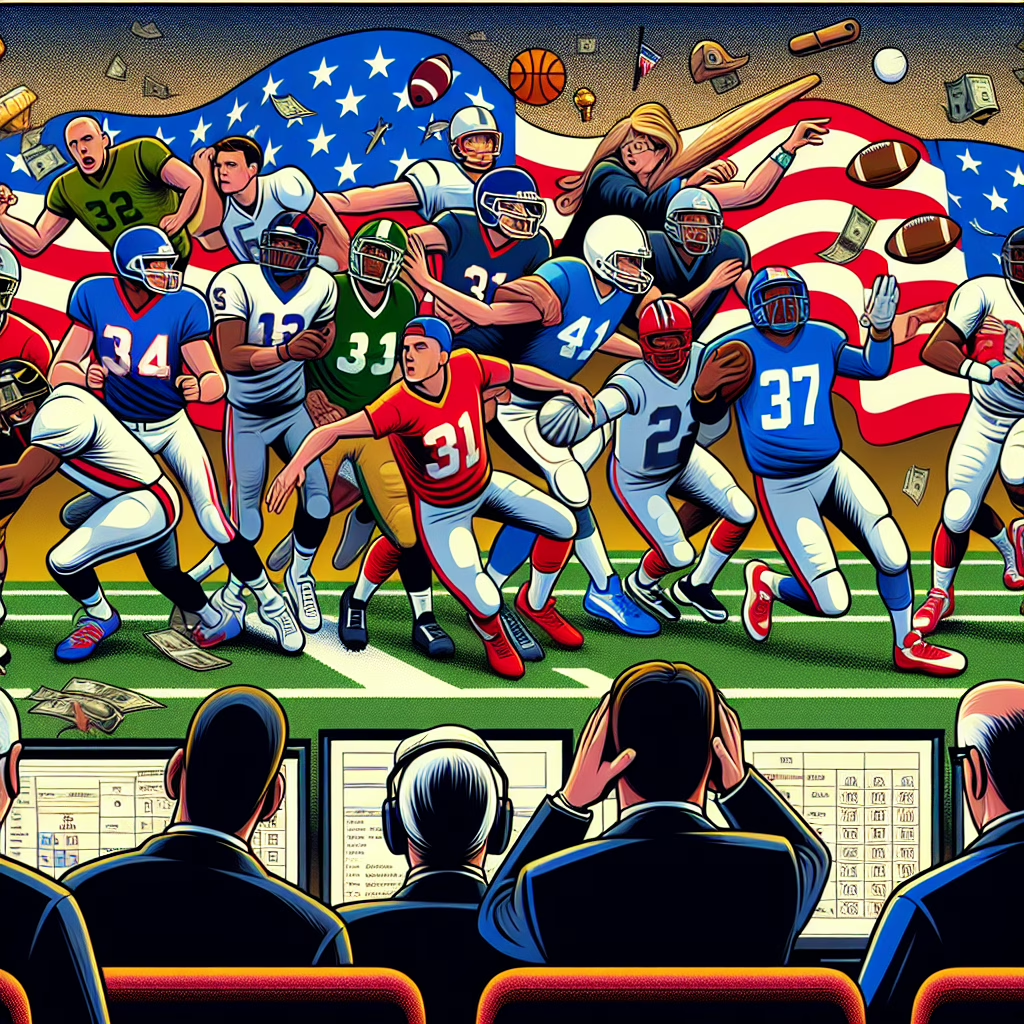
A recent survey conducted by YouGov has exposed a significant crisis of confidence in the integrity of U.S. sports, with findings indicating that over 80% of sports bettors believe that athletes intentionally modify their performances to influence gambling outcomes. This revelation comes at a time when the impact of sports betting on fair play and the reputational standing of leading U.S. betting brands is under intense scrutiny.
The survey was initiated following the high-profile FBI arrests in October involving Miami Heat guard Terry Rozier, NBA coach Chauncey Billups, and more than 30 other individuals, including alleged members of the New York Mafia. These arrests were part of an investigation into illegal poker operations and match-fixing, which has sparked a renewed global debate on how legalized betting affects sports competition integrity.
In the days after these arrests, YouGov surveyed 19,000 Americans. The results showed widespread public skepticism, with sports bettors showing a higher level of distrust in athletes’ conduct compared to non-bettors. This suggests a deeper concern among those most engaged with the sports betting industry.
The survey revealed that 65% of Americans overall suspect that professional athletes sometimes or often adjust their play to benefit gamblers. A mere 6% of respondents believe athletes never alter their performance for betting purposes, while 29% remained unsure. Further analysis shows that:
– 13% of respondents said athletes “often” change their play,
– 32% said it happens “sometimes,” and
– 19% believe it occurs “rarely.”
Among sports bettors, the distrust is even more pronounced. Eighteen percent said it happens often, compared to 13% of the general population. When all categories of suspicion are combined (“often,” “sometimes,” or “rarely”), more than 80% of bettors believe athletes alter performance due to betting influences.
YouGov analysts have highlighted this as a “significant perception gap,” noting that sports bettors—who are supposed to have the most confidence and engagement in the industry—are actually among the most skeptical about its fairness.
The ramifications of this mistrust extend beyond athletes to affect the reputation of leading betting brands. While most major U.S. sportsbooks have maintained generally positive public images, the recent scandals and ongoing integrity concerns have negatively impacted brand reputation. According to YouGov’s brand sentiment index, which evaluates whether people would feel proud or embarrassed to work for a company, there was an average decline of 1.1% year-on-year across the top 10 betting brands.
Notably, DraftKings and FanDuel, the market leaders, experienced the most significant declines, with both recording over 3% drops in their reputation scores, slipping into net negative territory. More survey respondents stated they would feel embarrassed rather than proud to be associated with these companies. In contrast, Betway was the only U.S. betting operator to see a slight improvement in reputation, with a 0.1% increase.
The survey also explored perceptions of legalized gambling’s broader impact on sports. Among sports bettors, 24% viewed betting as having a positive influence, but only 9% of the general population shared this view. In stark contrast, 44% of non-bettors believed that legal betting harms sports, which compares with 31% of bettors who shared this negative sentiment.
These findings underscore the significant challenges regulators, sportsbooks, and sports leagues face as they strive to balance commercial growth with maintaining public trust. Despite the high participation rates in sports betting, skepticism about integrity and ethics has the potential to emerge as the industry’s most substantial long-term risk.
However, YouGov suggests that the reputational damage is not irreversible. If major betting brands take proactive measures to lead in promoting integrity, transparency, and responsible betting standards, they could help restore public confidence in U.S. sports. The path forward involves a concerted effort to align commercial interests with ethical standards to ensure the long-term sustainability of the sports betting industry. As the industry evolves, fostering a culture that prioritizes fair play and transparency could mitigate the risks posed by current public perceptions.
Yet, a counterpoint exists. Some industry insiders argue that the focus should not only be on athletes and betting brands but also on the regulatory framework itself. They suggest that more robust regulatory measures, enhanced monitoring technologies, and stricter penalties for violations could play a crucial role in safeguarding the integrity of sports. By tightening these aspects, the chances of manipulation might be significantly reduced, ultimately restoring faith not only in sports but also in the systems designed to protect them.
As the debate continues, it is clear that resolving these issues will require collaboration among all stakeholders in the sports and betting ecosystems. Only then can the industry hope to overcome the skepticism and re-establish a sense of trust and fairness, both on and off the field.

Sarah Thompson is a seasoned writer specializing in casino gaming and online gambling. With over a decade of experience in the industry, Sarah brings in-depth knowledge and a keen eye for detail to her work at CasinoNoDeposits.com. Her expertise lies in uncovering the latest no deposit bonuses and providing comprehensive reviews of online casinos. Passionate about helping players maximize their gaming experience, Sarah combines her analytical skills with a flair for engaging storytelling.
 4/5
4/5