
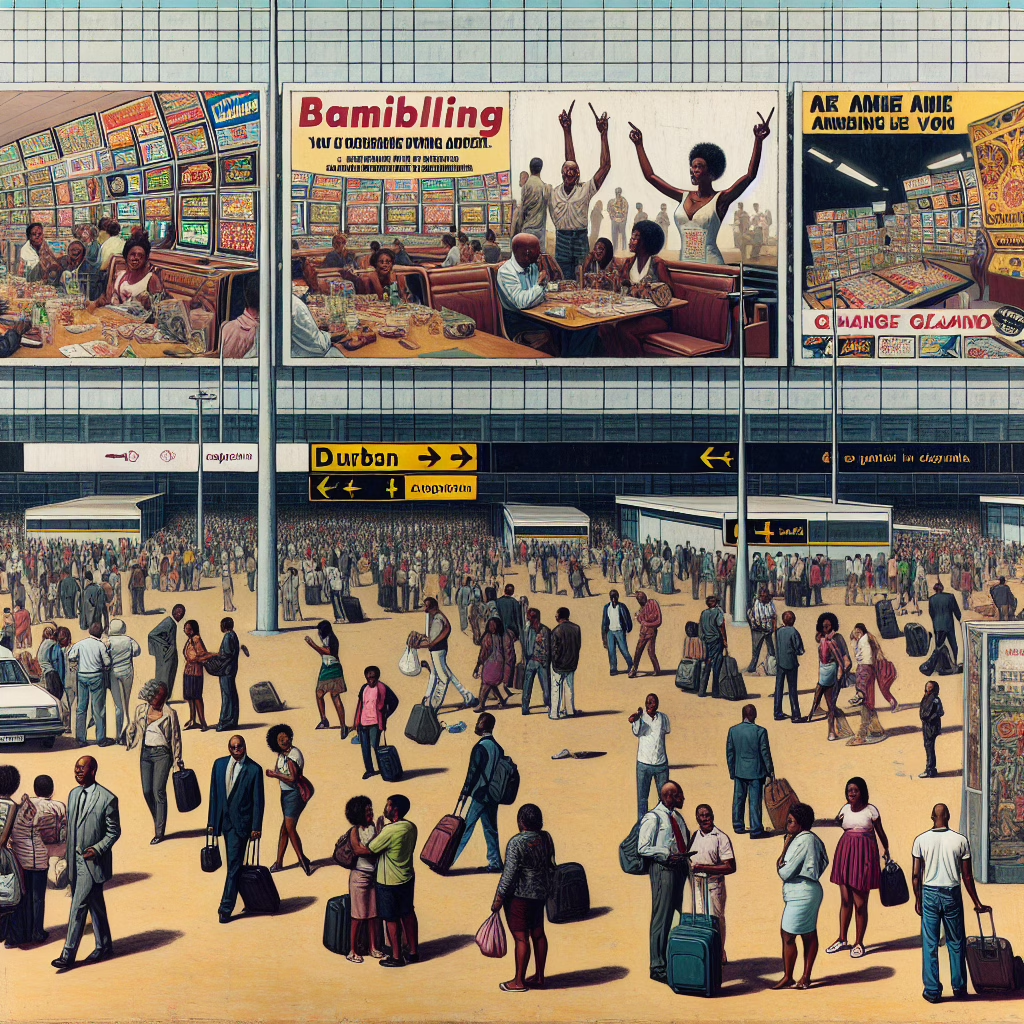
Hollywoodbets advertisements saturate King Shaka International Airport in Durban, South Africa, sparking public concern and a heated debate on advertising ethics and exposure to children. The vivid images showing betting promotions in both arrival and departure terminals have led many to question the responsibility of advertising in spaces frequented by families and minors.
The controversy erupted when photos of the conspicuous Hollywoodbets signage found near baggage claim areas went viral on social media platforms. Travellers voiced their frustration, noting that the ads seemed to appear at almost every turn, making them inescapable. These posts garnered significant attention, with hundreds of comments criticizing the display as “irresponsible” and “excessive,” and reigniting a long-standing debate about the appropriateness of such advertisements in state-owned locations.
In response to the uproar, Airports Company South Africa (ACSA), the operator of King Shaka Airport, acknowledged that the advertisements were legally placed under a current concession agreement. However, ACSA has initiated a policy review to ensure its advertising aligns with public expectations and ethical standards. Ofentse Dijoe, ACSA’s spokesperson, explained that advertising in their airport network operates on a concession model, with concessionaires responsible for securing advertisers for specified sites. Dijoe emphasized, “We are developing comprehensive guidelines to regulate advertising content across our airports to ensure responsible and consistent practices. These guidelines seek to promote societal welfare, uphold our brand values, and ensure compliance with industry and regulatory standards.”
The new policy aims to address social welfare, maintain brand integrity, and comply with regulations, ensuring that all advertising content meets broader community standards. ACSA is attempting to balance its contractual obligations with its ethical responsibility, aiming to address the concerns raised without violating existing agreements. Similar strategies have been applied at OR Tambo International Airport, where advertising control is stricter to avoid excessive exposure to sensitive content.
Industry analysts suggest that the backlash at King Shaka Airport reflects a broader challenge facing public venues that depend on commercial partnerships while maintaining ethical integrity. Airports, being among the most prominent advertising spaces in South Africa, are at the center of a growing debate about what should be displayed, particularly in high-traffic environments. The discussion over responsible marketing in these spaces is an evolving one, with visibility and ethics often at odds.
As South Africa grapples with balancing economic opportunities against social responsibilities, the fundamental question remains: how should public spaces define the limits of gambling visibility in daily life? The King Shaka Airport case serves as a microcosm of the broader conversation concerning responsible advertising practices in public venues, reminding all stakeholders that visibility should not come at the expense of ethical considerations.
Some voices in the debate argue for more stringent regulations, suggesting that the exposure of children to gambling advertising could have long-term negative effects. They point out that the presence of such advertisements in family-oriented public spaces may normalize gambling and potentially influence young minds to perceive it as a harmless activity. In contrast, others argue that commercial partnerships are vital for the financial sustainability of public venues, and as long as the advertisements adhere to legal standards, they should be permissible.
ACSA’s move to review its advertising policies signals a shift towards more conscientious practices that could set a precedent for other public spaces in South Africa. By seeking to uphold societal welfare and align with community values, ACSA is demonstrating a commitment to ethical advertising, albeit within the constraints of its commercial agreements.
The debate at King Shaka International Airport is emblematic of a larger issue within the advertising industry: the need to balance commercial interests with ethical considerations, particularly in spaces where the public, including vulnerable demographics like children, are present. As the conversation unfolds, it becomes clear that stakeholders must carefully consider how gambling and other sensitive content are promoted in public venues, ensuring that economic benefits do not overshadow the importance of social responsibility.
ACSA’s forthcoming guidelines are expected to provide a framework for responsible advertising practices, potentially influencing how other public venues approach similar issues in the future. By prioritizing social welfare and community standards, ACSA is taking an important step towards addressing the ethical concerns raised by the public, highlighting the need for a delicate balance between economic gain and ethical practices in public advertising.

erik is an editorial byline used by Casino No Deposits for industry news coverage. Articles published under this byline are summarised from reporting by licensed gambling industry news sources and produced with AI assistance, then published against our editorial rules on accuracy, sourcing and tone. They are not first-hand reporting and do not contain personal player accounts. Our full process, including how bonus listings and ratings are maintained separately by our team, is documented in how we review casinos: https://casinonodeposits.com/how-we-review-casinos/
Topics: South Africa · Enforcement · Gambling Regulation
Looking for somewhere to play? See our current no deposit bonus offers, updated with verified codes and full wagering terms.
 4.6/5
4.6/5