
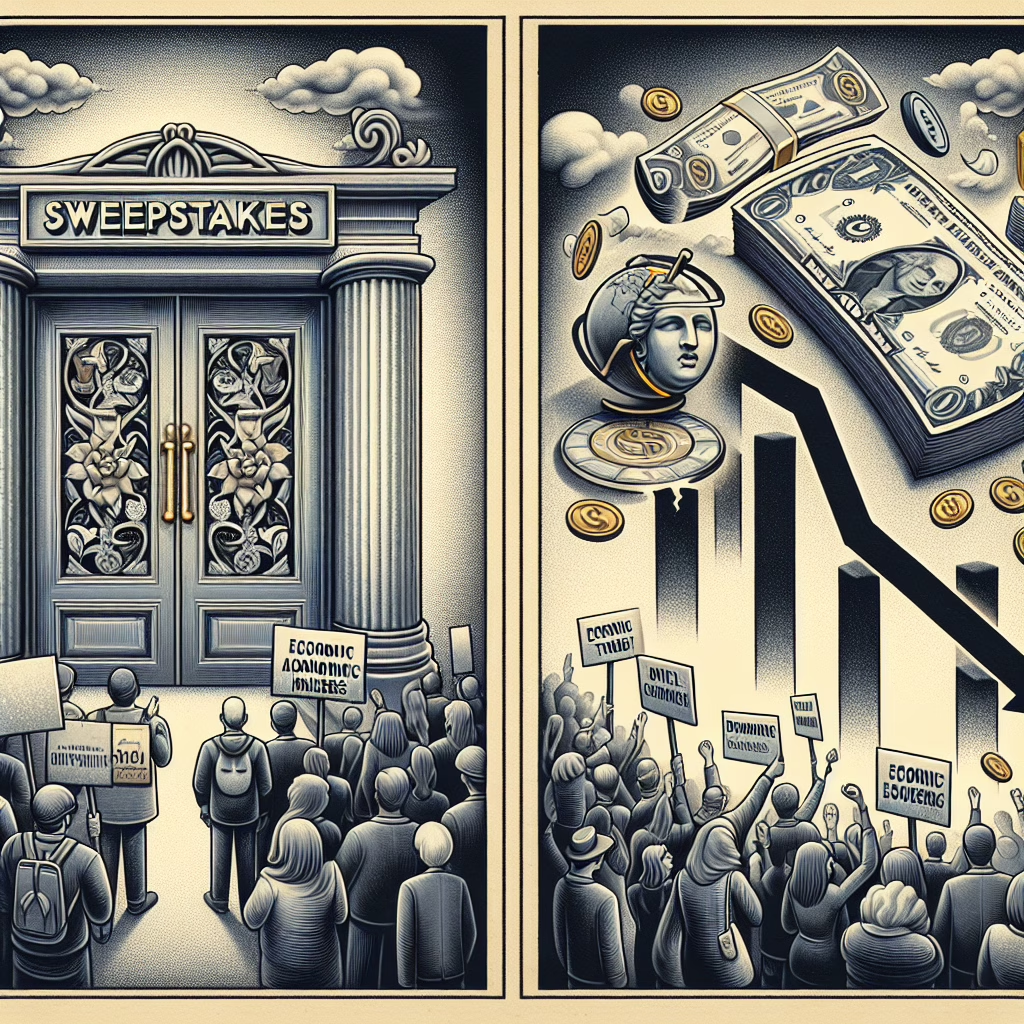
The Social Gaming Leadership Alliance (SGLA) has expressed strong disapproval of California’s recent legislative move to ban online social games featuring sweepstakes promotions, following the approval of Assembly Bill 831 (AB 831). The decision was backed by the California Assembly Governmental Organization Committee last week, triggering a wave of criticism from industry advocates.
If AB 831 is enacted into law, it could potentially eliminate over $1 billion in annual economic activity, impacting hundreds of businesses within the state. Jeff Duncan, the Executive Director of the SGLA, has criticized the legislative body for allegedly prioritizing the interests of large gaming tribes already heavily invested in Las Vegas and California’s coastal regions. He argued that such a move would unfairly restrict opportunities for other tribal groups. “Governor Gavin Newsom should consider vetoing this bill,” Duncan urged, as he highlighted the potential economic damage and loss of diversification in tribal revenue streams.
Duncan further argued against the notion that sweepstakes casinos operate outside the law. He emphasized that the need for new legislation like AB 831 contradicts claims of illegality, suggesting that the bill’s true purpose is to create legal advantages for a select group of wealthy tribes while dismantling a legal and thriving industry. The SGLA has voiced concerns over the legislative process, noting that over 16,000 Californians opposed AB 831, sending nearly 33,000 emails and making more than 4,400 calls—efforts that were largely ignored, according to the Alliance. Additionally, the committee has been accused of failing to acknowledge a comprehensive economic analysis presented to them, with Committee Chair Blanca Rubio allegedly denying receipt of the report despite its availability during public discussions.
The proposed ban has stirred division among tribal communities. Eric Wright, CEO of the Kletsel Economic Development Authority, emphasized the disparity between larger tribes benefiting from gaming revenues and smaller tribes relying on social gaming for economic survival. “AB 831 would exacerbate economic inequalities by severing vital economic lifelines for rural and struggling tribal nations,” Wright warned. Several tribes, including Big Lagoon Rancheria, Kletsel Dehe Wintun Nation, Mechoopda Indian Tribe of Chico Rancheria, and Sherwood Valley Rancheria of Pomo Indians, have raised concerns that the bill threatens to widen existing disparities and undermine tribal sovereignty.
Despite the opposition from various tribes, the California Senate advanced AB 831 with a unanimous 36-0 vote last week. The bill has undergone significant amendments in the Senate, including a prohibition on sweepstakes casinos, and has passed through multiple committees without opposition. However, Senate revisions now require Assembly approval. These amendments were made to ensure that state lottery games and sweepstakes operated by major corporations like McDonald’s and Starbucks are excluded, addressing concerns that the bill might unintentionally target these established entities.
This legislative push aligns with a broader national trend to restrict sweepstakes gaming, with states like Connecticut, Montana, and New Jersey already instituting similar bans. Additionally, regulators in various jurisdictions have issued cease-and-desist orders against sweepstakes operators, reflecting growing scrutiny of the industry.
Critics of the bill argue that such legislative measures overlook the economic contributions and legal standing of the sweepstakes gaming industry. Proponents, however, maintain that the bans are necessary to regulate gaming activities and protect consumers. They assert that the rise of sweepstakes casinos could pose risks similar to those encountered in unregulated gambling sectors, necessitating preemptive legislative action. This perspective, however, faces pushback from those who see the legislation as an overreach that favors established gaming entities over newer market entrants.
The debate over AB 831 highlights the complexity of balancing economic interests, tribal sovereignty, and consumer protection within the evolving gaming landscape. As California moves forward with the bill, stakeholders across the industry and tribal communities continue to watch closely, aware of the broader implications this legislation may hold for both the state’s economy and its gaming regulatory framework.

erik is an editorial byline used by Casino No Deposits for industry news coverage. Articles published under this byline are summarised from reporting by licensed gambling industry news sources and produced with AI assistance, then published against our editorial rules on accuracy, sourcing and tone. They are not first-hand reporting and do not contain personal player accounts. Our full process, including how bonus listings and ratings are maintained separately by our team, is documented in how we review casinos: https://casinonodeposits.com/how-we-review-casinos/
Topics: Sweepstakes Casinos · California · India · New Jersey · Partnerships · Las Vegas
Looking for somewhere to play? See our current no deposit bonus offers, updated with verified codes and full wagering terms.
 4.6/5
4.6/5