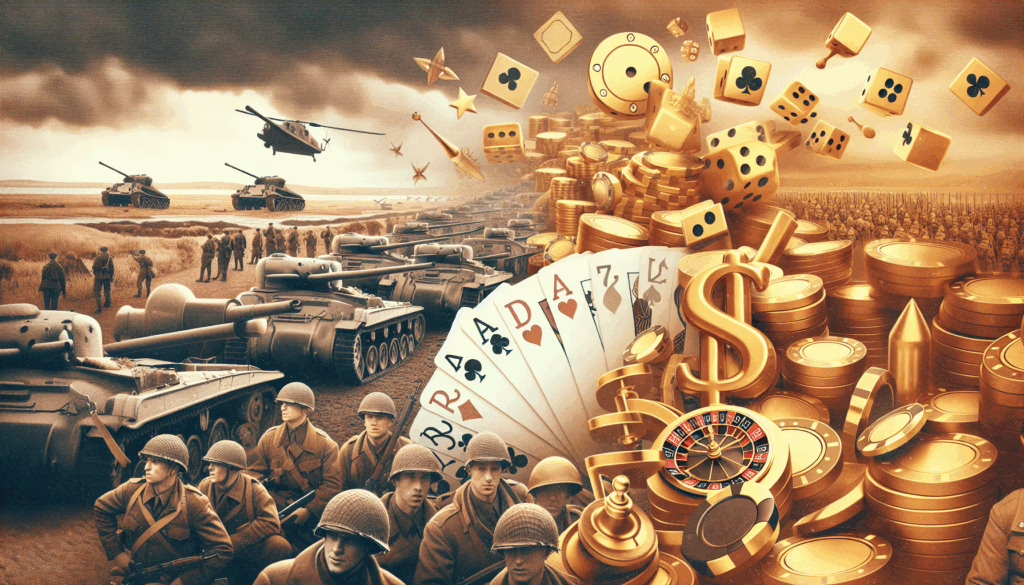
Throughout history, governments have often turned to unconventional sources of revenue to fund military conflicts. One such source, frequently overlooked, is gambling. While not a primary means of finance, gambling has periodically supplemented the financial needs of nations engaged in warfare. As geopolitical tensions rise in the present day, understanding the historical role of gambling in military funding illuminates its potential implications within the broader context of regulatory and market dynamics.
Historically, nations have had to manage extensive financial burdens during wartime. Conventional strategies to address these pressures typically involve increased taxation, issuing government bonds, or securing loans. However, gambling has occasionally provided an additional revenue stream, particularly through lotteries. Dating back to the 17th and 18th centuries, European countries such as Britain utilized lotteries to generate funds for war expenses, a practice that spread across the continent for both civilian and military funding.
In the United States, lotteries played a significant role in the late 18th and early 19th centuries, financing infrastructure such as roads and bridges, which indirectly supported military logistics. This method was politically feasible because participation was voluntary, distinguishing it from the politically sensitive approach of raising taxes.
In modern economic contexts, gambling revenue is categorized among “sin taxes,” along with industries like alcohol and tobacco. These taxes target non-essential spending, making them attractive options for governments needing additional revenue without inciting public discontent. The considerable profits from casinos, sportsbooks, and lottery operators provide substantial contributions to public finances. In times of economic stress or military conflict, this revenue becomes even more crucial.
Ukraine’s recent history offers a contemporary example. Following its re-legalization of gambling in 2020, the country faced new challenges with the onset of conflict in 2022. Military expenditures soared, and Ukraine evaluated all potential revenue avenues, including the nascent gambling sector. Regulatory efforts focused on ensuring compliance and addressing illegal operations, aiming to maximize the industry’s contributions to the national budget.
Russia presents a contrasting scenario where gambling remains tightly regulated, with limited legal venues and stringent online restrictions. However, discussions about potential tax revenues from gambling periodically surface, reflecting a broader interest in securing reliable income during economic or geopolitical pressures.
Beyond governmental budgets, gambling has also found a niche within military life. During World War II, recreational facilities for soldiers often included gaming devices, providing entertainment and funding welfare programs rather than directly financing military operations. This integration underscores gambling’s occasional cultural and social significance within military contexts.
The digital age has further transformed how gambling intersects with global events. Online platforms and prediction markets now allow individuals to wager on a vast array of outcomes, including political and geopolitical developments. While controversial, this form of speculation illustrates the evolving relationship between gambling and international affairs, enabled by technological advancements.
Ethical considerations invariably accompany discussions of gambling revenue in public funding. Proponents argue that such taxes are voluntary, offering a non-compulsory means to support public projects. Conversely, critics caution against excessive reliance on gambling revenue, which might discourage stringent regulation despite potential social issues like gambling addiction. The concern is that public funding derived from gambling essentially capitalizes on individual losses.
Despite these ethical debates, gambling remains a staple in governmental revenue strategies across the globe. Taxes from lotteries, casinos, and sports betting contribute significantly to funding education, infrastructure, and social programs. In times of financial strain, including wartime, these revenues can be pivotal in bridging budgetary gaps, demonstrating the persistent utility of gambling as an auxiliary fiscal resource.
Looking forward, the role of gambling in funding governmental needs is likely to continue, especially as nations face evolving financial challenges. Regulatory bodies and market players must navigate this landscape carefully, balancing revenue generation with ethical oversight and industry compliance. As governments explore these financial avenues, the historical precedent of gambling as a supplementary income source during wartime remains a relevant consideration in shaping future policy directions.

James Miller is an editorial byline used by Casino No Deposits for industry news coverage. Articles published under this byline are summarised from reporting by licensed gambling industry news sources and produced with AI assistance, then published against our editorial rules on accuracy, sourcing and tone. They are not first-hand reporting and do not contain personal player accounts. Our full process, including how bonus listings and ratings are maintained separately by our team, is documented in how we review casinos: https://casinonodeposits.com/how-we-review-casinos/
Topics: Ukraine · United Kingdom · Gambling Taxes · Sports Betting · Responsible Gambling · Financial Results
Looking for somewhere to play? See our current no deposit bonus offers, updated with verified codes and full wagering terms.