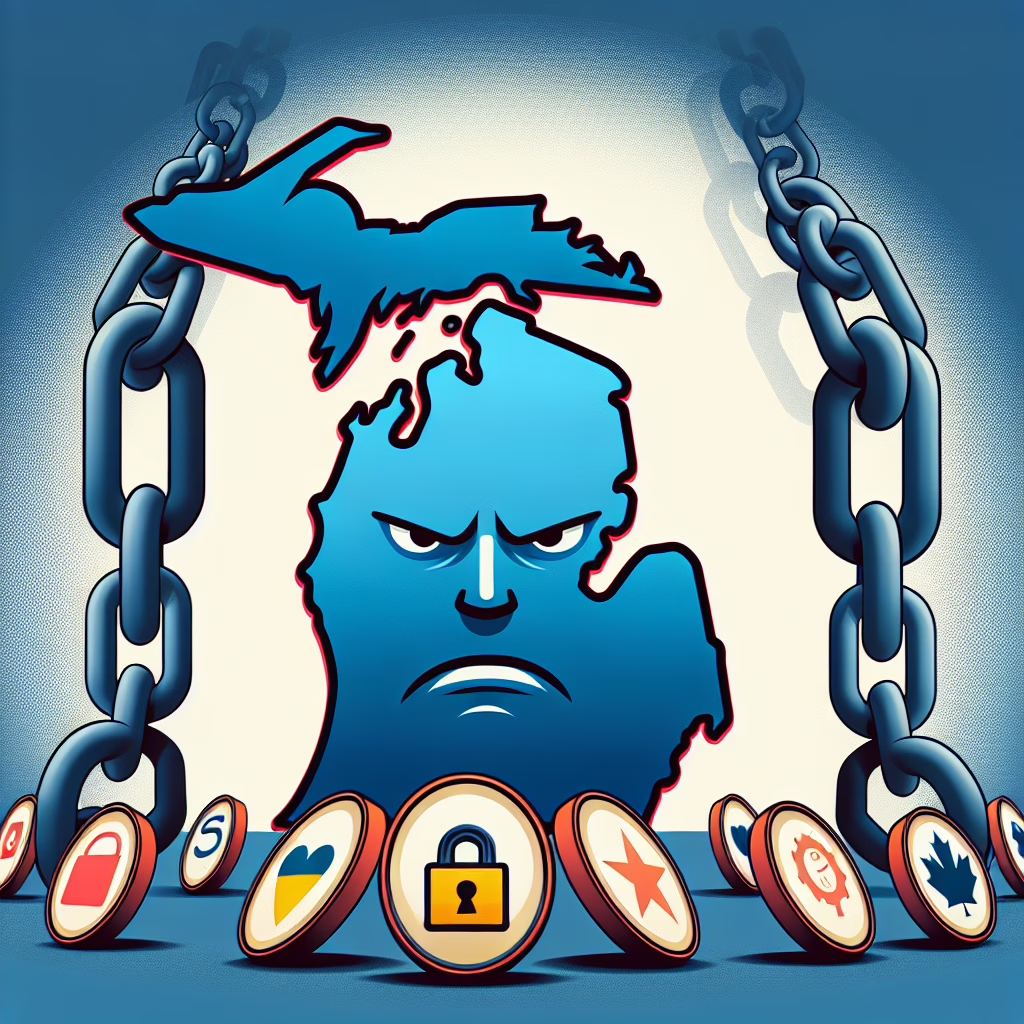
The Michigan Gaming Control Board (MGCB) has taken decisive action against 12 offshore gambling websites that were found to be illegally offering online casino games and sports betting to residents of Michigan. This move marks a significant escalation in the state’s ongoing efforts to safeguard one of the United States’ most lucrative regulated iGaming markets. The regulator has ordered these sites to cease operations targeting Michigan players within 14 days or face further consequences, which could include referral to the Michigan Attorney General.
According to MGCB Executive Director Henry Williams, the crackdown is essential for both consumer protection and the integrity of the market. He articulated the risks posed by illegal online gambling sites, noting that these platforms operate without oversight, thereby exposing players to potential dangers and undermining the security of Michigan’s regulated marketplace. Williams emphasized the board’s commitment to taking relentless and decisive action against unlicensed operators targeting Michigan residents, ensuring that gaming remains lawful and responsible.
The cease-and-desist orders were issued to a dozen offshore operators, including 31 Bets Casino, BetPhoenix, BetWager, Bovada, Cherry Gold Casino, Desert Night Casino, Diamond Sportsbook International (BetDSI), Golden Tiger Casino, Jazz Casino, Looselines, Royal Oak Casino, and WagerWeb. The MGCB stated that these sites were offering gambling services to Michigan residents without the proper licenses, which is a direct violation of state laws governing online sports betting and internet gaming.
Michigan stands as a significant player in the iGaming industry. According to the MGCB’s latest monthly reports, the state’s commercial and tribal internet gaming operators reported $335.7 million in combined gross receipts from iGaming and online sports betting in November 2025. Of this, iGaming gross receipts accounted for $248.4 million, while online sports betting grossed $87.3 million. Such figures underscore the substantial impact illegal offshore activities have on the business interests of licensed operators, suppliers, and the state’s tax revenues. Michigan alone collected $53.0 million in state taxes and payments from iGaming and online sports betting for November.
The MGCB has consistently demonstrated its commitment to enforcement actions that deter unlicensed brands from targeting Michigan residents. This week’s initiative is just one part of a broader enforcement strategy. In July 2025, the MGCB similarly issued cease-and-desist letters to 19 offshore gambling sites unlawfully targeting Michigan, characterizing illegal supply as a grave threat to consumer protections and legal market integrity. Earlier, in May 2025, the board had disclosed cease-and-desist notices to 14 offshore operators, again highlighting breaches of Michigan’s Lawful Sports Betting Act and Lawful Internet Gaming Act.
These actions clearly signal Michigan’s intent to treat offshore-facing enforcement as a core regulatory responsibility. The state’s proactive steps reflect a larger regulatory focus on preventing unlicensed supply from gaining a foothold in the market.
As Michigan’s regulated market continues to grow, so does the allure for offshore operators to exploit this demand. The state’s monthly reports indicate a robust structure with 15 commercial and tribal operators authorized to offer iGaming or online sports betting. However, the success of a regulated market often attracts offshore entities seeking to tap into this lucrative demand without adhering to regulatory requirements. Consequently, U.S. regulators, including those in Michigan, have resorted to repeated cease-and-desist campaigns as a deterrent and a public warning mechanism.
For the sites cited by Michigan, the message was clear: cease targeting Michigan customers within 14 days or prepare for additional enforcement actions. The possibility of extending enforcement beyond operators to other elements of the supply chain, such as marketing channels and payment facilitators, remains uncertain. The MGCB has not taken such steps in this instance, but its ongoing enforcement efforts suggest a continued push to limit the influence of unlicensed operators.
While Michigan is steadfast in its regulatory approach, some industry analysts argue for a more comprehensive strategy that includes educating consumers about the risks of unlicensed gambling. They believe that raising awareness could serve as an additional deterrent, complementing regulatory enforcement. On the other hand, some stakeholders in the industry express concern that overly aggressive enforcement may inadvertently drive consumers to seek out unregulated sites, especially if they perceive such sites as offering better odds or more attractive bonuses.
Ultimately, Michigan’s actions reflect a delicate balance between protecting its regulated market and ensuring that both operators and players adhere to established legal frameworks. As the state continues to navigate these challenges, its approach could serve as a model for other jurisdictions grappling with similar issues in the rapidly evolving iGaming landscape.

James Miller is an editorial byline used by Casino No Deposits for industry news coverage. Articles published under this byline are summarised from reporting by licensed gambling industry news sources and produced with AI assistance, then published against our editorial rules on accuracy, sourcing and tone. They are not first-hand reporting and do not contain personal player accounts. Our full process, including how bonus listings and ratings are maintained separately by our team, is documented in how we review casinos: https://casinonodeposits.com/how-we-review-casinos/
Topics: Michigan · Illegal Gambling · Gambling Taxes · Sports Betting · Online Casino · Enforcement
Looking for somewhere to play? See our current no deposit bonus offers, updated with verified codes and full wagering terms.