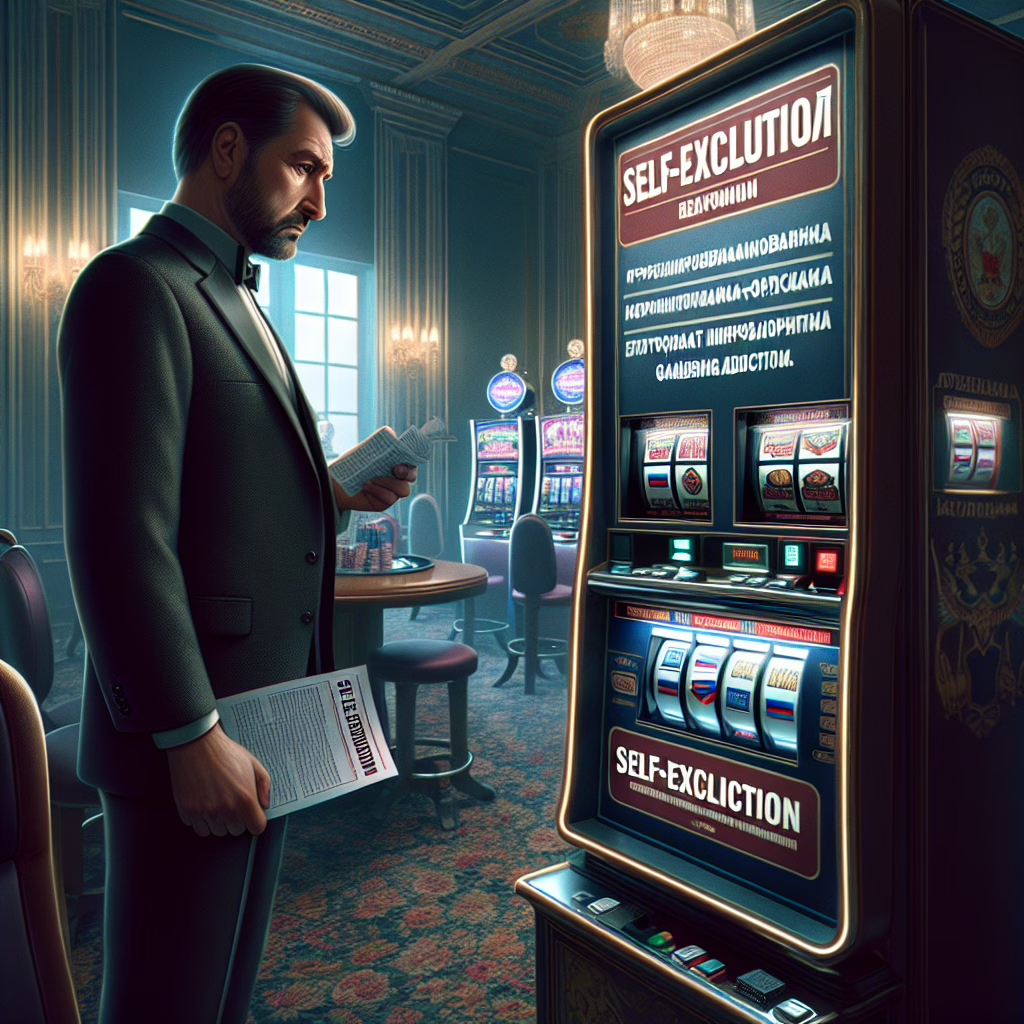
Beginning September 1, 2026, Russian citizens battling gambling addiction will have the ability to place themselves on a national “self-prohibition” list. This initiative will bar registered individuals from placing bets with bookmakers or entering licensed casinos and slot parlors. Managed through Gosuslugi, the Unified Portal of State and Municipal Services, this system provides people across Russia with straightforward access to the registry.
Licensed gambling operators will be mandated to check this database before accepting any wagers, ensuring that those who have opted into the self-prohibition list are prevented from participating in gambling activities. This move signifies a significant step by the Russian government to address the growing concerns over gambling addiction within the country.
Beyond merely blocking access to gambling venues, the self-prohibition measure also introduces stringent restrictions on gambling advertisements. Companies will be prohibited from sending promotional messages to individuals registered on Gosuslugi, reinforcing the protective barrier for those at risk. Moreover, all gambling establishments will be required to display clear information about the self-exclusion program within their premises, ensuring visibility and awareness among patrons. Online platforms operated by gambling firms must also include direct links and explanatory content about the service, reiterating the pathways available for individuals to opt out.
Participants in the self-exclusion program will select their abstinence period, with a minimum duration set at 12 months that cannot be reversed before its conclusion. The gambling regulator will oversee the processing of applications and will disseminate the list of self-excluded individuals to licensed operators nationwide. Such a comprehensive approach is designed to standardize enforcement and prevent circumvention of the system.
Maxim Topilin, chair of the State Duma’s Committee on Economic Policy, emphasized the importance of this measure, describing it as a crucial tool “for people with gambling addictions and their families,” offering them a chance to “control their betting habits.” The legislation is not without its enforcement mechanisms; lawmakers are examining options for stricter penalties to ensure compliance. Proposed plans involve fines of up to $360 for employees who allow excluded individuals to gamble, and penalties reaching $1,200 for employers who fail to adhere to the regulations.
The Ministry of Health has underscored the urgency of these measures by pointing out that thousands of Russians seek help for gambling-related issues each year. This highlights the necessity of tightening restrictions on both advertising and access to gambling services as the self-prohibition system is implemented.
In contrast to this viewpoint, some industry experts suggest that while the self-exclusion list is a positive step, there is a need for more comprehensive support systems, including counseling and rehabilitation services. They argue that addressing gambling addiction requires a multifaceted approach, involving psychological support and financial counseling, alongside legislative measures.
Critics also raise concerns about the potential for a black market in gambling, where unregulated operators might exploit individuals who are not adequately supported by the legal system. They suggest that the government should also focus on strengthening the regulatory framework to deter illegal gambling activities that could undermine the effectiveness of the self-exclusion program.
The Russian government’s initiative to allow individuals to self-exclude from gambling activities reflects a growing recognition of the social and economic challenges posed by gambling addiction. This legislative effort is part of a broader strategy to mitigate the negative impacts of gambling and to foster a healthier environment for citizens. By integrating technology with regulatory oversight, the government seeks to provide a robust solution to a complex problem, ensuring that those in need have the tools and resources necessary to make informed decisions about their gambling behavior.
As the implementation date approaches, stakeholders across the gambling industry are preparing to meet the new requirements. This involves upgrading their systems to ensure compliance with the self-exclusion list, retraining staff to recognize and address potential breaches, and revising marketing strategies in accordance with the new advertising restrictions.
While the self-exclusion initiative marks a significant advancement in Russia’s approach to managing gambling addiction, ongoing evaluation and adaptation will be crucial. The success of this measure will depend not only on the enforcement of regulations but also on the availability of support services and public education campaigns to raise awareness about the risks associated with gambling.
Ultimately, the introduction of a national self-exclusion list represents a proactive attempt by Russia to address a critical public health concern, balancing the interests of the gambling industry with the need to protect vulnerable populations from the harms of addiction. As this policy unfolds, it may serve as a model for other countries grappling with similar challenges, demonstrating the potential benefits of combining regulation with accessible support systems in the fight against gambling addiction.

James Miller is an editorial byline used by Casino No Deposits for industry news coverage. Articles published under this byline are summarised from reporting by licensed gambling industry news sources and produced with AI assistance, then published against our editorial rules on accuracy, sourcing and tone. They are not first-hand reporting and do not contain personal player accounts. Our full process, including how bonus listings and ratings are maintained separately by our team, is documented in how we review casinos: https://casinonodeposits.com/how-we-review-casinos/
Topics: Illegal Gambling · Responsible Gambling · Slots · Enforcement · Gambling Regulation
Looking for somewhere to play? See our current no deposit bonus offers, updated with verified codes and full wagering terms.