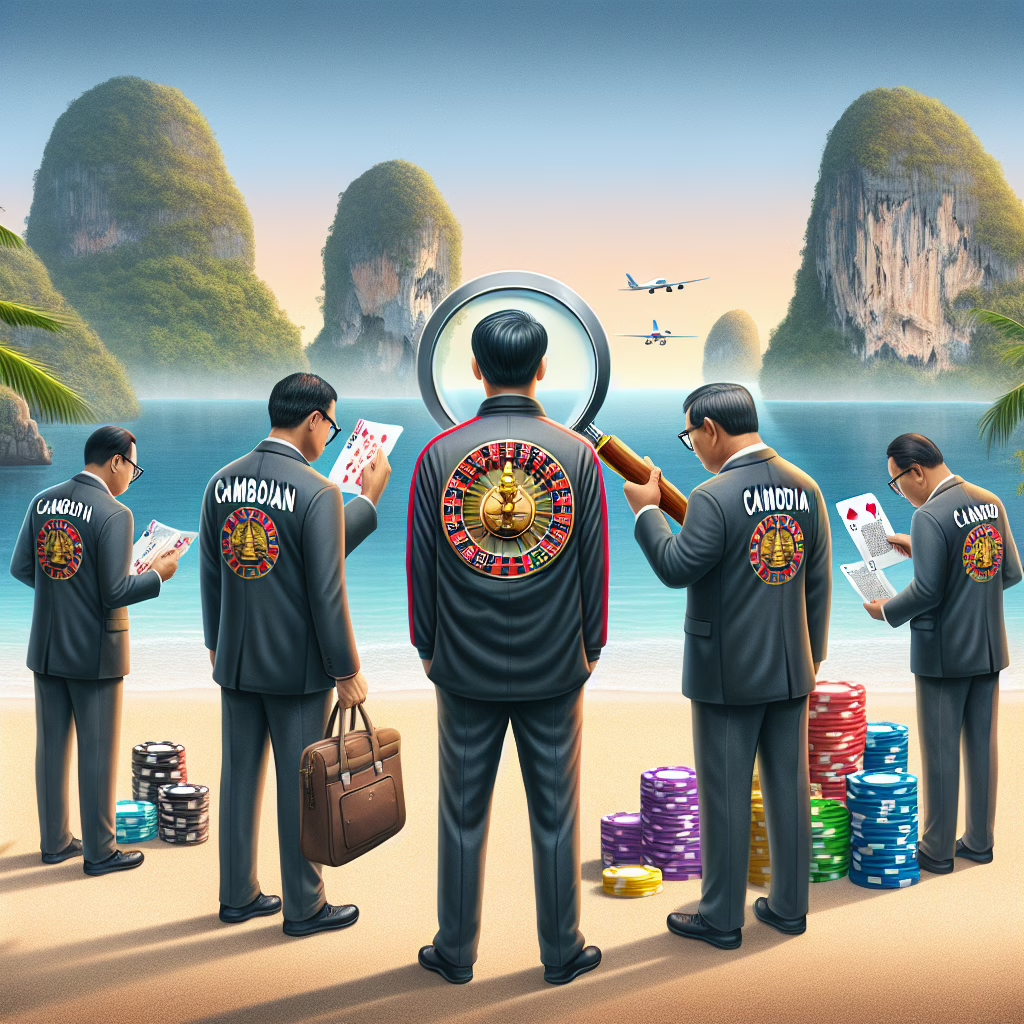
On December 8, during the official flag-raising ceremony at the 33rd Southeast Asian Games held in Bangkok’s Indoor Stadium Hua Mark, an unexpected controversy emerged involving the Cambodian team’s jackets. These jackets prominently featured the logo of NagaWorld, a major casino resort based in Phnom Penh, which quickly drew attention and scrutiny in Thailand, a country where most forms of gambling are prohibited.
In Thailand, the sight of a casino-related logo at a public sporting event is not just unusual—it is potentially illegal. The country’s strict gambling laws extend to advertising, where even indirect promotion of gambling businesses can be considered a violation. This starkly contrasts with Cambodia, where the branding is completely legal and a common sight.
The incident gained rapid traction online as images of the jackets spread across social media, leading to a wave of public concern. Thai citizens questioned the legality of displaying such a logo during an official event, prompting the Sports Authority of Thailand (SAT) to take action. SAT, alongside the Department of Provincial Administration, initiated a formal review to determine whether the visible branding on the Cambodian team’s jackets constituted illegal advertising under Thai law.
The investigation highlights a recurring challenge faced by international sports events: the complexities of sponsorship agreements across different legal jurisdictions. While NagaWorld is a legitimate commercial partner in Cambodia, its visibility in Thailand during a high-profile event places it in a potentially prohibited category. The Cambodian athletes wore these jackets as part of their standard team gear, not intending to infringe on Thai regulations. However, the context of the event transformed a routine detail into a significant issue.
Thai officials have been careful to limit the investigation’s scope, focusing solely on the jackets worn during the ceremony. This cautious approach aims to prevent the situation from escalating into a broader diplomatic dispute, especially during such an important regional event. Officials stress that the focus is on achieving legal clarity rather than stirring conflict.
Remarkably, this investigation was not triggered by a formal complaint from regulatory authorities but rather by the vigilant eyes of the public on social media. This underscores the power of digital platforms in shaping regulatory actions today. Every aspect of branding, from logos to uniform designs, is subject to immediate and intense public scrutiny.
As it stands, there is no set timeline for the conclusion of the review. The outcomes remain uncertain—if the branding is deemed to have violated Thai advertising laws, further action could follow. Conversely, if it is found to be within legal boundaries, the matter may quietly dissipate. This situation underscores the ongoing challenges faced by international sporting events in navigating the intricate web of national laws within a commercialized global landscape.
The incident serves as a reminder that despite the spirit of regional cooperation and unity that such events champion, the reality of differing national laws and the impact of commercial interests remain potent forces. A single logo, in this case, has emphasized the importance of understanding and respecting these legal boundaries, even as athletes from different nations come together on the sporting stage.

James Miller is an editorial byline used by Casino No Deposits for industry news coverage. Articles published under this byline are summarised from reporting by licensed gambling industry news sources and produced with AI assistance, then published against our editorial rules on accuracy, sourcing and tone. They are not first-hand reporting and do not contain personal player accounts. Our full process, including how bonus listings and ratings are maintained separately by our team, is documented in how we review casinos: https://casinonodeposits.com/how-we-review-casinos/
Topics: Thailand · Gambling Advertising · Land-Based Casinos · Gambling Regulation
Looking for somewhere to play? See our current no deposit bonus offers, updated with verified codes and full wagering terms.
 4.6/5
4.6/5