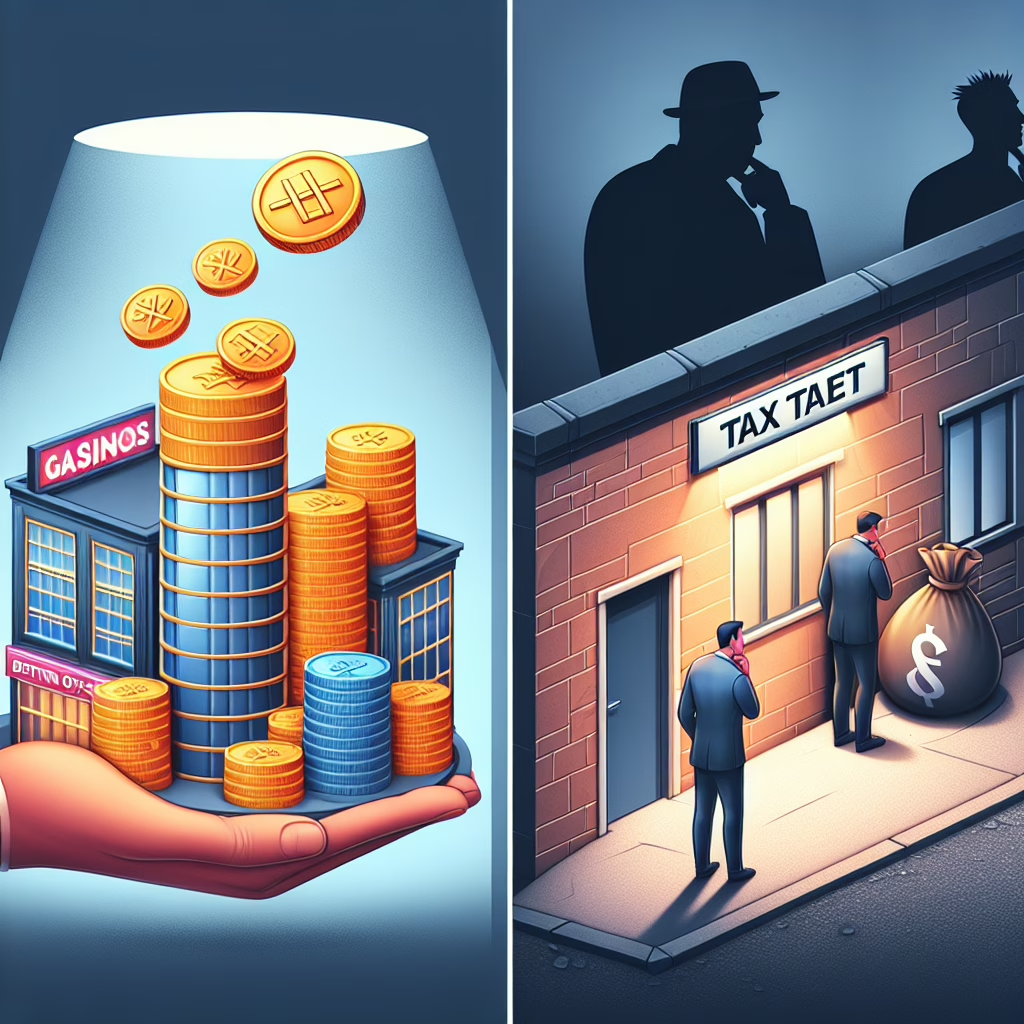
In November, Chancellor Rachel Reeves announced a significant increase in taxes on the UK gambling industry, sparking concerns from industry leaders. The plan includes raising the Remote Gaming Duty on online casino products from 21% to 40% starting in April 2026, and implementing a new 25% remote General Betting Duty on online sports bets beginning in April 2027. The Treasury estimates these measures will generate an additional £1.1 billion in gambling taxes by the 2029-30 fiscal year. However, critics argue that these changes may inadvertently boost unlicensed gambling activities rather than increase tax revenue.
The Betting and Gaming Council (BGC), representing much of the UK’s regulated gambling sector, disputes the government’s revenue target. They caution that illegal gambling could potentially double as a result of these tax hikes. The BGC cites the Office for Budget Responsibility (OBR), which released a report indicating that the anticipated higher taxes might actually reduce the projected revenue by approximately one third. The OBR noted that as operators adjust to the new taxes by offering worse odds or increasing margins, customers might migrate towards untaxed, unregulated options, thereby reducing the expected fiscal gains.
The government’s messaging emphasizes the anticipated revenue increase of £1.1 billion, framing the tax hike as a way for online betting firms to contribute fairly while supporting welfare reforms. However, the BGC warns that this approach might risk not only the financial health of the industry but also job security. Using analysis from EY, the BGC suggests that nearly 17,000 jobs could be at risk across the online betting and gaming sectors due to the tax changes. Additionally, the BGC estimates that more than £6 billion in stakes could shift to the black market, representing a 140% rise in illegal betting activities.
Grainne Hurst, the BGC’s chief executive, stated the government cannot ignore the potential damage highlighted by its own forecasts. She argued that the higher tax rates would render the licensed market less competitive, inadvertently favoring unlicensed operators who avoid taxes and offer no consumer protection. Currently, the regulated gambling sector contributes significantly to the UK economy, adding around £6.8 billion in gross value annually, supporting over 109,000 jobs, and generating approximately £4 billion in taxes, including contributions to racing, sports, and tourism. The BGC warns that the new tax policy threatens to undermine this economic contribution just as other countries are courting investment from betting and gaming firms.
A separate study by PwC commissioned by the BGC supports these concerns, showing that high tax rates in countries such as France, Sweden, and the Netherlands have led to a shift towards offshore operators. In contrast, markets like Spain and Denmark, with more moderate tax regimes, have retained most gambling activity within licensed channels. Industry leaders caution that increasing the Remote Gaming Duty to 40% will place the UK above many of its European counterparts, potentially exacerbating channelization problems as seen in the Netherlands, where a tax increase led to more illegal gambling and lower-than-expected government revenue.
Critics argue that the UK’s policy approach might be inconsistent. On one hand, the government is tightening regulations around advertising, affordability checks, and product design to mitigate gambling-related harm. On the other hand, it is relying on increased tax revenue from the same activities. This contradictory stance is likely to face further challenges, as the OBR has already predicted that the behavior of players and firms could diminish the expected financial outcomes.
Operators have expressed concern about the distributional impacts of the tax changes. Given that 90% of the additional duty is expected to be passed on to consumers, the financial burden will fall on the most active bettors and casino players. This group, which safer-gambling policies aim to protect, might find themselves attracted to riskier, offshore options offering better odds and lower costs.
The BGC is calling for the Treasury and the Department for Digital, Culture, Media and Sport to engage in discussions with industry representatives, independent analysts, and the Gambling Commission to reassess the proposed tax package. Grainne Hurst emphasized the need for an evidence-based dialogue that weighs the fiscal goals against potential job losses and shifts to unregulated markets. According to EY’s findings, a less aggressive tax structure that narrows the gap with other regulated markets could ensure more sustainable revenue in the long term.

Sarah Thompson is an editorial byline used by Casino No Deposits for industry news coverage. Articles published under this byline are summarised from reporting by licensed gambling industry news sources and produced with AI assistance, then published against our editorial rules on accuracy, sourcing and tone. They are not first-hand reporting and do not contain personal player accounts. Our full process, including how bonus listings and ratings are maintained separately by our team, is documented in how we review casinos: https://casinonodeposits.com/how-we-review-casinos/
Topics: Denmark · France · Spain · Netherlands · Sweden · Executive Appointments
Looking for somewhere to play? See our current no deposit bonus offers, updated with verified codes and full wagering terms.
 4.6/5
4.6/5