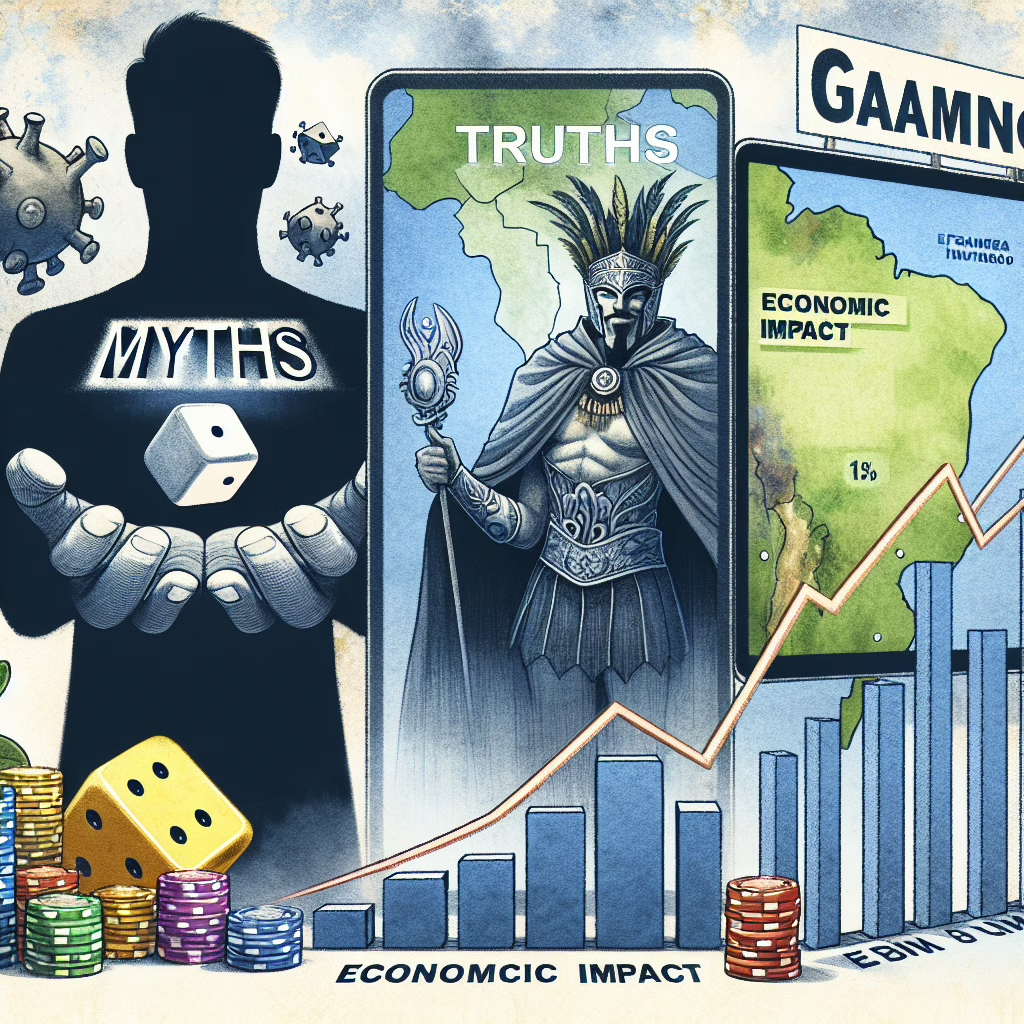
In 2025, the Free Market Parliamentary Front, known as the “Freedom Caucus,” released a pivotal report titled “Myths and Truths About the Online Betting Market.” Recently distributed in Brazil’s National Congress, the document aims to clarify misconceptions surrounding the taxation, revenue, and economic influence of sports betting and online gaming in Brazil. This comes at a critical moment as legislative debates intensify regarding the regulation of Brazil’s burgeoning iGaming industry. The FPLM positions itself as a vital link among lawmakers, the private sector, academia, and civil society, advocating for a balanced approach between free enterprise and effective regulatory oversight.
Central to the report is addressing the widespread belief that “the betting sector doesn’t pay taxes.” Contrary to this, the FPLM highlights that regulated operators in Brazil face some of the highest tax burdens across the entertainment industries, potentially exceeding 50% of their gross revenue. These operators endure multiple taxation layers, including a 26% tax on Gross Gaming Revenue, which encompasses 9.25% PIS/Cofins, 2–5% ISS, and 12% gaming tax. Additionally, they face a 34% tax on net profit via Corporate Income Tax (IRPJ) at 25% and Social Contribution on Net Profit (CSLL) at 9%. Furthermore, they must pay a license fee of R$30 million for authorization and up to R$2 million in regulatory supervision fees.
This framework has already allowed the betting industry to make a considerable financial contribution to the country. By September 2025, Brazil’s Ministry of Finance had recorded revenue of R$6.85 billion from the sector, with forecasts suggesting it could surpass R$10 billion by year-end. However, the FPLM cautions against increasing taxes on the regulated sector, warning that higher taxes could paradoxically reduce government revenue. They argue that international experiences have shown excessive taxation drives consumers to illegal betting markets, thus reducing tax collection and exposing Brazilian bettors to unregulated environments with inadequate assurances of fairness and player protection.
The report also tackles the myth that “authorized online casinos are rigged.” The FPLM asserts that licensed betting houses use games certified by laboratories accredited by the Ministry of Finance, which ensures randomness and a minimum return-to-player of 85%. In contrast, illegal operators lack regulation and cannot provide transparency or legitimacy in their gaming outcomes.
A significant concern raised in the report is that 51% of Brazil’s betting activity still transpires in the illegal market, resulting in an estimated annual loss of R$10.8 billion in potential tax revenue for the federal government. To combat this, the FPLM stresses the importance of eliminating illegal operators, enhancing public education on responsible gaming, and improving regulatory frameworks to offer greater transparency and security for players.
Moreover, the report highlights that regulating online betting can enhance sports integrity. Licensed operators are members of sports integrity organizations and must cooperate with the Public Prosecutor’s Office and the Ministry of Finance in cases of match-fixing or fraud. Betting sponsorship deals have become crucial revenue sources for Brazilian football, with all 20 Série A clubs and nearly every Série B team having a betting company as a key sponsor in 2025. These partnerships have become integral to the financial health and youth development projects of these clubs.
The FPLM concludes by warning of the dangers posed by the underground market, which has become a conduit for money laundering and organized crime financing. Unlike regulated operators, illegal platforms do not report financial transactions to oversight entities such as COAF or the Ministry of Finance, complicating the tracking of illicit activities. The way forward, according to the FPLM, involves adopting transparent and symmetric regulation that safeguards economic freedom, ensures player safety, and promotes fair competition within the betting industry.
While the report presents a clear endorsement of regulation, a counterpoint comes from some stakeholders who argue that regulation might not fully address the underlying social issues associated with gambling, such as addiction and financial ruin. They suggest that alongside regulatory measures, there should be increased investment in prevention and treatment programs for problem gamblers to mitigate the potential negative effects on society.
In conclusion, as Brazil’s iGaming market continues to expand, the discourse surrounding its regulation and economic impact remains complex and multifaceted. The Free Market Parliamentary Front’s report provides valuable insights into the realities of the sector while advocating for a regulatory framework that balances economic growth with social responsibility. As Brazil navigates these challenges, the focus will undoubtedly remain on crafting policies that protect consumers, support economic development, and ensure a fair and transparent gaming environment.

Sarah Thompson is an editorial byline used by Casino No Deposits for industry news coverage. Articles published under this byline are summarised from reporting by licensed gambling industry news sources and produced with AI assistance, then published against our editorial rules on accuracy, sourcing and tone. They are not first-hand reporting and do not contain personal player accounts. Our full process, including how bonus listings and ratings are maintained separately by our team, is documented in how we review casinos: https://casinonodeposits.com/how-we-review-casinos/
Topics: Gambling Advertising · Brazil · Illegal Gambling · Licensing · Gambling Taxes · Sports Betting
Looking for somewhere to play? See our current no deposit bonus offers, updated with verified codes and full wagering terms.
 4.6/5
4.6/5