
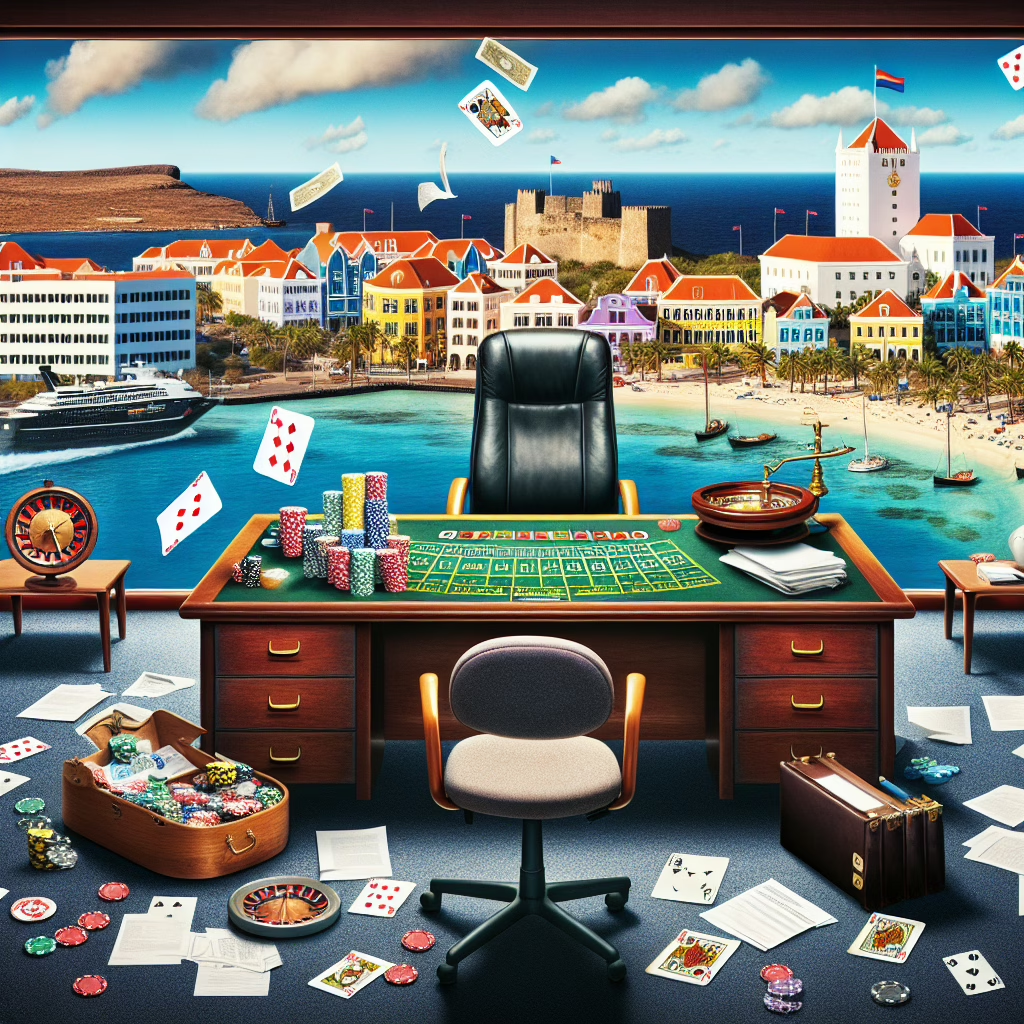
In mid-September, the entire Board of Commissioners of Curaçao’s gambling regulatory body, the Curaçao Gaming Authority (CGA), unexpectedly resigned, leaving a significant leadership vacuum in the organization. This development raises questions about who now governs the burgeoning gaming industry on the island, which is a significant contributor to its economy.
The timing of this mass resignation is particularly precarious, as political tensions within the Curaçao government are escalating. It appears that Prime Minister Gilmar Pisas has assumed direct control of the CGA. Although the authority officially falls under the jurisdiction of Finance Minister Javier Silvania, the Prime Minister’s recent involvement suggests a strategic shift in control.
This shift in power coincides with a period of political instability for Minister Silvania, who has faced substantial internal criticism from within his MFK party amid allegations of corruption and misconduct. These challenges have weakened his political clout, and the current situation further diminishes his influence over the gaming sector, one of the island’s most financially vital areas.
Curaçao’s gaming industry brings in approximately 40 million guilders annually, making it a major source of public revenue. The CGA was established in July, succeeding the Gaming Control Board (GCB), with the aim of modernizing and strengthening gaming regulations. These reforms were part of Silvania’s broader economic strategy. However, the abrupt leadership void casts doubt on the continuation and effectiveness of these plans.
Adding to the uncertainty, the CGA has yet to be registered with Curaçao’s Chamber of Commerce, despite publicly presenting itself as a foundation. Its website still claims it operates under the Minister of Finance’s purview, yet all official communications are reportedly now routed through the Prime Minister’s Office.
The resignation of commissioners Shelwyn Salesia, Robert Reijnaert, and Ildefons Simon has left the CGA without a supervisory board. The government has not yet announced replacements, nor has it provided a timeline for appointing new commissioners.
Given the absence of clear leadership, the future regulatory environment for gaming in Curaçao is uncertain. The recent reshuffling of authority, coupled with political maneuvering, has left both local and international gaming operators in a state of flux, unsure of who precisely controls regulatory oversight on the island.
One observer speculated that this void in leadership and oversight could deter potential investors and create operational challenges for current gaming operators, who now find themselves navigating an unpredictable regulatory landscape.
However, there is an alternative perspective to consider. Some industry insiders believe that the Prime Minister’s involvement could bring a more streamlined and efficient regulatory process. They argue that consolidating oversight under a central authority could potentially reduce bureaucratic delays and facilitate more responsive governance.
Still, the lack of transparency and the sudden upheaval have sparked concern among stakeholders. Without a clear direction or leadership within the CGA, there is a risk that the reforms intended to ensure transparency and integrity in the gaming sector might stall.
The situation in Curaçao reflects a broader trend seen in other jurisdictions where political volatility has resulted in shifts in regulatory frameworks. Such changes often lead to uncertainty in industries that rely on consistent and clear regulatory oversight to operate effectively.
As the island navigates this critical period, the international gaming community watches closely, aware that the outcome could have implications beyond Curaçao’s borders. The need for stable and transparent governance in the gaming industry is paramount, not only for maintaining investor confidence but also for ensuring that gaming operations remain compliant with international standards.
In conclusion, Curaçao’s gaming authority finds itself at a crossroads amid political upheaval and leadership change. While the Prime Minister’s involvement could bring about more centralized and potentially efficient oversight, the current lack of clarity and leadership poses significant challenges for the island’s gaming industry. The situation serves as a reminder of the complex interplay between politics and industry regulation, and its potential impacts on economic sectors that play crucial roles in national economies.

James Miller is an editorial byline used by Casino No Deposits for industry news coverage. Articles published under this byline are summarised from reporting by licensed gambling industry news sources and produced with AI assistance, then published against our editorial rules on accuracy, sourcing and tone. They are not first-hand reporting and do not contain personal player accounts. Our full process, including how bonus listings and ratings are maintained separately by our team, is documented in how we review casinos: https://casinonodeposits.com/how-we-review-casinos/
Topics: Curacao · Financial Results · Gambling Regulation
Looking for somewhere to play? See our current no deposit bonus offers, updated with verified codes and full wagering terms.
 4.6/5
4.6/5