
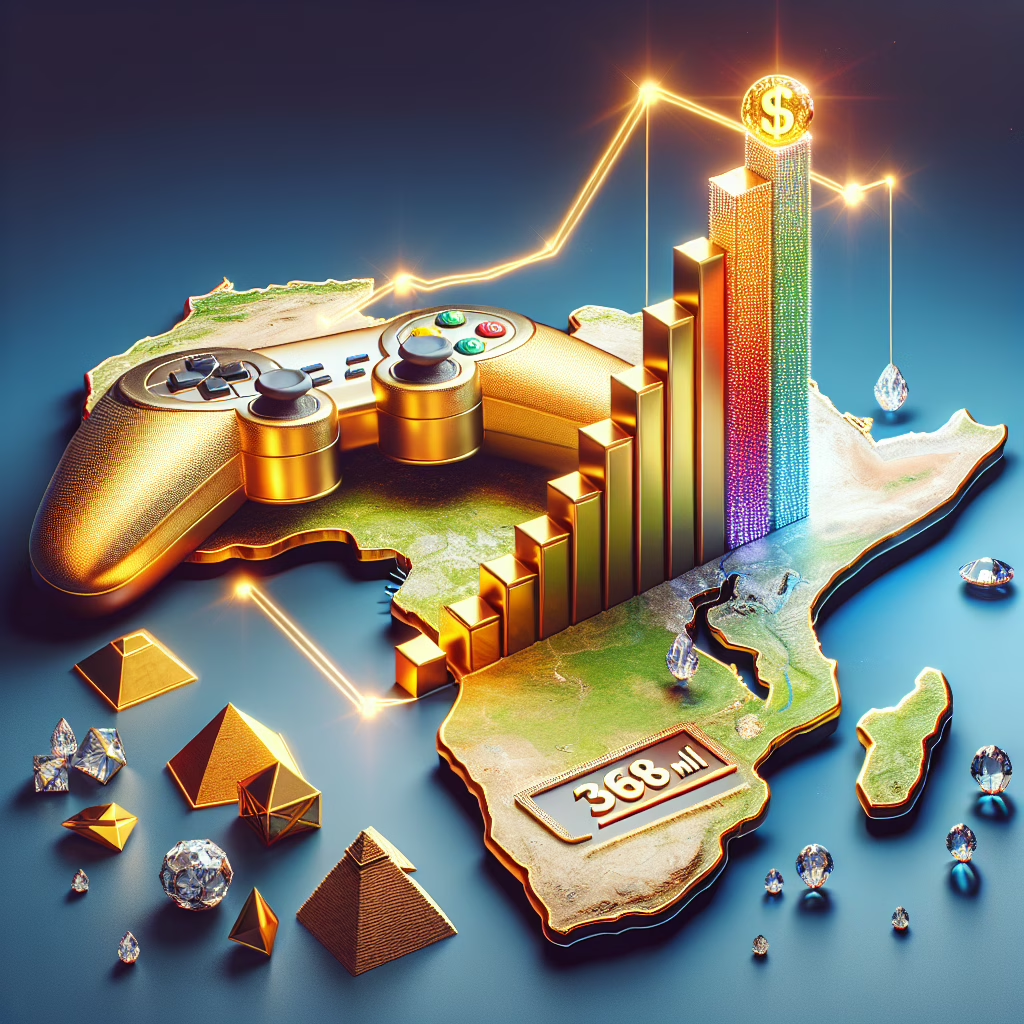
In a significant development for Africa’s gaming industry, Egypt is poised to become the continent’s largest gaming market by revenue in 2025. A recent report by Maliyo Games estimates that Egypt will generate approximately $368 million in gaming revenue next year, surpassing other African nations in financial terms and boasting a vibrant community of over 20 million players.
The shift towards Egypt highlights a strategic approach that emphasizes monetization over sheer player numbers. Although Nigeria continues to have the largest player base with 46.5 million gamers, its annual revenue remains between $250 million and $300 million. This discrepancy between the number of players and revenue underscores the potential for better monetization strategies, positioning Egypt as a leader in this regard.
South Africa follows closely behind Egypt with 26.5 million gamers contributing $278 million in revenue. Meanwhile, Kenya and Côte d’Ivoire, though smaller in scale, are emerging players in the gaming arena, generating $46 million and $31.9 million, respectively. Collectively, these markets contribute to a booming $2.1 billion African gaming economy, supported by nearly 349 million active players.
The rise of mobile gaming is a key driver of this transformation across Africa. Smartphones have become the primary platform for gaming, fundamentally altering how individuals play, pay, and interact. In Nigeria, approximately 90% of gamers use mobile devices, a trend mirrored in Egypt, where improvements in internet infrastructure and digital payments are catalyzing growth. This burgeoning mobile landscape is attracting developers, investors, and esports organizers eager to engage with a young, digitally savvy audience.
Esports is carving out a significant niche within Africa’s gaming landscape, transforming competitive play into a cultural phenomenon. The esports market is currently valued at around $40 million and is projected to reach $60 million by 2025. South Africa leads the esports charge with annual revenues between $7 million and $10 million and a viewership of approximately 3 million people. Egypt is not far behind, generating $5 million to $7 million in esports revenue and attracting 6 million viewers.
Despite its large population, Nigeria ranks third in esports revenue, earning between $3 million and $6 million with an audience of up to 3 million. Kenya and Côte d’Ivoire are nurturing smaller but passionate esports communities, further diversifying the continent’s gaming culture.
The rapid growth of Africa’s gaming sector is a testament to the innovation and determination of its pioneers. As Hugo Obi, the founder of Maliyo Games, reflects, Africa’s gaming evolution is fueled by a deep-rooted desire to connect, create, and compete. He believes that digital and interactive spaces are becoming vital avenues for community building and personal expression.
Egypt’s rise as a gaming powerhouse is a narrative about the power of innovation, ambition, and accessibility. While Nigeria may lead in player numbers, Egypt’s focus on strategic growth and mobile adoption demonstrates that the real potential lies in turning gaming into a robust industry. As Africa’s gaming market expands beyond $2 billion, the future will be shaped by those who can blend scale with creativity, whether they are established players or daring innovators.
This dynamic environment raises the pressing question of who will drive Africa’s gaming industry to the next level. Will it be the countries with the most players, or those that leverage bold, creative approaches to redefine gaming on the continent? As the gaming landscape continues to evolve, all eyes will be on Egypt and its role in steering Africa towards a vibrant digital future.

erik is an editorial byline used by Casino No Deposits for industry news coverage. Articles published under this byline are summarised from reporting by licensed gambling industry news sources and produced with AI assistance, then published against our editorial rules on accuracy, sourcing and tone. They are not first-hand reporting and do not contain personal player accounts. Our full process, including how bonus listings and ratings are maintained separately by our team, is documented in how we review casinos: https://casinonodeposits.com/how-we-review-casinos/
Topics: Kenya · Nigeria · South Africa · Esports Betting · Financial Results · Enforcement
Looking for somewhere to play? See our current no deposit bonus offers, updated with verified codes and full wagering terms.
 4.6/5
4.6/5