
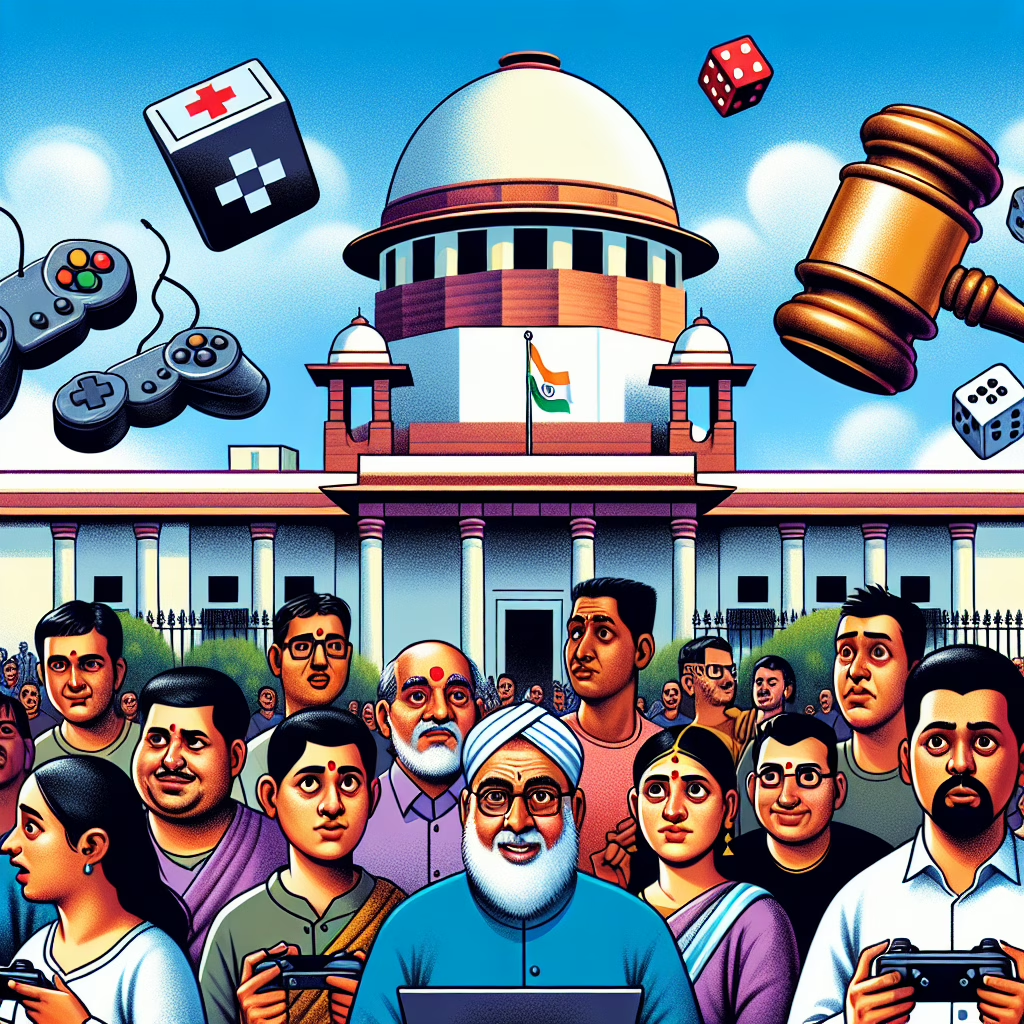
The Supreme Court of India is set to hear consolidated petitions challenging the Promotion and Regulation of Online Gaming Act, 2025, on November 4. Passed swiftly by parliament in August 2024, the law came into effect on January 1, 2025, banning all online games involving real money, including casinos, fantasy sports, esports, and poker. This decision has sent shockwaves through the burgeoning online gaming industry in India.
Legal Challenges and Court Consolidation
Numerous petitions challenging the law have been filed across the country in high courts located in Karnataka, Madhya Pradesh, and Delhi. The Ministry of Electronics and Information Technology has requested that these cases be moved to the Supreme Court to prevent conflicting judgments and ensure legal clarity. This move aims to streamline the judicial process and address the industry’s concerns in a single, authoritative forum.
Scope and Controversy Surrounding the Act
The Promotion and Regulation of Online Gaming Act, 2025, criminalizes the operation and participation in online games for financial gain. It also outlaws related monetary transactions and advertising. Violators face fines or imprisonment of up to three years. The inclusion of skill-based games, such as fantasy sports and esports, has sparked significant opposition from operators. They argue that the ban infringes upon Article 19(1)(g) of the Indian Constitution, which guarantees citizens the right to practice any profession or carry out any occupation, trade, or business.
Government Justifications and Industry Impact
The legislation was enacted with remarkable speed, passing by voice vote and receiving presidential assent within a day. This rapid process surprised many in the industry and has led to substantial disruptions in India’s large and growing online gaming market. Legal experts suggest that the outcome of this legal battle will be pivotal in shaping the future regulatory framework for online gaming and gambling in India.
Judicial Proceedings and Broader Implications
The Supreme Court’s decision to consolidate these cases reflects careful deliberation by Justices J.B. Pardiwala and K.V. Viswanathan. Senior counsel representing the petitioners advocated for a joint hearing to resolve the matters efficiently. The hearing has garnered significant attention from industry stakeholders, regulators, and legal analysts due to its potential impact on India’s digital gaming ecosystem.
The upcoming hearing is seen as a critical juncture in balancing consumer protection, regulatory oversight, and the economic contributions of online gaming. Many in the industry are keenly awaiting the Supreme Court’s interpretation of whether the ban aligns with constitutional rights and how government policy will shape the future of online gaming.
Industry Concerns and Advocacy
Industry leaders have expressed considerable concern over the sweeping nature of the ban, particularly given the economic potential of online gaming in providing employment and fostering innovation. They argue that a blanket prohibition could stifle entrepreneurial spirit and deny India a chance to lead in a thriving global market. It is suggested that a more nuanced regulatory approach could protect consumers while allowing the industry to flourish under clear and fair guidelines.
An industry expert remarked that the ban might be counterproductive, pushing gaming activities underground where regulation and consumer protection are nonexistent. This perspective emphasizes the need for a balanced approach that safeguards consumers without impeding economic growth.
Counterpoint: Government’s Rationale
On the other hand, government officials argue that the ban is necessary to curb growing addiction, financial exploitation, and negative social impacts associated with gambling. They assert that the law is intended to protect vulnerable populations from the adverse effects of unregulated gaming, citing instances of financial ruin and social discord as justifications for the stringent measures.
Future Directions and Anticipations
As the Supreme Court prepares to adjudicate this contentious issue, all eyes are on how it will balance the competing interests of economic development, individual rights, and social welfare. The outcome will likely set a precedent for how India navigates the complexities of regulating digital spaces in a rapidly evolving technological landscape.
In anticipation of the hearing, stakeholders are actively engaging with policymakers to advocate for a regulatory regime that acknowledges the industry’s potential while addressing legitimate concerns. The Supreme Court’s ruling could either pave the way for a more liberalized and structured approach to online gaming or reinforce a restrictive stance that prioritizes caution over innovation.
As November 4 approaches, the online gaming community, legal experts, and government officials await a decision that will have far-reaching implications not only for the industry but also for the broader question of digital freedoms and economic policy in India.

Sarah Thompson is an editorial byline used by Casino No Deposits for industry news coverage. Articles published under this byline are summarised from reporting by licensed gambling industry news sources and produced with AI assistance, then published against our editorial rules on accuracy, sourcing and tone. They are not first-hand reporting and do not contain personal player accounts. Our full process, including how bonus listings and ratings are maintained separately by our team, is documented in how we review casinos: https://casinonodeposits.com/how-we-review-casinos/
Topics: India · Esports Betting · Poker · Enforcement · Gambling Regulation
Looking for somewhere to play? See our current no deposit bonus offers, updated with verified codes and full wagering terms.
 4.6/5
4.6/5