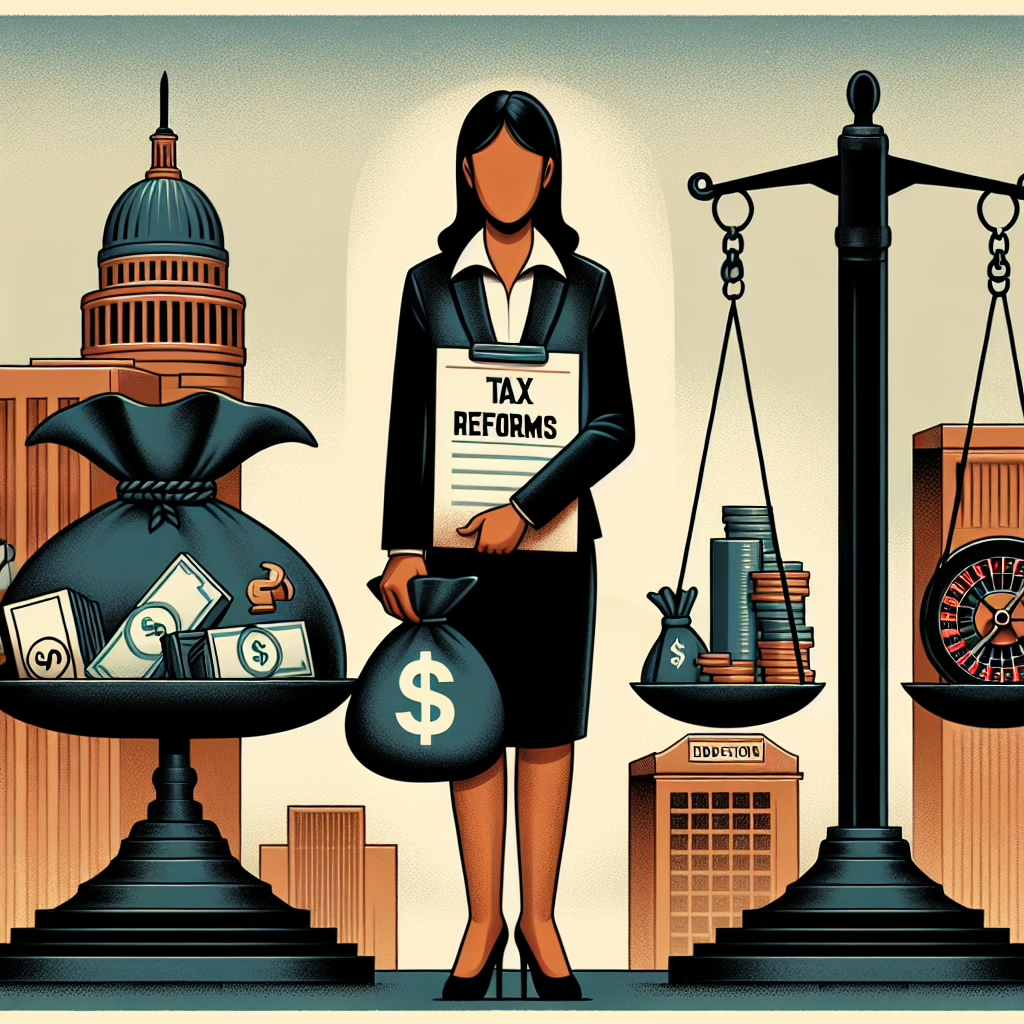
Guilherme Boulos, newly appointed as Brazil’s Minister of the General Secretariat of the Presidency, immediately stirred the political landscape with a bold proposition to increase taxes on the ultra-wealthy and betting companies. This announcement was made during his inaugural address at the Palácio do Planalto. His speech underscored the government’s strategy of using these measures as tools to bolster public finances and mitigate income inequality, aiming to address Brazil’s long-standing economic disparities.
Boulos challenged opposition lawmakers who have resisted such tax reforms, suggesting their stance contradicts their professed commitment to the welfare of ordinary Brazilians. “The question remains,” he noted, “why some continue to oppose measures that would close the financial gaps endemic in our society.” His comments reflect the growing debate around economic and regulatory policies in Brasília.
In addition to fiscal reforms, Boulos emphasized the need to revisit labor laws, particularly criticizing the “6×1” work schedule, which mandates six workdays for every one day off. This system, he argued, unfairly burdens low-income workers and demands a revision to ensure more equitable conditions across the workforce. This stance aligns with President Luiz Inácio Lula da Silva’s broader social and economic agenda, focusing on creating fair labor practices and supporting Brazil’s working population.
Boulos also highlighted the administration’s dedication to promoting democratic values. His office plans to foster open communication across political and social sectors but will remain cautious of groups perceived as threats to Brazil’s democracy. His mission, he articulated, revolves around inclusivity, dialogue, and the protection of democratic institutions, emphasizing these as cornerstones for advancing Lula’s vision.
President Lula, present at the ceremony, refrained from speaking, allowing Boulos the spotlight. Boulos takes over from Márcio Macêdo and signaled his intent to continue engaging with civil society and advocating for progressive reforms. His approach indicates a continuity of the administration’s goals with a renewed vigor for societal engagement.
This development comes at a pivotal time for Brazil’s gambling and betting industry. A recent report from consultancy Yield Sec disclosed that unlicensed betting operators now dominate Brazil’s online gambling market. For the first time, these offshore entities have surpassed legal operators in market share, prompting regulatory bodies to respond with increased vigilance. The Ministry of Finance, in collaboration with telecom regulator Anatel, has intensified efforts to block access to illegal online gambling platforms and payment channels. This initiative is part of a comprehensive strategy to formalize and tax the burgeoning online gaming sector, which remains largely untapped in terms of potential public revenue.
Boulos’ speech reflects a government prioritizing fairness, market regulation, and democratic principles. Yet, his proposals face significant opposition. Critics argue that increased taxation could stifle economic growth and deter investment. They caution that over-regulation might drive more operators underground, exacerbating the very issues the government seeks to address.
An alternative perspective suggests that while taxing the wealthy and regulating betting are necessary steps, the implementation must be carefully balanced to avoid unintended economic repercussions. Some analysts advocate for a phased approach that incorporates stakeholder feedback and ensures that new regulations do not hinder legitimate business operations or innovation in the sector.
Despite these challenges, Boulos’ firm stance on these issues has reignited discussions about how best to tackle inequality and modernize the Brazilian economy. His advocacy for labor reform and democratic engagement aligns with global trends emphasizing social responsibility and inclusive growth. However, the effectiveness of these measures will depend on the administration’s ability to navigate political resistance and execute reforms that are both economically viable and socially equitable.
As Brazil stands at this crossroads, Boulos’ leadership will be closely watched by both domestic and international observers. His tenure could set significant precedents in how emerging markets manage wealth disparities and regulate rapidly evolving industries like online gambling. The outcomes of these policies could provide valuable lessons for other nations grappling with similar challenges, underscoring the importance of nuanced and adaptable governance in an interconnected world.

Sarah Thompson is an editorial byline used by Casino No Deposits for industry news coverage. Articles published under this byline are summarised from reporting by licensed gambling industry news sources and produced with AI assistance, then published against our editorial rules on accuracy, sourcing and tone. They are not first-hand reporting and do not contain personal player accounts. Our full process, including how bonus listings and ratings are maintained separately by our team, is documented in how we review casinos: https://casinonodeposits.com/how-we-review-casinos/
Topics: Brazil · Illegal Gambling · Gambling Taxes · Financial Results · Online Casino · Gambling Regulation
Looking for somewhere to play? See our current no deposit bonus offers, updated with verified codes and full wagering terms.
 4.6/5
4.6/5