
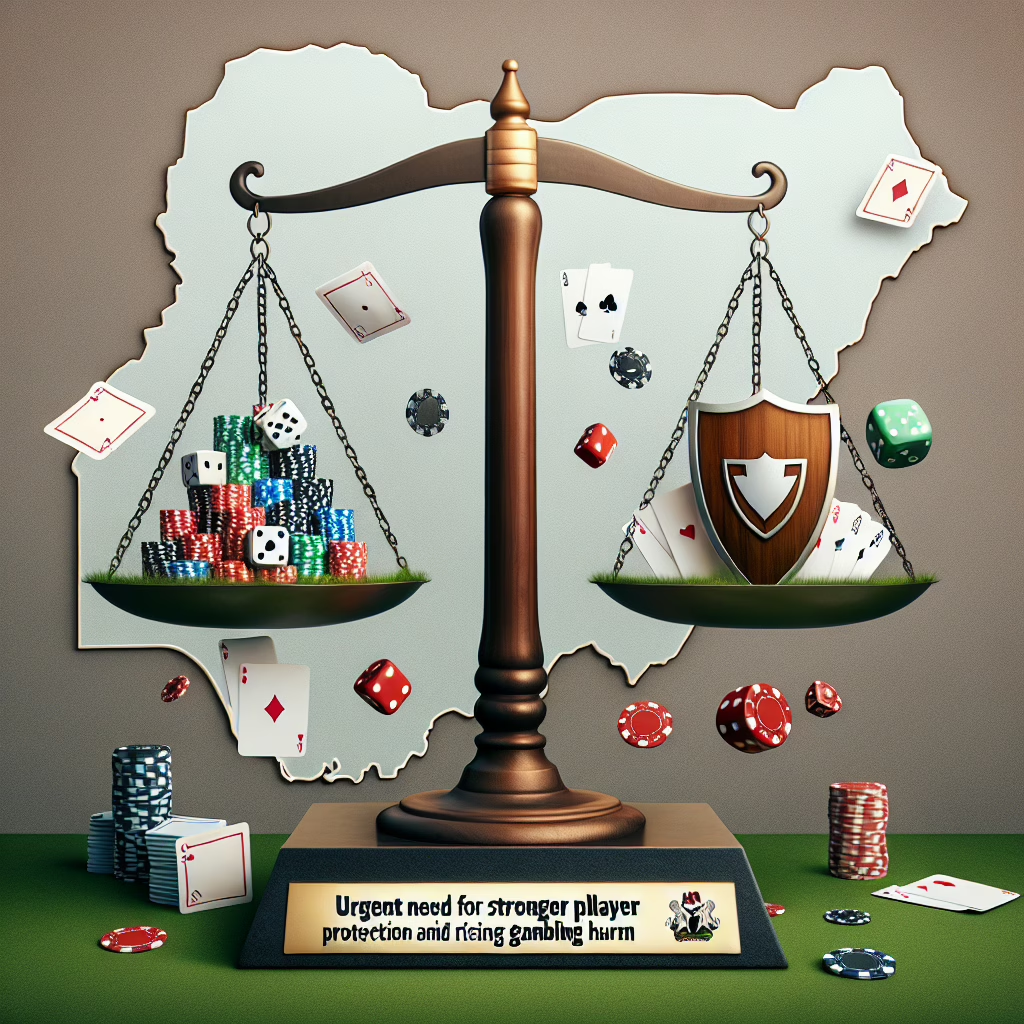
Charles Akhenamen, a prominent gaming advocate, is calling on Nigeria’s betting operators and regulators to take definitive steps to enhance responsible gambling practices. According to Akhenamen, the ubiquitous small-print warnings such as “18+ Only. Bet Responsibly” have become meaningless in their current form, serving more as a legal checkbox than a genuine commitment to player welfare. He stressed the devastating consequences of this superficial approach.
Akhenamen cited two tragic incidents from this year where gambling losses led to suicides. In July, Stephen Chidubem, a young man from Abuja, took his own life after accumulating insurmountable debt from betting. Similarly, in Ogun State, a student ended his life following the loss of both his and his friend’s tuition money to gambling. These tragedies illustrate, in Akhenamen’s view, how deeply ingrained gambling has become in Nigerian society, overshadowing effective player protection measures.
In the current landscape, Nigeria boasts over 65 million active bettors, a number fueled by widespread mobile access and high rates of unemployment. Operators pour millions into advertising campaigns featuring celebrities and sports icons, yet the critical message of responsible gambling is often overshadowed, buried within the dense text of terms and conditions.
Akhenamen argues that betting companies possess the tools necessary to safeguard players, but they are primarily used to maximize profits. He highlighted how analytical technologies, commonly deployed to identify potential bonus recipients, could instead be utilized to detect risky gambling behaviors and intervene appropriately. Akhenamen proposed four immediate measures that operators could implement: assessing players’ financial capacity for large bets, monitoring sudden patterns of losses, enforcing mandatory breaks after extended play sessions, and sharing data on gambling-related harm with regulatory bodies.
A beacon of progress has emerged in Lagos, where the Lagos State Lotteries and Gaming Authority (LSLGA) launched the SafePlay initiative in August 2025. SafePlay allows users to self-exclude from all licensed gaming sites within Lagos with a single click. Akhenamen praised this system as a significant move towards responsible gambling, demonstrating how technological innovation can enhance both player safety and the credibility of the gaming industry.
However, Akhenamen warns that isolated reforms in Lagos will not suffice to protect players nationwide. He urged the federal government to develop a comprehensive national policy on player protection, emphasizing that without such a framework, gamblers in other regions remain at risk. “More families will face loss unless change happens at the national level,” he cautioned, underscoring the necessity for cooperation among operators, regulators, and civil society to prevent further harm.
Nigeria’s gaming sector is experiencing robust growth, but its protective measures are lagging. Akhenamen sees this as an opportunity for the country to demonstrate leadership across Africa by establishing a responsible and transparent industry that prioritizes player protection over profits. He concluded his remarks with a challenge to both regulators and operators: the technology currently used for distributing bonuses has the potential to save lives. The pressing question is whether they will choose to utilize it for that purpose.
This call for reform reflects a broader global conversation about the responsibilities of gambling operators in safeguarding their customers. While some argue that personal responsibility should remain at the forefront, others believe that systemic changes are necessary to provide adequate protection for vulnerable individuals. In Nigeria’s case, the debate centers on how to balance a thriving industry with the welfare of its participants.
Critics of Akhenamen’s proposals might argue that such stringent regulations could stifle industry growth and innovation. They might also point out that gambling, like other forms of entertainment, involves inherent risks that individuals must navigate themselves. However, proponents insist that adopting these measures is not only a moral imperative but also a pragmatic approach to ensuring the industry’s long-term sustainability.
As Nigeria navigates this complex issue, it faces the challenge of fostering an environment where the excitement of gaming does not come at the expense of player safety and well-being. The decisions made now will likely shape the future of Nigeria’s gambling industry, influencing how it is perceived both domestically and internationally.
The path forward requires a collaborative effort involving all stakeholders—operators, regulators, policymakers, and civil society—to create a unified approach that effectively addresses the risks associated with gambling. By doing so, Nigeria can set a precedent for responsible gaming across the continent and establish itself as a leader in promoting a fair and balanced gaming environment.

Sarah Thompson is an editorial byline used by Casino No Deposits for industry news coverage. Articles published under this byline are summarised from reporting by licensed gambling industry news sources and produced with AI assistance, then published against our editorial rules on accuracy, sourcing and tone. They are not first-hand reporting and do not contain personal player accounts. Our full process, including how bonus listings and ratings are maintained separately by our team, is documented in how we review casinos: https://casinonodeposits.com/how-we-review-casinos/
Topics: Nigeria · Responsible Gambling · Gambling Regulation
Looking for somewhere to play? See our current no deposit bonus offers, updated with verified codes and full wagering terms.
 4.6/5
4.6/5