
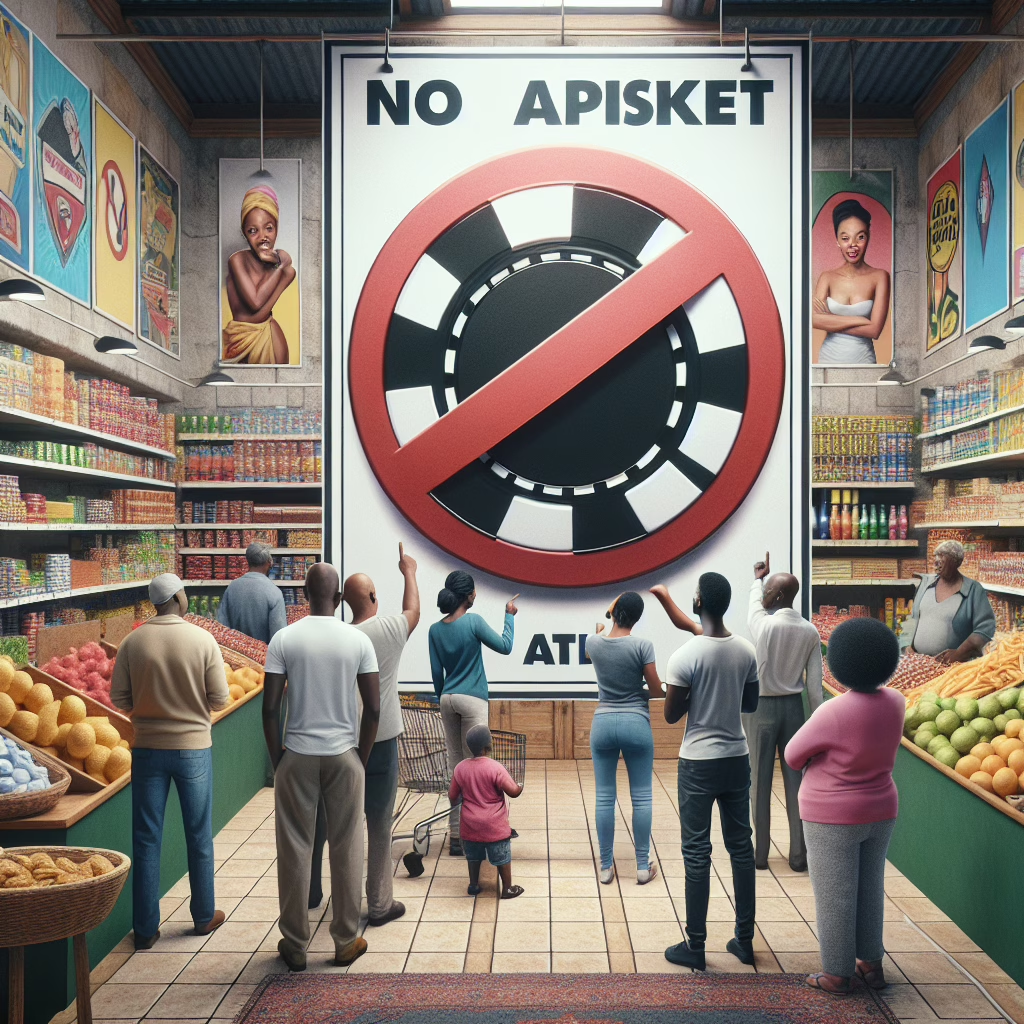
Sean Summers, at the helm of Pick n Pay, is leading a fervent call for a complete prohibition on online gambling advertisements across South Africa. His argument is compelling: the unregulated surge of offshore betting platforms is bleeding the economy dry to the tune of over R1 billion every week. This hemorrhage, he argues, deprives the local market of much-needed capital and resources.
In a conversation with John Maytham on CapeTalk’s Afternoon Drive, Summers emphasized the alarming statistics from banking data, revealing that a significant portion of social grants, including SASSA benefits meant for essentials like food and rent, is being diverted to mobile betting applications. The impact is most severe among those who can least afford to gamble away their livelihoods. “People at the lower end of the market are struggling to put food on the table. It’s utterly staggering and the scale is monumental,” he remarked.
The fiscal year has painted a grim picture with gambling losses in South Africa climbing to ZAR 70 billion, a figure that rivals Pick n Pay’s own annual earnings. Summers has deemed online gambling a “scourge,” urging local authorities to take immediate action. Unlike traditional casinos and lotteries that contribute to the economy through employment and taxes, online gambling sites siphon money without reinvesting in the communities from which they draw.
Summers advocates for adopting regulatory measures similar to those in Europe, where countries like Belgium, the Netherlands, Italy, and the UK have implemented bans or restrictions, especially in spaces accessible to children. The proliferation of smartphones and aggressive marketing strategies have fueled a 60% year-on-year growth in this industry, exponentially increasing its reach.
Particularly concerning to Summers is the detrimental impact on vulnerable groups such as low-income earners and students. Many among these groups, he notes, turn to online betting in desperation, only to face devastating financial consequences. “This is wealth being extracted from our economy in vast quantities, and the main victims are those who can least endure such losses,” he insisted.
Recognizing the gravity of the situation, the National Gambling Board (NGB) of South Africa, alongside provincial regulatory bodies, is preparing to enhance control measures. This includes scrutinizing gambling influencers who have become an entrenched part of the marketing landscape.
On the revenue front, the gambling industry pulled in R75 billion during the 2024-2025 period, with online betting outpacing other segments as the most rapidly expanding. Summers draws parallels between gambling advertisements and the detrimental promotion of tobacco products, advocating for stricter regulations and higher taxes, culminating in a complete advertising ban.
However, not everyone aligns with Summers’ perspective. Critics of the proposed ban argue that rather than outright prohibition, a more balanced approach could be more effective. They caution that a ban might push gambling activities further underground, making them even harder to monitor and control. Instead, these voices suggest enhancing current regulations to ensure better oversight and consumer protection, potentially offering a more sustainable solution.
Moreover, the economic contribution of the gambling sector cannot be ignored. It creates jobs and generates substantial tax revenue, which is crucial for government funding. Opponents of a total ban argue that these benefits must be weighed carefully against the social costs. They propose that a well-regulated and transparent gambling industry could coexist with responsible advertising practices, ensuring that the sector continues to thrive while minimizing harm to vulnerable populations.
As the debate unfolds, Summers’ plea for action highlights the need for a nuanced conversation about the role of gambling in South Africa’s economy. The challenge lies in balancing economic interests with social responsibility—a task that will require input from stakeholders across the spectrum. The regulatory path forward must consider both the protection of individuals and the economic realities of the industry, aiming for a solution that maximizes societal benefits while minimizing harm.

James Miller is an editorial byline used by Casino No Deposits for industry news coverage. Articles published under this byline are summarised from reporting by licensed gambling industry news sources and produced with AI assistance, then published against our editorial rules on accuracy, sourcing and tone. They are not first-hand reporting and do not contain personal player accounts. Our full process, including how bonus listings and ratings are maintained separately by our team, is documented in how we review casinos: https://casinonodeposits.com/how-we-review-casinos/
Topics: Belgium · South Africa · Italy · Netherlands · United Kingdom · Gambling Taxes
Looking for somewhere to play? See our current no deposit bonus offers, updated with verified codes and full wagering terms.
 4.6/5
4.6/5