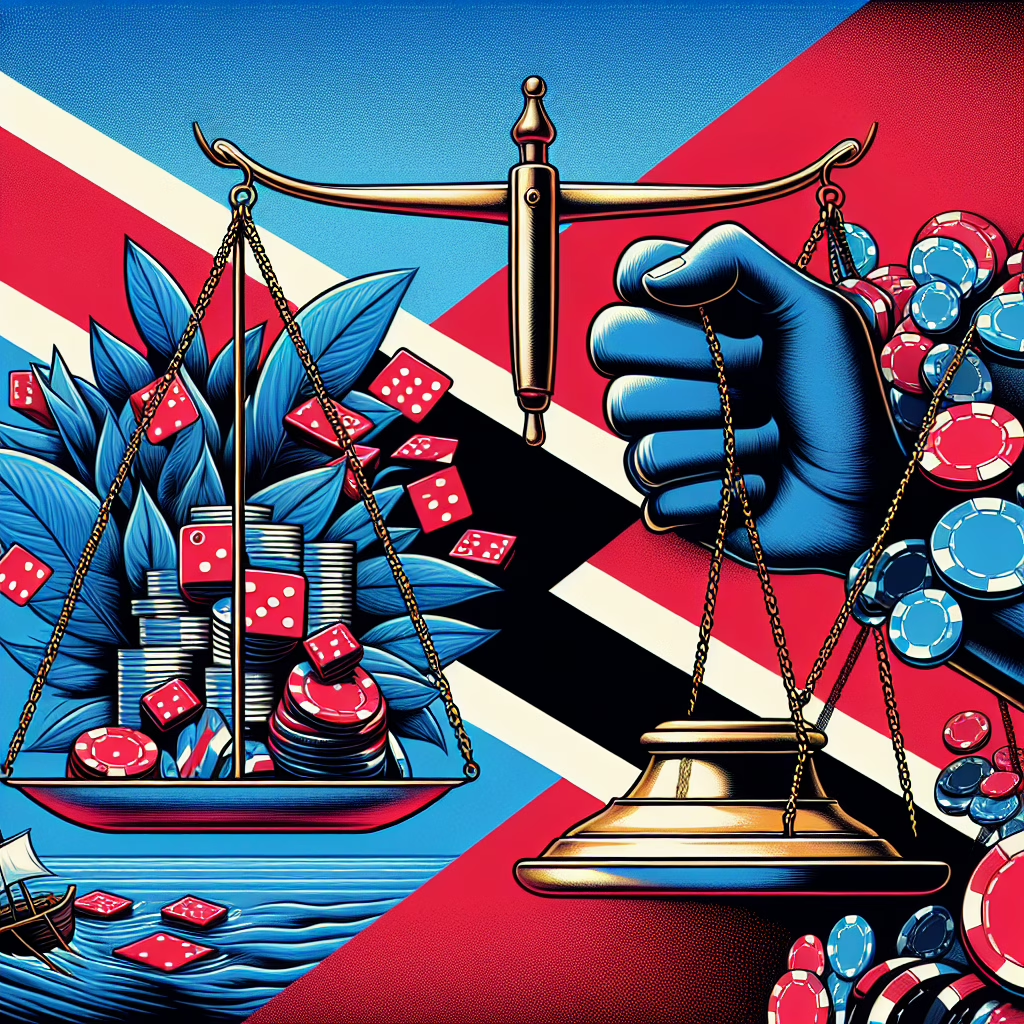
In Trinidad and Tobago, the government is addressing a pressing issue: the illegal lottery market valued at TTD9 billion. This underground sector, thriving alongside the legal operations, has prompted the government to take decisive action. Finance Minister Davendranath Tancoo, in his 2025 budget statement, emphasized the urgency of the situation and announced a crackdown on illegal gambling activities.
The National Lotteries Control Board (NLCB) in Trinidad and Tobago records about TTD3 billion (approximately $441.9 million) in gross gaming revenue each year. However, the illegal counterpart dwarfs these official figures, generating three times that amount. Tancoo’s plan involves amending the current Gambling and Betting Act to increase the penalties for illegal activities. Under the proposed changes, fines could reach up to TTD3 million, and those involved might face prison sentences of up to seven years. This amendment aims to bolster the Gambling (Gaming and Betting) Control Act 2021, which is still in the process of being fully implemented.
The government’s stance is part of a broader regional effort to tighten regulatory frameworks in the gambling industry. This pattern is evident across other Caribbean markets as noted in the recent iGaming market research report for Trinidad and Tobago. However, regulation often lags behind the innovative strategies employed by illegal operators.
A notable tactic used by these operators includes issuing counterfeit tickets that mimic grocery store receipts, using the official NLCB draw results to bait unsuspecting players. This practice complicates enforcement efforts by blurring the distinction between legitimate and illicit activities. In response, the government plans to introduce a new criminal offense targeting this loophole. Individuals found accepting bets, printing tickets, or issuing payouts based on these counterfeit schemes will face penalties outlined in the revised Section 19 of the Act.
Law enforcement agencies will receive further support through enhanced evidence-sharing arrangements with the NLCB. The definition of a “ticket” within the legal framework will be expanded to include these grocery-style receipts, bringing legal clarity and supporting crackdown efforts.
The government also seeks to bolster financial transparency and accountability within the sector. Tancoo highlighted past shortcomings, where inconsistent audits allowed the NLCB to withhold substantial sums that should have been allocated to the Consolidated Fund, the government’s primary account. To rectify this, the government will implement quarterly revenue transfers instead of annual ones. This change is designed to ensure more consistent public revenue collection. Additionally, spending caps will be set for the NLCB to enforce a strict budgetary regime, as Tancoo described, to prevent financial mismanagement.
The overarching goal is to establish a reputable and trusted gambling market in Trinidad and Tobago, where regulatory compliance ensures that profits benefit public services rather than illicit networks. However, the effectiveness of these reforms is contingent on swift and consistent enforcement. Despite legal efforts, illegal lotteries continue to significantly overshadow the legal market, with a ratio of three to one.
The pressing question is whether increased penalties and the move towards quarterly audits will be enough to shift the balance in favor of legality, or if the black market will once again outpace regulatory measures through innovation and speed. The shadow market’s adaptability poses a significant challenge: can tighter regulations and financial scrutiny truly dismantle such a deeply entrenched sector?
As the government pushes forward with these initiatives, the outcome remains uncertain. Critics of the reform argue that focusing solely on punitive measures might not address the root causes driving the black market. They suggest that a more comprehensive approach, perhaps incentivizing legal participation and increasing public awareness about the benefits of regulated gaming, might yield better results.
The debate continues as Trinidad and Tobago navigates this complex issue, seeking a balance between regulation and the realities of a fast-evolving gambling landscape. The coming months will be crucial in revealing whether these efforts will succeed in bringing about a more controlled and legitimate gambling industry.

Sarah Thompson is an editorial byline used by Casino No Deposits for industry news coverage. Articles published under this byline are summarised from reporting by licensed gambling industry news sources and produced with AI assistance, then published against our editorial rules on accuracy, sourcing and tone. They are not first-hand reporting and do not contain personal player accounts. Our full process, including how bonus listings and ratings are maintained separately by our team, is documented in how we review casinos: https://casinonodeposits.com/how-we-review-casinos/
Topics: Illegal Gambling · Product Launches · Financial Results · Online Casino · Enforcement · Gambling Regulation
Looking for somewhere to play? See our current no deposit bonus offers, updated with verified codes and full wagering terms.
 4.6/5
4.6/5