
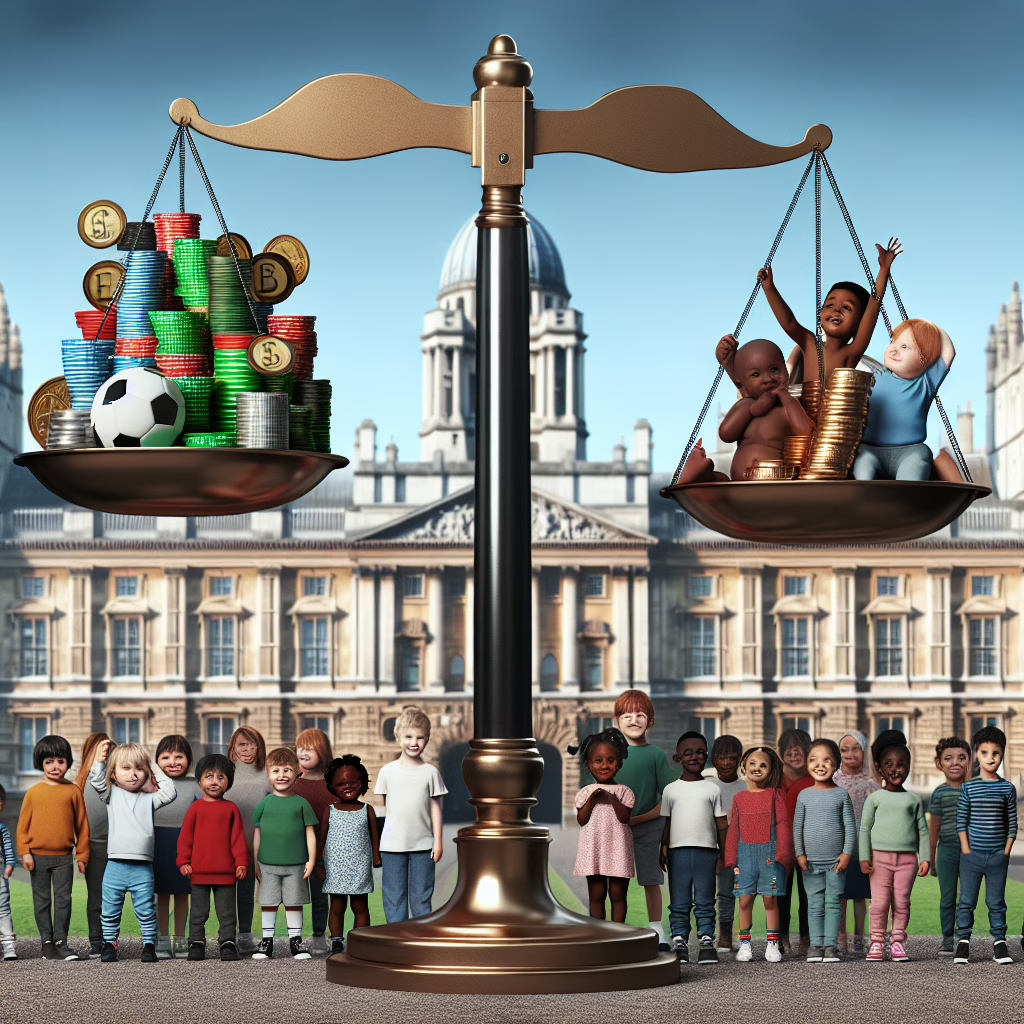
The UK government is preparing to increase gambling taxes as part of a concerted effort to tackle child poverty. This initiative, championed by think tanks such as the Social Market Foundation and the Institute for Public Policy Research, proposes that heightened gambling levies could fund the removal of the two-child benefit cap, a policy change requiring an estimated £3 billion.
Prime Minister Sir Keir Starmer hinted that this move might be included in the forthcoming Autumn Budget, set to be unveiled later this month. In a recent interview with ITV, he suggested: “We won’t have to wait much longer, but I wouldn’t be telling you that we’re going to drive down child poverty if I wasn’t clear that we will be taking a number of measures in order to do so.”
Former Prime Minister Gordon Brown voiced his support for the proposal, drawing a stark comparison between gambling taxes and other so-called sin taxes. He noted: “We tax cigarettes at 80 per cent, we tax alcohol at 70 per cent, but the online gambling tax is 21 per cent. So there’s a big case for change… move the money from, if you like, the bad, by taxing it, and put it to good, which is children taken out of poverty.”
The proposed adjustments have garnered backing from over 100 Labour MPs and the Liberal Democrat Party. They aim to increase the remote gaming duty for online casinos from 21% to 50%, raise slot machine duty from 20% to 50%, and elevate the general betting duty on non-racing bets from 15% to 25%. According to estimates from the Institute for Public Policy Research, these changes could generate approximately £3.2 billion, enough to eliminate the child benefit cap’s financial burden.
However, the proposal is not without its critics. The Betting and Gaming Council has issued a warning that a sudden hike in taxes might drive players toward unlicensed gambling sites. They cite the example of the Netherlands, where a similar increase in taxes reportedly resulted in a decline in regulated tax revenues, a cautionary tale of the potential risks involved in such policy changes.
With the Autumn Budget announcement imminent, the government faces a complex challenge: it must balance the need to raise additional funds to support struggling families against the risk of alienating the gambling industry or inadvertently fostering illegal gambling activities. The decision holds significant implications, not just for the affected industries, but also for the households that rely on government support.
In the broader context of UK fiscal policy, this move highlights the government’s willingness to explore unconventional avenues to finance social programs. It reflects a growing trend across Europe, where governments are increasingly looking to the gambling sector as a potential source of revenue for social initiatives. This approach aligns with global shifts towards leveraging taxation on industries perceived as socially or morally contentious to fund public welfare.
Nevertheless, the debate continues over the efficacy and fairness of such measures. Critics argue that excessively high taxes on gambling could disenfranchise consumers and reduce overall economic activity within the sector. Proponents, however, emphasize the moral imperative of reducing child poverty and the potential for positive societal impact.
Furthermore, the proposed tax changes have sparked discussions about the role of government in regulating gambling and safeguarding vulnerable populations. Supporters argue that higher taxes could act as a deterrent, reducing gambling-related harm, while opponents caution against over-regulation, which might stifle innovation and competition within the industry.
As the UK government prepares to finalize its decision, the outcome will likely serve as a bellwether for other nations considering similar policies. The success or failure of this initiative could influence international approaches to balancing economic growth with social responsibility.
The possibility of increased gambling taxes has also raised questions about the potential for revenue volatility. Given the unpredictable nature of gambling revenues, some experts suggest that relying heavily on this source for funding social programs could pose a risk to fiscal sustainability. This concern underscores the importance of a diversified approach to budget planning.
In conclusion, the proposed gambling tax hike presents a multifaceted policy challenge for the UK government. It involves navigating complex trade-offs between raising necessary funds for critical social initiatives and maintaining a healthy, regulated gambling industry. As policymakers weigh their options, the eyes of both domestic and international observers will be on the UK’s approach to addressing these pressing economic and social issues.

James Miller is an editorial byline used by Casino No Deposits for industry news coverage. Articles published under this byline are summarised from reporting by licensed gambling industry news sources and produced with AI assistance, then published against our editorial rules on accuracy, sourcing and tone. They are not first-hand reporting and do not contain personal player accounts. Our full process, including how bonus listings and ratings are maintained separately by our team, is documented in how we review casinos: https://casinonodeposits.com/how-we-review-casinos/
Topics: Netherlands · United Kingdom · Illegal Gambling · Gambling Taxes · Slots · Financial Results
Looking for somewhere to play? See our current no deposit bonus offers, updated with verified codes and full wagering terms.
 4.6/5
4.6/5