
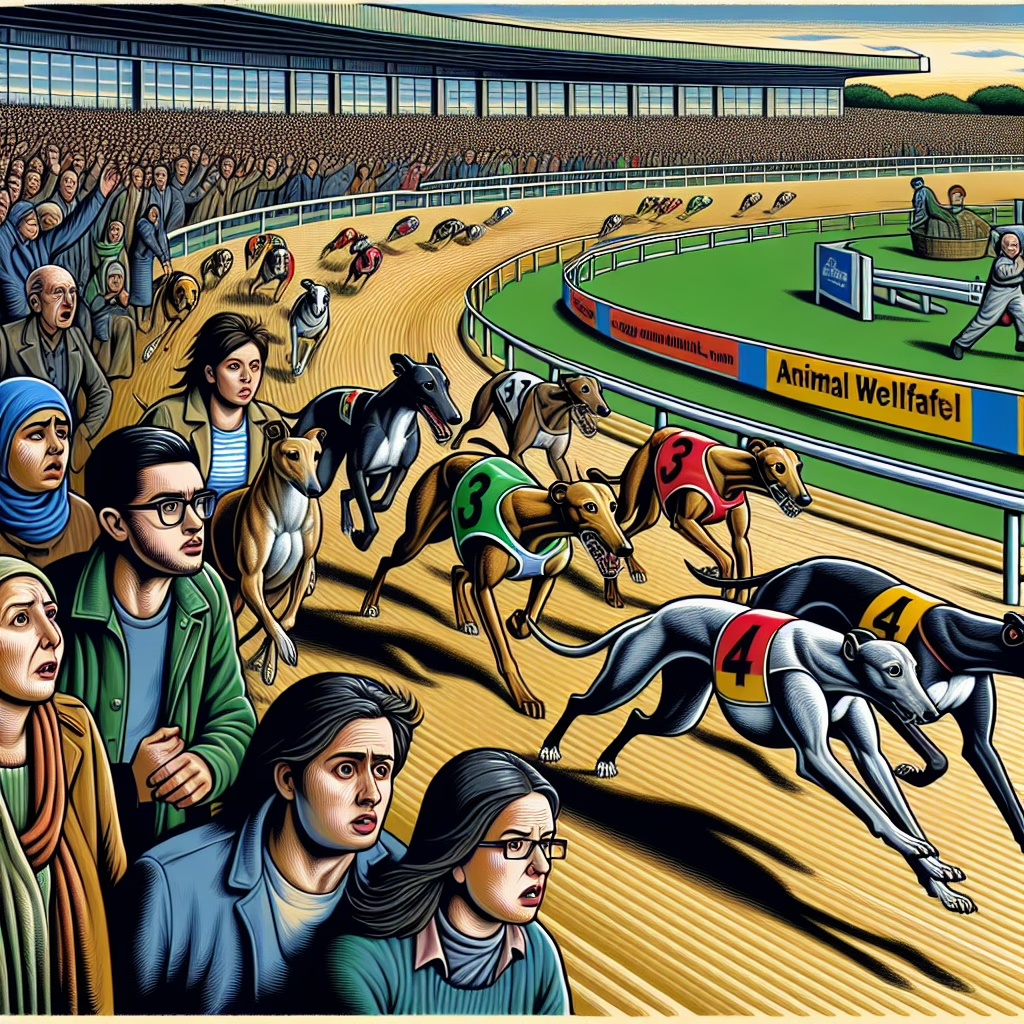
On November 3, 2025, the UK government firmly rejected the notion of banning greyhound racing, a decision prompted by a public petition that has rekindled discussions about animal welfare and the sport’s future. The government posits that greyhound racing remains a well-regulated activity, significant to the culture, and economically beneficial, particularly in rural locales.
The petition, which garnered over 13,000 signatures, urged for an outright ban on greyhound racing. Advocates for this ban highlighted distressing statistics: between 2017 and 2023, 1,230 dogs perished, and over 31,000 sustained injuries on British racing tracks. Critics also pointed to concerning breeding practices, suggesting that approximately 20,000 dogs are bred annually in Ireland, with additional numbers in Britain. This influx has reportedly overwhelmed rescue centers. Proponents of the ban argue that many greyhounds endure substandard kennel conditions, asserting that the current system prioritizes performance metrics over animal well-being.
In response to these concerns, both Wales and Scotland have already expressed support for phasing out greyhound racing, increasing pressure on Westminster to take similar action. However, the UK government has opted for reform rather than elimination, underscoring the importance of leadership in defending traditions that some seek to erase.
In its official stance, the government has stated it has no intentions to prohibit greyhound racing, referencing the regulatory framework provided by the Animal Welfare Act 2006 and the Welfare of Racing Greyhounds Regulations 2010. These pieces of legislation empower authorities to intervene against animal cruelty and mandate veterinary examinations for every greyhound before races, trials, or sales trials. Additionally, tracks are required to document all injuries and are subject to routine inspections.
Economically, the sport is notable for supporting 5,400 jobs nationwide and ranks as the sixth most popular sport in the UK by audience size. This economic dimension adds another layer to the discussion, illustrating the sport’s integration into the social and financial fabric of certain communities.
The Greyhound Board of Great Britain (GBGB) has been proactive in addressing welfare issues by implementing several new initiatives aimed at improving conditions. They release annual reports detailing injuries, fatalities, and retirements. The data show a decrease in fatalities, from 1,013 in 2017 to 386 in 2024, with the number of dogs euthanized due to treatment costs plummeting from 333 to just 3 in the same timeframe. Such statistics reflect the ongoing progress within the industry.
Trainers’ kennels are now subjected to inspections approximately three times annually, conducted by GBGB staff, veterinarians, and independent inspectors. These inspections are designed to ensure that greyhounds receive appropriate care both on the track and in their kennels.
Collaboration has been key to these advancements. The GBGB has partnered with animal welfare organizations to elevate standards for kennel care, track surfaces, and post-race support systems. The government has commended these cooperative efforts, viewing them as proof that meaningful reform is possible within the existing structures.
In its official statement, the government said: “Given the work being undertaken to improve greyhound welfare, and the protections in place, the government does not believe it is necessary to ban greyhound racing.”
The emphasis remains on continuous improvement rather than outright elimination. Nevertheless, the government has committed to ongoing surveillance of the sport’s welfare practices and is open to considering further action if warranted. Any future measures would aim to be targeted, effective, and equitable.
Despite these assurances, campaigners remain skeptical. They argue that the intrinsic nature of greyhound racing cannot be disentangled from potential harm, regardless of reforms. This skepticism raises a critical question: can a sport that thrives on speed also embrace a philosophy of compassion and care?
For the time being, the UK government has chosen to support regulatory measures over a complete ban, maintaining its stance that greyhound racing is an integral part of Britain’s cultural and rural heritage. Yet, as the conversation around animal welfare continues to evolve, the sport may face increasing scrutiny and calls for transformation.
As debates over welfare deepen, it remains to be seen if greyhound racing can adapt to new societal expectations without losing its essence. The challenge lies in balancing the thrill of the sport with the imperative of compassionate animal care.

James Miller is an editorial byline used by Casino No Deposits for industry news coverage. Articles published under this byline are summarised from reporting by licensed gambling industry news sources and produced with AI assistance, then published against our editorial rules on accuracy, sourcing and tone. They are not first-hand reporting and do not contain personal player accounts. Our full process, including how bonus listings and ratings are maintained separately by our team, is documented in how we review casinos: https://casinonodeposits.com/how-we-review-casinos/
Topics: Ireland · United Kingdom · Gambling Regulation
Looking for somewhere to play? See our current no deposit bonus offers, updated with verified codes and full wagering terms.
 4.6/5
4.6/5