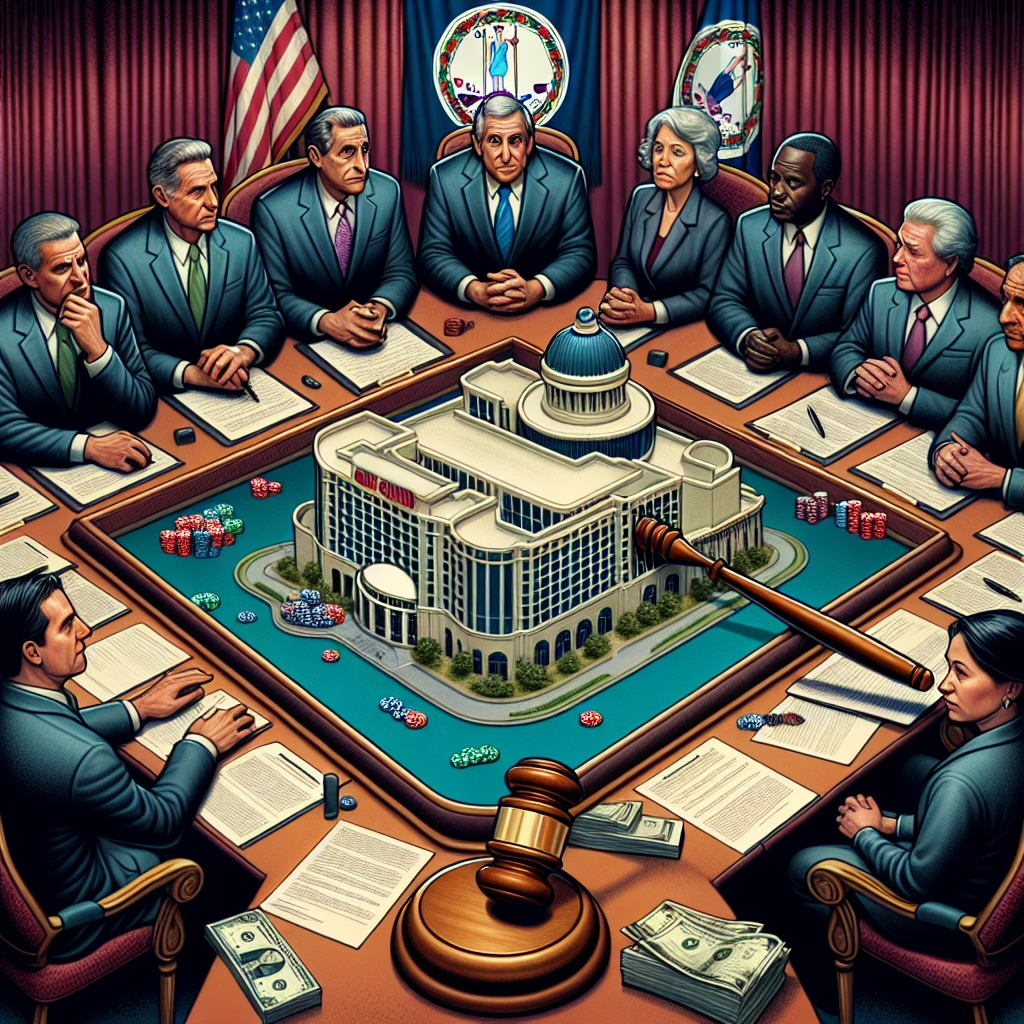
Virginia is at a crossroads as the 2026 legislative session approaches, scheduled to open on January 14. Democratic senator Scott Surovell from Fairfax has already announced his intention to reintroduce legislation that would permit the establishment of a casino near the Spring Hill Metro station in Tysons. Concurrently, his fellow Fairfax Democrat, Paul Krizek, is drafting a bill to establish a unified Virginia Gaming Commission. This new body would consolidate the oversight of casinos, sports betting, horse racing, and various other wagering forms currently managed by different agencies.
These legislative efforts come at a time when five voter-approved casinos have already opened in Bristol, Danville, Portsmouth, and Norfolk. These developments have sparked growing concerns in Northern Virginia about whether to follow suit.
Surovell champions the Tysons casino as a potential solution to Fairfax County’s financial woes. He sponsored a similar bill earlier this year that did not succeed. “Fairfax County is grappling with a substantial budget deficit of approximately $130 million,” he noted in an interview with WUSA9. “The financial shortfall is persistent, and the county continuously seeks additional revenue-raising authorities. A resort casino could be a significant opportunity, and it’s crucial not to let a vocal minority of local residents deter potential progress.”
His proposal involves putting the decision to the voters of Fairfax County through a referendum, a process similar to the one used when the General Assembly approved casinos in five other cities in 2020. Only with voter approval could the project move forward. Surovell is adamant that the new bill will concentrate on Tysons, a vital commercial district and transportation hub on Metro’s Silver Line. Proponents of the project argue that a resort-style casino could recapture some of the spending currently flowing to out-of-state venues like Maryland’s National Harbor and MGM locations.
Despite Surovell’s push, Fairfax County’s Board of Supervisors has expressed reservations. In a close 5–4 vote, the board officially opposed any casino-authorising legislation for Tysons. They argue that the General Assembly should not interfere with the county’s long-established land-use plans. “The designation and location of a casino is fundamentally a major land-use decision,” said Walter Alcorn, the supervisor for the Hunter Mill district, which encompasses the Spring Hill area. “Intervention from the General Assembly in our land-use processes would undermine decades of community consensus and economic achievements.”
Alcorn emphasized that the board had not sought casino authority, and any future discussions must include assurances about retaining tax revenue within Fairfax and integrating the project with Tysons’ long-term transportation and housing strategies.
Parallel to this debate, Krizek is pushing for a comprehensive reform of Virginia’s gambling regulation. Currently, casino licensing and supervision fall under the Virginia Lottery, horse racing is managed by the Virginia Racing Commission, and some gaming oversight is handled by the Department of Agriculture and Consumer Services. Krizek, who chairs the House ABC/Gaming subcommittee, argues that this fragmented regulatory framework is outdated given Virginia’s expanding gambling landscape, which includes mobile sports betting and a variety of retail and online products.
“We have all kinds of gambling in Virginia, and we do not have one regulatory body,” he explained. “Consolidating under a single umbrella would provide synergy and cost-efficiency, benefiting the general fund.”
The proposed Virginia Gaming Commission would integrate the Lottery’s casino and sports-betting responsibilities with those of racing and other gambling oversight. Advocates for this unified regulator believe it would offer the state a more coherent approach to addressing risks like money laundering and problem gambling, aligning Virginia with other major gambling centers such as New Jersey and Nevada.
Republican governor Glenn Youngkin supported the formation of a Gaming Commission in the previous budget cycle, although the proposal was ultimately removed during negotiations. Krizek is determined to revive the initiative, and governor-elect Abigail Spanberger will confront the issue early in her administration.
As lawmakers reconvene in Richmond in mid-January, both the commission bill and the Tysons casino proposal are expected to advance swiftly to committee hearings. These sessions will allow various stakeholders, including tribal operators, commercial casino interests, local governments, and faith-based groups, an opportunity to express their views.
The outcome of these legislative efforts will have long-lasting implications for Virginia’s gambling landscape. The state stands at a critical juncture, poised to decide whether to consolidate regulatory oversight, embrace casino expansion in Northern Virginia, and balance fiscal pressures against local concerns over land use and social ramifications.
For Krizek and others, the central issue is clear: “We are already a gambling state. The question is whether we organise ourselves to manage it properly – or keep muddling through while the market runs ahead of the rules.”

James Miller is an editorial byline used by Casino No Deposits for industry news coverage. Articles published under this byline are summarised from reporting by licensed gambling industry news sources and produced with AI assistance, then published against our editorial rules on accuracy, sourcing and tone. They are not first-hand reporting and do not contain personal player accounts. Our full process, including how bonus listings and ratings are maintained separately by our team, is documented in how we review casinos: https://casinonodeposits.com/how-we-review-casinos/
Topics: Maryland · Virginia · New Jersey · Nevada · Licensing · Gambling Taxes
Looking for somewhere to play? See our current no deposit bonus offers, updated with verified codes and full wagering terms.