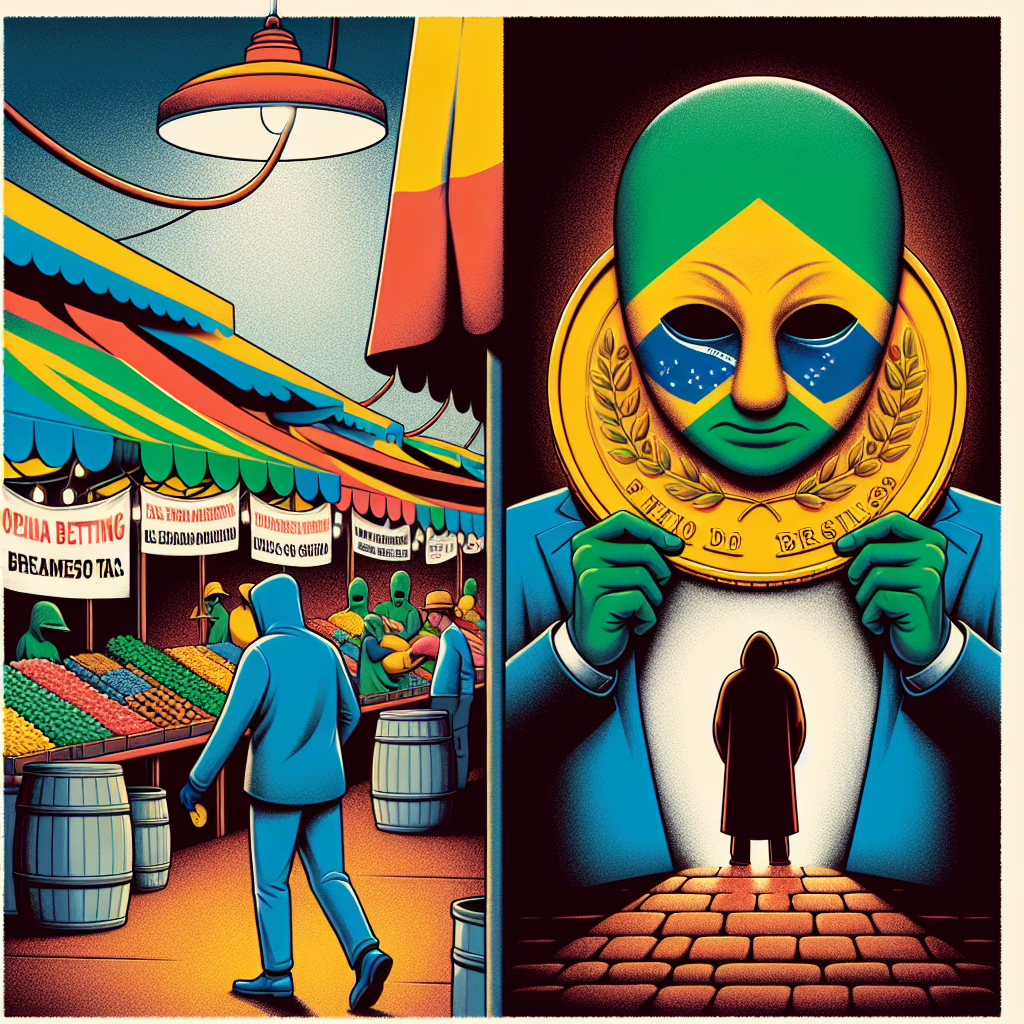
On the verge of a critical decision, Brazil’s betting market is poised to experience one of its most significant challenges yet. The government is gearing up to vote on a proposed tax increase—a move that could transform the landscape of the country’s nascent betting industry. The Brazilian Institute of Responsible Gaming (IBJR) has sounded the alarm, cautioning that a 50% hike in taxes might drive bettors away from legitimate betting platforms and inadvertently boost black market activities. This shift threatens to undo the advancements achieved since the sector’s regulation began earlier this year.
Brazil’s regulated betting market, introduced on January 1, 2025, aimed to establish a transparent and secure environment for gamblers. The framework came with assurances of consumer protection and encouraged operators to make significant investments. Companies responded by forming local teams and partnerships, all under the umbrella of a 12% tax on gross gaming revenue (GGR). However, the government’s current proposal to elevate that tax to 18%—outlined in Provisional Measure No. 1,303—has introduced uncertainty. This measure, initially presented in June, awaits a final vote this week, following two prior postponements. Legislators face a Wednesday deadline to decide whether to make the increase permanent, a decision that could have far-reaching consequences.
Industry insiders warn that such a steep and rapid increase could erode trust and challenge the competitiveness of licensed companies. The IBJR contends that the tax hike might direct players towards unregulated offshore betting sites. When taxes rise, operators often face reduced margins, leading to fewer promotions and less favorable odds for bettors. Unlicensed websites, operating outside Brazil’s legal framework, could become more appealing under these conditions.
In a recent statement, the IBJR emphasized the risks, asserting that the new tax “exposes not only the sector but also bettors to increasing risks of migration to clandestine operators.” Players opting for unregulated sites forsake vital protections, such as responsible gambling tools, data security, and guaranteed payouts. According to the IBJR, these dangers far outweigh any short-term fiscal gains the government might achieve through increased taxes.
To combat illegal online gambling, the IBJR is calling for stronger digital enforcement. The organization has urged technology companies to take a stand against unlicensed operators, advocating for search engines and social media platforms to block access to these sites as they do with other unlawful or harmful content. The group maintains that robust enforcement, rather than higher taxes, is the key to curbing black market activity.
The proposed tax increase has also sown seeds of uncertainty among investors, both local and international. Businesses that entered Brazil’s betting market anticipated stable conditions in its infancy. Instead, they now confront a potential 50% tax hike, along with looming new advertising restrictions, just eight months after the regulatory framework’s inception. The IBJR argues that such volatility diminishes Brazil’s appeal as an investment destination.
“Abruptly changing taxation, increasing the contribution rate on gross revenue from 12% to 18% just eight months after the regulation was enacted, creates legal uncertainty,” the IBJR noted in its criticism. “This instability undermines the confidence of companies that have invested in the country. This threatens not only the continuity of operations but also the credibility of the business environment in Brazil.”
Already, some operators have curtailed their marketing and partnership expenditures, while others are in a holding pattern, awaiting the outcome of the imminent vote before committing additional resources.
Complicating matters is a leadership transition within the IBJR. In September, Fernando Vieira stepped down as executive president after nearly a year of service. During his tenure, Vieira was instrumental in raising awareness about the risks of black market activities and fostering dialogue between regulators and operators. André Gelfi, a founding member of the IBJR and Betsson Group’s managing partner in Brazil, is currently serving as interim president. Under Gelfi’s leadership, the organization is reinforcing its central message: Brazil’s betting market can only thrive if it remains stable, equitable, and secure.
The impending vote on Provisional Measure No. 1,303 could significantly shape the future of Brazil’s regulated betting sector. Should the tax increase be approved, it will take effect immediately. Conversely, if the proposal is rejected, the government will be compelled to revisit its financial strategy. For the IBJR, the issue transcends mere financial calculations. It is fundamentally about striking a balance between generating revenue and safeguarding consumers, as well as between attracting investment and ensuring player safety.
As the decision looms, the betting industry is unified in its message: rapid changes to regulations make it increasingly difficult to cultivate a stable and responsible gambling market. The outcome of this week’s vote will undoubtedly have long-lasting implications for all stakeholders involved.

erik is an editorial byline used by Casino No Deposits for industry news coverage. Articles published under this byline are summarised from reporting by licensed gambling industry news sources and produced with AI assistance, then published against our editorial rules on accuracy, sourcing and tone. They are not first-hand reporting and do not contain personal player accounts. Our full process, including how bonus listings and ratings are maintained separately by our team, is documented in how we review casinos: https://casinonodeposits.com/how-we-review-casinos/
Topics: Brazil · Illegal Gambling · Partnerships · Gambling Taxes · Responsible Gambling · Financial Results
Looking for somewhere to play? See our current no deposit bonus offers, updated with verified codes and full wagering terms.
 4.6/5
4.6/5