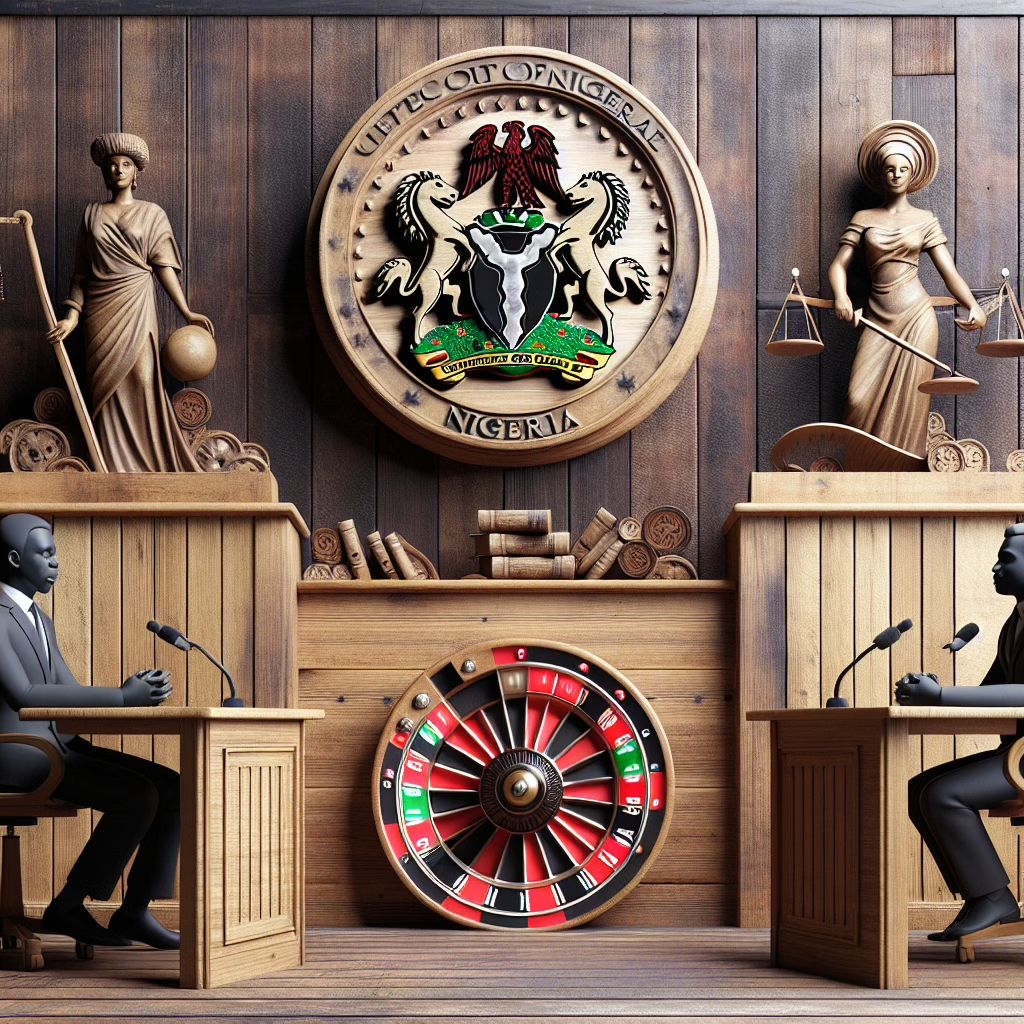
In November 2025, the Lagos State government escalated its legal battle to Nigeria’s Supreme Court, seeking to commence contempt proceedings against the National Assembly over the contentious Central Gaming Bill. This bill aims to bring gaming under the jurisdiction of federal oversight, a move Lagos claims contradicts the Supreme Court’s November 2024 decision, which upheld states’ powers over gambling, lotteries, and gaming regulations.
Attorney-General Lawal Pedro, SAN, spearheads the legal charge, supported by counsel Bode Olanipekun, SAN. The state has submitted Form 48, a critical procedural document under Order 9 Rule 13 of the Supreme Court Rules. This notice serves as a formal warning of potential imprisonment for non-compliance with the prior judgment. “It directly breaches the Supreme Court’s judgment,” Olanipekun stated, emphasizing that the Central Gaming Bill attempts to reintroduce elements of previously annulled legislation without enacting the necessary constitutional changes to the Second Schedule of the 1999 Constitution.
The core of Lagos State’s argument is that the proposed legislation overreaches constitutional boundaries, as no amendments have been made to the legislative list since the Supreme Court’s ruling in 2024. This legal clash mirrors past disputes, particularly the high-profile case where Lagos and other states successfully challenged federal authority over lottery and gambling regulation, culminating in a landmark Supreme Court decision affirming state control.
Once again, states and stakeholders, including the Federation of State Gaming Regulators of Nigeria (FSGRN), rally to oppose the Central Gaming Bill. The outcome of this legal contest could significantly reshape the regulatory landscape of Nigeria’s gaming industry. Should Lagos succeed, states would retain their autonomy to regulate gaming within their jurisdictions without federal intervention. In contrast, if the Central Gaming Bill is enacted, states will be compelled to adapt their regulations to meet federal standards, with a substantial portion of gaming tax revenues redirected to the federal government’s coffers.
The implications of this legal showdown are profound, as it underscores the ongoing tension between federal and state authorities over jurisdictional control in Nigeria. The gaming industry, a burgeoning sector contributing significantly to state revenues, finds itself at the heart of this power struggle. Analysts suggest that this case could set a precedent not only for gaming but also for other areas where state and federal jurisdictions intersect.
Some observers argue that federal oversight could bring uniformity and standardization to the gaming sector, potentially attracting more international investors and ensuring consistent regulatory practices across the country. However, this viewpoint is met with skepticism by those who argue that the diversity of Nigeria’s states demands bespoke regulatory frameworks tailored to local contexts. They assert that centralized control could stifle innovation and responsiveness, key drivers of the industry’s growth.
Critics of the Central Gaming Bill contend that such federal mandates may dilute the states’ ability to legislate in a manner that reflects the unique social and economic conditions prevalent within their regions. They caution that a one-size-fits-all approach could inadvertently hinder the sector’s development and limit its potential economic benefits.
Meanwhile, proponents of the bill maintain that federal regulation would enhance oversight, reduce discrepancies in enforcement, and potentially curb illegal gaming activities that thrive in regulatory grey areas. They argue that a cohesive national strategy is essential for monitoring and curbing illicit practices that undermine the integrity of the gaming industry.
As Lagos State mounts its legal challenge, the spotlight turns to the judiciary to navigate this complex legal terrain. The Supreme Court’s eventual ruling will not only shape the future of gaming regulation in Nigeria but may also influence the broader discourse on state versus federal powers. This case illustrates a broader narrative of Nigerian states asserting their rights and pushing back against perceived federal overreach.
The gaming industry, a critical component of Nigeria’s economy, remains in a state of uncertainty as stakeholders await the Supreme Court’s decision. The resolution of this dispute will likely reverberate throughout the sector, affecting policy decisions, investment opportunities, and regulatory practices.
In conclusion, the conflict over the Central Gaming Bill encapsulates the ongoing struggle between state sovereignty and federal authority in Nigeria. The outcome will have far-reaching consequences, not just for the gaming sector, but for the broader balance of power between the nation’s federal and state governments. As legal arguments unfold, the gaming industry watches closely, aware that the court’s decision will fundamentally impact its regulatory environment and economic trajectory.

erik is an editorial byline used by Casino No Deposits for industry news coverage. Articles published under this byline are summarised from reporting by licensed gambling industry news sources and produced with AI assistance, then published against our editorial rules on accuracy, sourcing and tone. They are not first-hand reporting and do not contain personal player accounts. Our full process, including how bonus listings and ratings are maintained separately by our team, is documented in how we review casinos: https://casinonodeposits.com/how-we-review-casinos/
Topics: Nigeria · Gambling Taxes · Enforcement · Gambling Regulation
Looking for somewhere to play? See our current no deposit bonus offers, updated with verified codes and full wagering terms.
 4.6/5
4.6/5