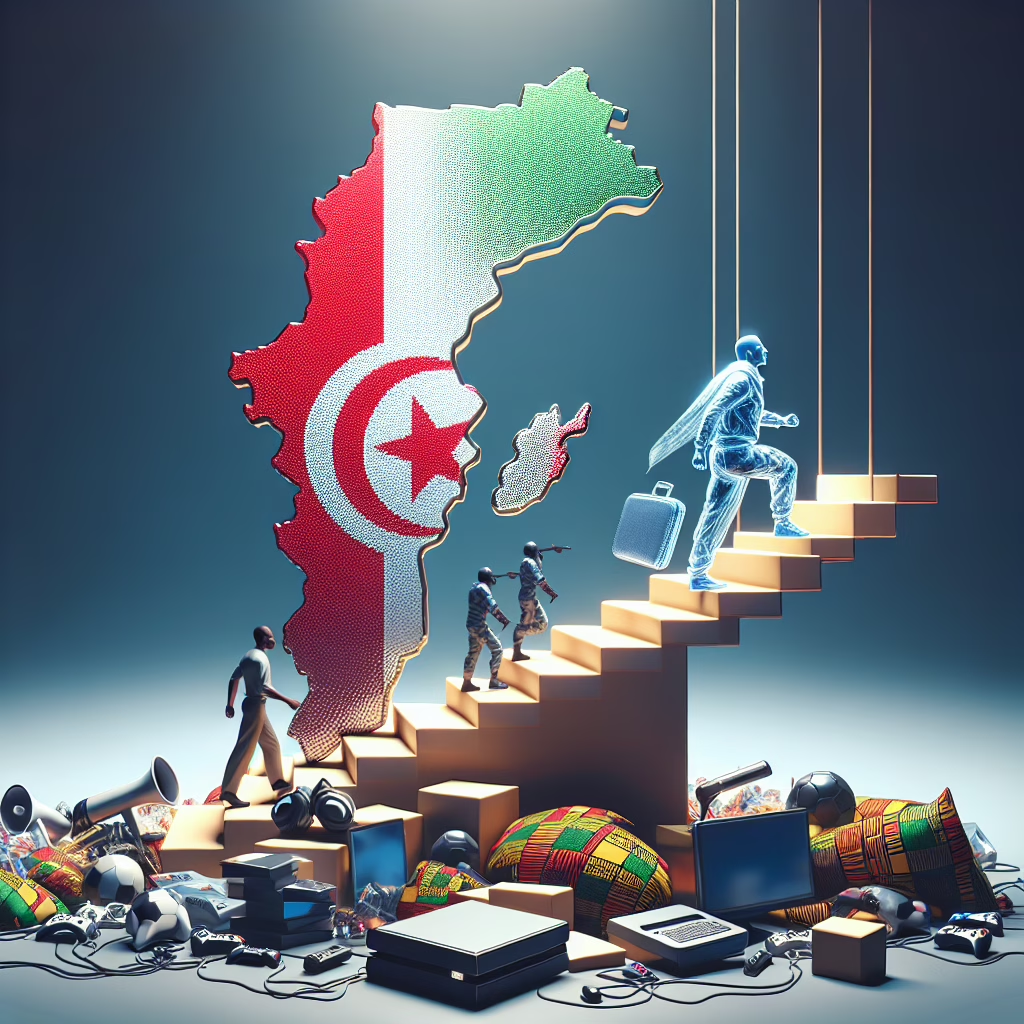
Tunisia is making concerted efforts to carve out a significant presence in Africa’s burgeoning gaming and esports industry. Central to this initiative is the National Committee for Video Game Development. This organization, under the aegis of the Tunisian Esports Federation (TunESF), seeks to harness the potential of local talent and small studios to strengthen the digital economy of the country.
Established with a mission that transcends mere competition, the committee is tasked with fostering a coordinated gaming ecosystem in Tunisia. It aims to help developers, studios, educators, and policymakers collaborate more effectively. The primary goal is to create a nurturing environment that not only stimulates game development but also attracts investment, allowing the industry to evolve into a more resilient and economically beneficial sector.
TunESF has clearly articulated the committee’s mission: to support talent and bring structure to a sector brimming with potential yet in dire need of resources and strategic alignment.
The committee plays a pivotal role in uniting various stakeholders through events like the annual CNGD Summit. This summit becomes a melting pot where developers, investors, and educators converge to exchange ideas and chart the future course for the local gaming industry. With Tunisia boasting a young, tech-savvy population and a burgeoning indie game scene, alongside increasing esports venues, there lies a significant opportunity for the country to cement its role as a key player in North Africa’s gaming landscape.
The committee’s ambition is clear: by bringing together developers, startups, educators, and policymakers, it seeks to create a more structured and investment-ready ecosystem conducive to video game creation. This collaborative effort is viewed by stakeholders as a critical step in defining the industry’s roadmap for the coming years, especially as more studios seek partnerships and expert guidance.
The committee’s agenda is not confined to esports alone; it is part of a broader vision for Tunisia’s digital future. The focus is on nurturing talent, facilitating the growth of new studios, and creating long-term career opportunities for those entering the industry. Additionally, by fostering collaboration between universities, developers, and tech organizations, the committee aims to strengthen the pipeline of future professionals in the gaming industry.
TunESF officials emphasize their mission to support talent, promote collaborative ventures, and ensure the sustainability of video game development as a strategic industry in Tunisia. As the committee looks to 2026 and beyond, it is poised to expand its influence by enhancing training, promoting innovation, and positioning Tunisia’s gaming sector to compete robustly within the broader African ecosystem.
Despite not being the largest gaming market on the continent, Tunisia is methodically laying the groundwork for substantial growth. The country’s proactive approach reflects its commitment to evolving from a nascent market into a competitive force within Africa’s gaming domain.
However, some industry observers offer a counterpoint, noting that while Tunisia’s ambitions are commendable, there are significant challenges that must be addressed. These include the need for improved infrastructure, securing consistent funding for startups, and cultivating a wider pool of skilled professionals who can sustain the momentum. Addressing these issues is crucial if Tunisia is to achieve its vision of becoming a key player in Africa’s digital economy.
Meanwhile, proponents of the initiative argue that Tunisia’s strategic geographic location, coupled with its young population and burgeoning tech culture, provides a unique advantage. These factors, they assert, position Tunisia to rapidly scale its gaming sector, attracting foreign investment and fostering cross-border collaborations.
As Tunisia steps into the future, its efforts to reshape its digital economy through gaming and esports reflect a strategic pivot towards a modern industry landscape. The nation’s journey is emblematic of a broader trend seen across the continent, where countries are increasingly recognizing the economic and cultural impact of the gaming industry. Tunisia’s trajectory in this sector will be one to watch as it continues to build upon its current foundation, striving to transform itself into a central hub for gaming innovation in Africa.

Sarah Thompson is an editorial byline used by Casino No Deposits for industry news coverage. Articles published under this byline are summarised from reporting by licensed gambling industry news sources and produced with AI assistance, then published against our editorial rules on accuracy, sourcing and tone. They are not first-hand reporting and do not contain personal player accounts. Our full process, including how bonus listings and ratings are maintained separately by our team, is documented in how we review casinos: https://casinonodeposits.com/how-we-review-casinos/
Topics: Esports Betting · Enforcement
Looking for somewhere to play? See our current no deposit bonus offers, updated with verified codes and full wagering terms.
 4.6/5
4.6/5