
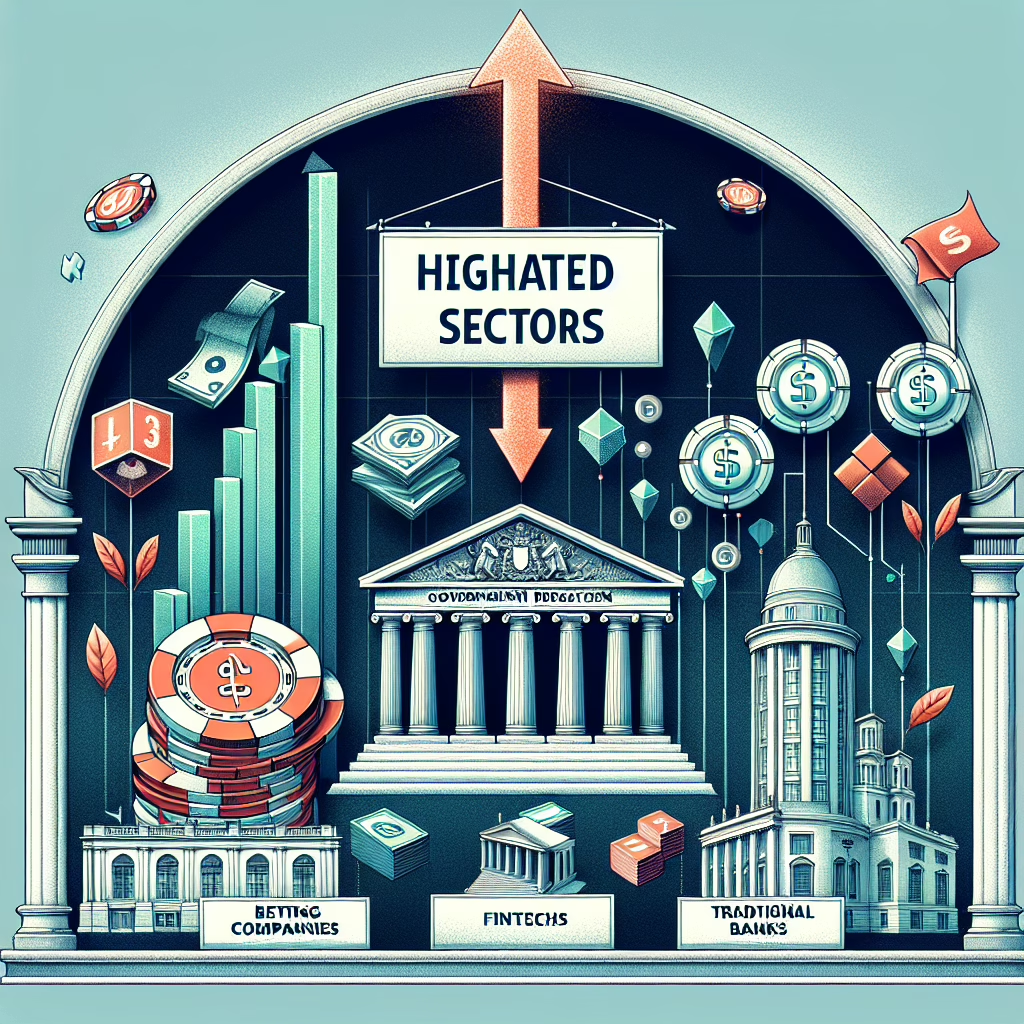
The Brazilian government has formally announced its support for a legislative bill introduced by Senator Renan Calheiros (MDB-AL), aiming to increase taxes on sectors including betting companies, fintechs, and banks. This proposal is scheduled for discussion in mid-November before the Senate’s Committee on Economic Affairs (CAE), aligning with President Lula da Silva’s broader fiscal strategy to balance the country’s finances by adjusting tax exemptions and boosting revenue avenues.
Emerging from strategic political negotiations, the bill seeks to prevent delays in the IR exemption reform, which provides tax relief to individuals earning up to R$5,000 monthly. Initially, Senator Renan intended to introduce several modifications to the bill’s text. However, such changes risked sending the bill back to the Chamber of Deputies, potentially postponing its implementation beyond the intended start in January.
In a bid to finalize the measure, Senator Eduardo Braga, tasked with reporting on Renan’s proposal, held meetings earlier this week with Finance Minister Fernando Haddad and Senate President Davi Alcolumbre (União Brasil-AP). Braga has also been engaging with opposition leaders, particularly those from the Liberal Party (PL), to secure a smoother legislative passage.
Gleisi Hoffmann, head of the Secretariat for Institutional Relations, indicated that the government opted to back Renan’s initiative instead of introducing its version, especially after withdrawing a provisional measure intended to replace the IOF tax. She highlighted that the government might later merge its proposal with the Senate bill under an urgent procedure if necessary, but emphasized that “the government’s priority is supporting Senator Renan’s project now.”
The proposed tax adjustments are significant, particularly for different sectors. For sports betting operators, the tax rate on gross revenue will be increased from 12% to 24%. Financial institutions, including banks, credit companies, and investment firms, will see their CSLL taxes rise from 15% to 20%. Fintechs, securities brokers, and payment institutions will experience a tax increase from 9% to 15%.
Senator Carlos Portinho, leader of the PL in the Senate, expressed his support for increasing taxes on betting companies, even suggesting that a 24% tax might still be low. However, he remained cautious about applying the same tax framework to fintechs, acknowledging them as innovative entities rather than equating them with the gambling sector.
In addition to tax hikes, another amendment to the Renan bill proposes extending the deadline for tax-exempt dividend distributions. Currently, an exemption from a 10% withholding tax on dividends is available for approvals made until December 31, 2025. Senator Izalci Lucas (PL-DF) has suggested prolonging this deadline to April 30, 2026. This extension addresses the business community’s concerns that companies typically approve financial statements and dividends only after the fiscal year concludes, usually during the first quarter of the following year. Portinho also mentioned ongoing negotiations to potentially limit the 10% tax on dividends sent abroad to non-resident taxpayers.
The Lula Administration perceives the Renan-Calheiros bill as a strategic, politically viable approach to generate additional revenue without advancing a government-sponsored tax reform proposal. This measure reflects a collaborative effort between the government and Senate leaders, including some opposition members, to tackle Brazil’s complex fiscal challenges. Should the bill pass, it will significantly reshape the tax landscape for key sectors, enhancing the government’s fiscal capabilities while sparking discussions around innovation, fairness, and competitiveness in Brazil’s rapidly evolving digital and financial markets.
In contrast to the government’s enthusiastic support, some analysts caution that the increased tax burden on fintechs and financial institutions could stifle innovation and investment in these sectors. They argue that fintechs, in particular, have been pivotal in driving financial inclusion and technological advancement in Brazil. A sudden hike in taxes might deter local startups from entering the market or discourage foreign investors.
Nevertheless, proponents of the bill argue that the increased taxes are necessary to ensure a fair distribution of the financial sector’s profits, particularly in light of the substantial growth they have enjoyed in recent years. They contend that these industries, having benefited from favorable conditions, should contribute more substantially to the nation’s fiscal stability.
The debate over this bill highlights a broader dilemma faced by many governments: balancing the need for revenue with fostering a conducive environment for business and innovation. As Brazil stands at this crossroads, the outcome of this legislative process could set a precedent for future fiscal policies and economic strategies. By addressing these issues, the country aims to maintain a robust economic landscape while ensuring equitable growth for all its citizens.

erik is an editorial byline used by Casino No Deposits for industry news coverage. Articles published under this byline are summarised from reporting by licensed gambling industry news sources and produced with AI assistance, then published against our editorial rules on accuracy, sourcing and tone. They are not first-hand reporting and do not contain personal player accounts. Our full process, including how bonus listings and ratings are maintained separately by our team, is documented in how we review casinos: https://casinonodeposits.com/how-we-review-casinos/
Topics: Brazil · Gambling Taxes · Sports Betting · Product Launches · Financial Results · Gambling Regulation
Looking for somewhere to play? See our current no deposit bonus offers, updated with verified codes and full wagering terms.
 4.6/5
4.6/5