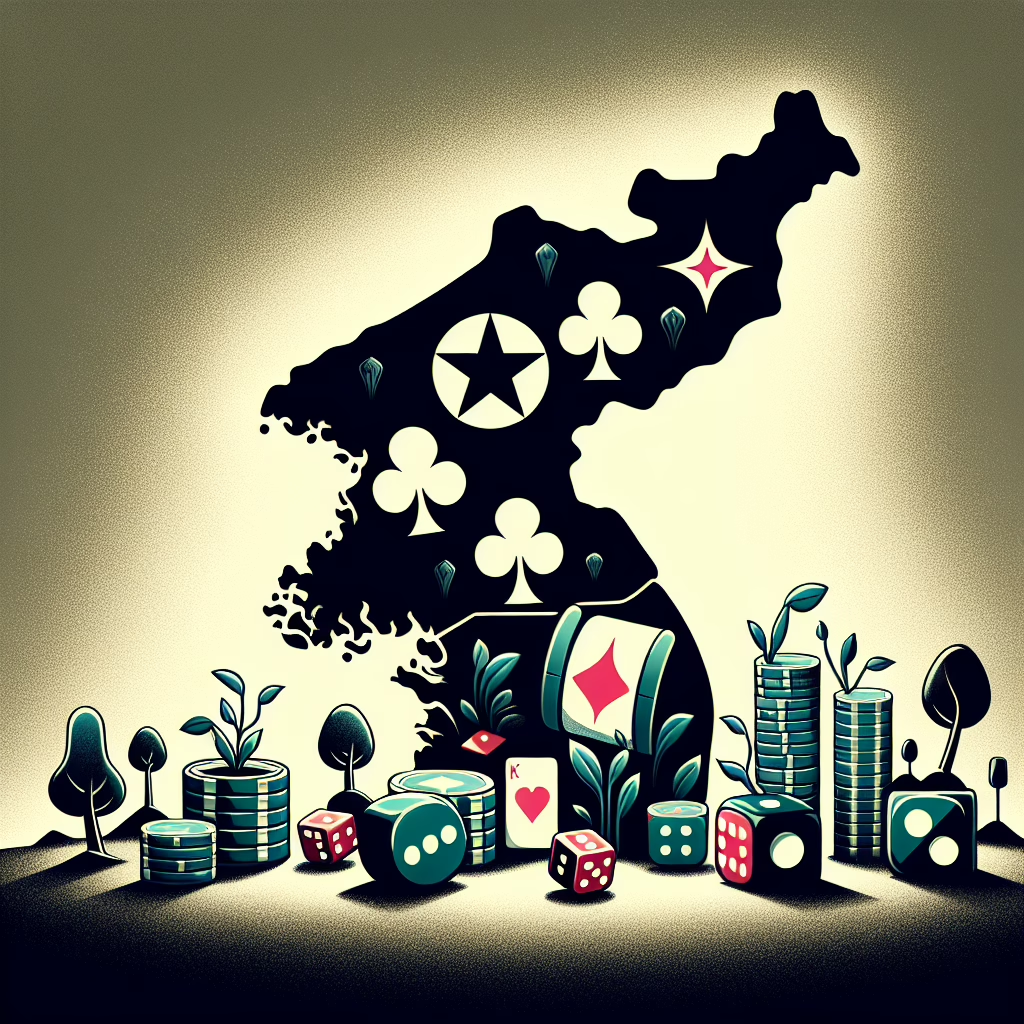
North Korea, officially known as the Democratic People’s Republic of Korea (DPRK), stands as one of the globe’s most isolated nations, governed by a centralized socialist regime that oversees approximately 26 million residents. Within this framework, the iGaming industry is nearly nonexistent for domestic consumption, as gambling is strictly forbidden for North Korean citizens. Consequently, there is little motivation for iGaming operators to focus on the local populace. Gambling facilities such as the casinos in Pyongyang and the Rason Special Economic Zone are exclusively for foreign visitors, generating much-needed foreign currency to navigate economic sanctions imposed by international bodies.
In recent developments, the North Korean government has carefully laid plans for a casino to be built at the long-vacant Ryugyong Hotel and for managed betting on horse races at the Mirim Horse Riding Club. These initiatives are part of a strategic experiment to open economic opportunities through tourism while engaging affluent individuals abroad. Despite these steps, there remains no infrastructure for online iGaming, making North Korea’s gaming market vastly different from international standards. As such, any international attempt to enter this market would face significant risks and a narrow focus on tourism-driven ventures.
The North Korean gambling market is characterized by its opacity, with state-run venues solely accessible to international guests. Traditional iGaming metrics like revenue, player numbers, and growth rates are unmeasurable within the country. Although official data on the gambling market size is unavailable, industry insiders estimate that revenue from these state-controlled venues reaches only a few million USD annually—a paltry sum when juxtaposed with global figures. The growth of the gambling industry in the North stagnated post-COVID, with no development to speak of, and the opening of horse racing at Mirim failed to show any significant uptrend in participation or revenue.
The casino offerings in North Korea are limited to table games available only to foreigners. At locations like Yanggakdo and Imperial in Rason, visitors can engage in games such as baccarat, blackjack, and roulette. Horse race betting is an option for local citizens through a raffle system, albeit on a limited scale, starting from the age of 12. Unofficial reports suggest underground lotteries exist, although these are not sanctioned by the state.
Foreign visitors, primarily from wealthier regions like North America, Europe, and Australia, constitute the majority of casino patrons in North Korea. Within this demographic, individuals between 30 and 60 years old, often business travelers, are most prevalent. The gambling scene is dominated by males—around 70 to 80 percent—with Chinese and Russian high rollers being the main patrons. Privacy is highly valued, and many prefer private, soundproofed rooms for high-stakes gaming, which comes with significant entry fees such as €500 at Imperial, deterring casual players.
The stringent North Korean regulatory landscape prohibits gambling for its citizens, with severe penalties like imprisonment or forced labor for violations. The only legal gambling venues are foreigner-only casinos in Pyongyang and the Rason Special Economic Zone, both under strict government oversight. The horse racing betting system at Mirim, introduced in 2017, remains an anomaly and is strictly controlled.
Licensing for gambling operations in North Korea is non-existent for private or international entities. The government holds a monopoly, controlling both regulation and operation of gambling venues. The fiscal model focuses on attracting foreign currency, with the state directly managing industry finances due to its monopoly and lack of transparency.
Looking forward, there is no expectation of major reform by 2025, though there are cautious steps towards enhancing foreign gaming activities. A proposed casino at the Ryugyong Hotel hints at this strategy. Yet, any expansion must navigate international sanctions and internal political priorities, limiting any potential liberalization.
State control defines the competitive landscape, with no foreign entities allowed entry. The Yanggakdo Hotel Casino in Pyongyang leads in tourist engagement, offering games like baccarat and roulette since the 1990s. Imperial Hotel Casino in Rason caters to high-stakes players, especially from China and Russia, charged with an entry fee that underscores its exclusivity. The Mirim Horse Riding Club provides limited horse race betting, applying a raffle system for locals.
Player behavior reflects constrained access to gambling. Foreigners at Yanggakdo and Imperial prefer discreet, high-stakes table games in quiet environments devoid of crowds or alcohol. Locally, the Mirim Club allows small stakes on horse races during public events, with minimal engagement in habitual gambling.
Payment methods remain cash-based, with USD, RMB, and Euro being the primary currencies exchanged for chips. Digital payment methods are absent due to severe sanctions, and technology in gambling is outdated, lacking online platforms and apps.
Culturally, the government views gambling as a capitalist vice, barring citizens from participation while allowing foreign access to earn revenue. A cultural stigma persists, and the growth potential for any new market entrant is virtually non-existent due to regulatory constraints and geopolitical risks.
Despite this, there might be room for innovations linking tourism with gambling, albeit requiring diplomatic progress. Any investment would need compliance with international laws, especially given the geopolitical uncertainties and the likelihood of enduring sanctions.
In conclusion, North Korea’s iGaming sector is likely to remain a niche market, heavily monitored and limited to foreign dealings. While there might be cautious openings like the proposed Ryugyong Casino, broader market liberalization is improbable due to international sanctions, political isolation, and cultural barriers. Until at least 2031, North Korea will linger on the periphery of the global iGaming market, relegated to a small role within the region.

erik is an editorial byline used by Casino No Deposits for industry news coverage. Articles published under this byline are summarised from reporting by licensed gambling industry news sources and produced with AI assistance, then published against our editorial rules on accuracy, sourcing and tone. They are not first-hand reporting and do not contain personal player accounts. Our full process, including how bonus listings and ratings are maintained separately by our team, is documented in how we review casinos: https://casinonodeposits.com/how-we-review-casinos/
Topics: South Korea · Australia · China · Blackjack · Licensing · Financial Results
Looking for somewhere to play? See our current no deposit bonus offers, updated with verified codes and full wagering terms.
 4.6/5
4.6/5