
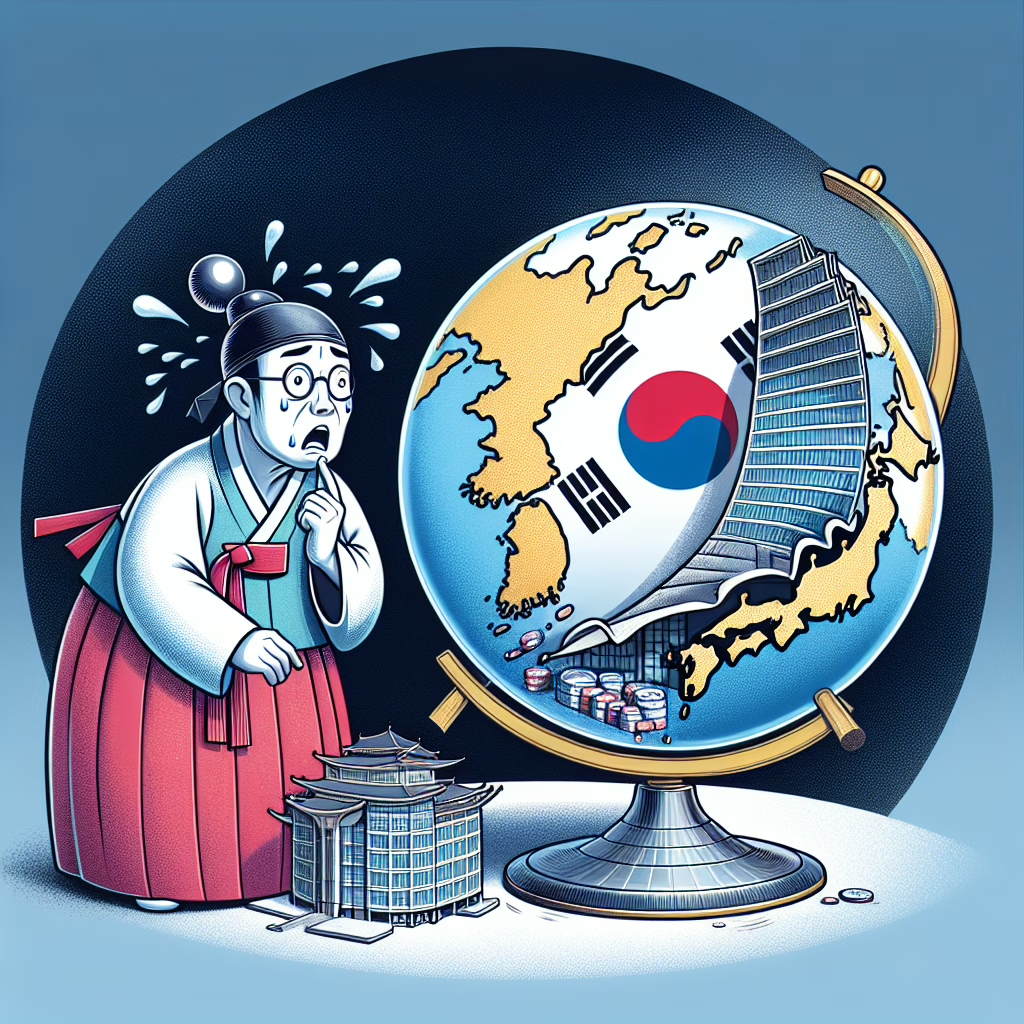
In late 2025, the South Korean casino industry finds itself grappling with mounting challenges as Japan gears up to launch its first integrated resort, potentially redefining the regional gaming arena. The $9 billion MGM Osaka, anticipated to open its doors by 2030, is set to reshape the gaming landscape, prompting South Korea to reevaluate and enhance its casino and tourism sectors.
MGM Osaka: A New Power Player
Japan’s MGM Osaka Integrated Resort (IR) is projected to make a significant impact on Asia’s hospitality market, drawing an estimated 7.6 million South Korean visitors annually. Analysts suggest this influx could redirect nearly $1.9 billion worth of tourist expenditures back to Japan, posing a formidable challenge to South Korea’s market. The allure of Osaka’s state-of-the-art complex, which will feature three hotels, an extensive MICE (Meetings, Incentives, Conferences, and Exhibitions) space of 730,000 square feet, alongside various amenities, underscores its potential to captivate tourists.
Collaborative Efforts and Strategic Dialogue
In response to these developments, the Korea Casino Integrated Resort Association and Korea Tourism Society organized a two-day forum in Osaka. This gathering of industry leaders, scholars, and government officials sought to evaluate the ramifications of Japan’s upcoming resort and strategize South Korea’s response. The discourse centered on the urgent need to formulate policies that transcend current regulatory limitations, aiming to bolster South Korea’s competitive stance while safeguarding public interest.
Kangwon Land, South Korea’s sole casino accessible to locals, has emerged as a focal point in these discussions. Choi Cheol-gyu, Acting CEO, acknowledged the competitive threat posed by MGM Osaka, emphasizing its potential impact not only on Kangwon Land but also on the nation’s 17 foreigner-exclusive casinos, which depend heavily on international visitors, including those from Japan.
Introducing the K-HIT Project
Amidst this pressure, Kangwon Land unveiled the “K-HIT Project,” a comprehensive plan intended to transform High1 Resort into a world-class destination by 2032. The project prioritizes the integration of wellness, sports, and leisure facilities, aligning with global lifestyle trends to attract tourists and invigorate the local economy.
Choi highlighted the initiative’s intent to elevate Korea’s standing on the international integrated resort map through innovative strategies like K-HIT, while simultaneously contributing to the economic revival of the mining region. Recognizing the need for a shift from traditional models, this approach underscores a growing awareness that the sustainability of South Korea’s casino industry hinges on adaptability amid rising regional competition.
Pushing for Regulatory Evolution
There is a prevailing sentiment among stakeholders, encompassing government bodies and academia, that South Korea’s regulatory framework for casinos is not only fragmented but also outdated, impeding strategic progression. Licensing on the mainland is overseen by the Ministry of Culture, Sports, and Tourism, whereas the National Gambling Control Commission manages the casinos on Jeju Island. Advocates urge the establishment of coherent and transparent regulations to bolster tourism while ensuring adequate safeguards against gambling-related issues.
Lee Jae-seok, a university professor, argued that integrated resorts should be central to South Korea’s ambition to attract 30 million international visitors annually. He supported the call for conducive policies and regulations, balanced by protective measures for problem gamblers.
Mixed Outcomes Across Industry Players
The performance of South Korea’s casino operators presents a mixed picture. Grand Korea Leisure, managing seven foreigner-exclusive casinos, reported a 6.5% decline in revenue year-on-year in October, attributed to weaker table game performance. Conversely, Jeju Dream Tower, South Korea’s largest integrated resort, witnessed a doubling of its casino revenue compared to the previous year, benefiting from stable visitor numbers and increased table game earnings. These shifts highlight the necessity for dynamic policy and business adaptations to navigate both domestic competition and Japan’s emerging market.
Navigating Towards Strategic Growth
Japan’s imminent IR debut casts a spotlight on regional competitiveness, presenting both challenges and opportunities for South Korea. Regulatory reform, strategic innovation, and investment in diverse entertainment options are essential for harnessing this situation as a catalyst for revitalizing its sector and achieving substantial growth in international tourism. Industry stakeholders now advocate for proactive and unified efforts to ensure that South Korea’s casino and tourism industries not only withstand the evolving regional gaming landscape but also thrive in it.

erik is an editorial byline used by Casino No Deposits for industry news coverage. Articles published under this byline are summarised from reporting by licensed gambling industry news sources and produced with AI assistance, then published against our editorial rules on accuracy, sourcing and tone. They are not first-hand reporting and do not contain personal player accounts. Our full process, including how bonus listings and ratings are maintained separately by our team, is documented in how we review casinos: https://casinonodeposits.com/how-we-review-casinos/
Topics: South Korea · Japan · Land-Based Casinos · Licensing · Product Launches · Financial Results
Looking for somewhere to play? See our current no deposit bonus offers, updated with verified codes and full wagering terms.
 4.6/5
4.6/5